
Replacing the drive belt (original or compatible, depending on the model)
Washing Machines
Top-Load Washing Machine Repair
Top-load washer repair in Egypt: no spin, a worn belt or clutch, heavy vibration or no water filling. Clear price before repair, 6-month written warranty.
Agent Site is an independent repair center — not the manufacturer's authorized service or warranty provider.
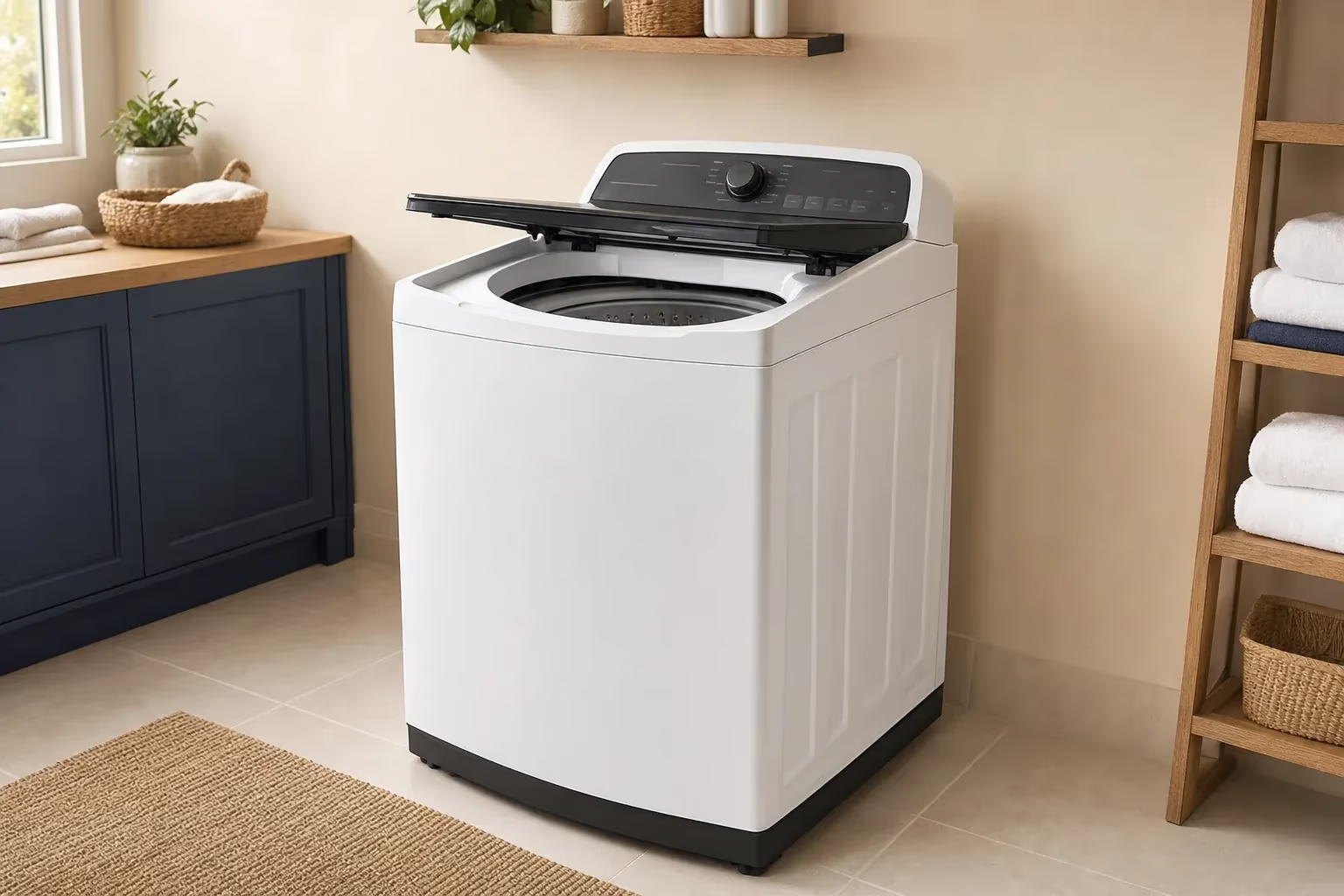
Top-load washers have a vertical drum, their wash cycles are usually shorter than a front-loader's, and you can add clothes during the wash (during the spin the lid locks or the drum stops for safety). They use more water, but they usually cost less to buy and to service, and many have no internal heater. The most common faults: the drive belt, the clutch, the lid switch, and worn suspension causing vibration on spin.
Signs your Top-Load Washing Machine needs service
- The drum does not turn, or turns very slowly
- It washes but will not spin, or spins but will not wash
- A squealing or rubbing belt noise while the drum turns
- Heavy vibration or banging on spin
- Water leaking from underneath the machine
- The program stops suddenly mid-cycle
- Water does not come in, or comes in slowly
Common technical faults
Faults we often meet when servicing this type.
- 01
A snapped or slack drive belt — one of the most common top-load faults
- 02
A worn clutch — the washer washes but will not spin
- 03
A clogged water inlet filter
- 04
A faulty water level sensor
- 05
A damaged lid switch that stops the washer from running
- 06
An unbalanced drum or worn suspension rods
Top-Load Washing Machine repair services
Repairing or replacing the clutch
Cleaning the water inlet filter and removing deposits
Replacing the lid switch and the water level sensor
Checking the drum balance and replacing the suspension rods
Installing a new top-load washer
Tips to keep your Top-Load Washing Machine running
- Do not load the washer beyond the rated capacity
- Spread the clothes evenly around the drum
- Clean the water filter every 6 months
- Make sure the water hose is not kinked before starting
- The lid must close properly for the program to start
- If it does not spin: unplug it for two minutes, plug it back in and select the spin-only program
Washing Machine fault guides
Fault guides that apply to this type — causes, safe checks and when to call a technician.
Control board burnt out by voltage surges Washer stopped full of water — blocked drain pump Washer not filling — inlet (solenoid) valve Failed capacitor — the motor hums but won't turn Washer keeps filling — the siphon effect Weak or no spin — worn shock absorbers Gearbox or clutch failure — top-load washer Too much foam and overflowing suds
Top-Load Washing Machine repair by brand
Pick your brand to see its common faults and error codes.
Top-Load Washing Machine — frequently asked questions
My top-load washer does not spin — what is the most common cause?
Usually a snapped or slack belt, a worn clutch, or a lid switch that is not engaging. The belt and the lid switch are simple repairs; the clutch is a bigger job — the technician tells you the cost first.
What is the real difference between top-load and front-load in maintenance?
A top-loader is easier to service because the motor, belt and clutch are easier to reach. A front-loader is more involved (it has to be taken apart to reach the bearings).
What is the lifespan of a top-load washer?
It depends on use, maintenance and the quality of your water and electricity supply. The belt and the clutch are among the parts that wear most over time, and they are replaced when they fail.
Do you service old Japanese top-load washers?
Yes, we work on them (Sharp, Toshiba, National, Panasonic); parts availability depends on the model — original or compatible.
The machine vibrates heavily during the spin — what is the fix?
Spread the clothes more evenly and make sure the feet are level. If it still vibrates, the suspension rods are usually worn.
Other Washing Machine types
Need a technician for your Top-Load Washing Machine?
Inspection, a clear price before the repair, and a 6-month written warranty.