
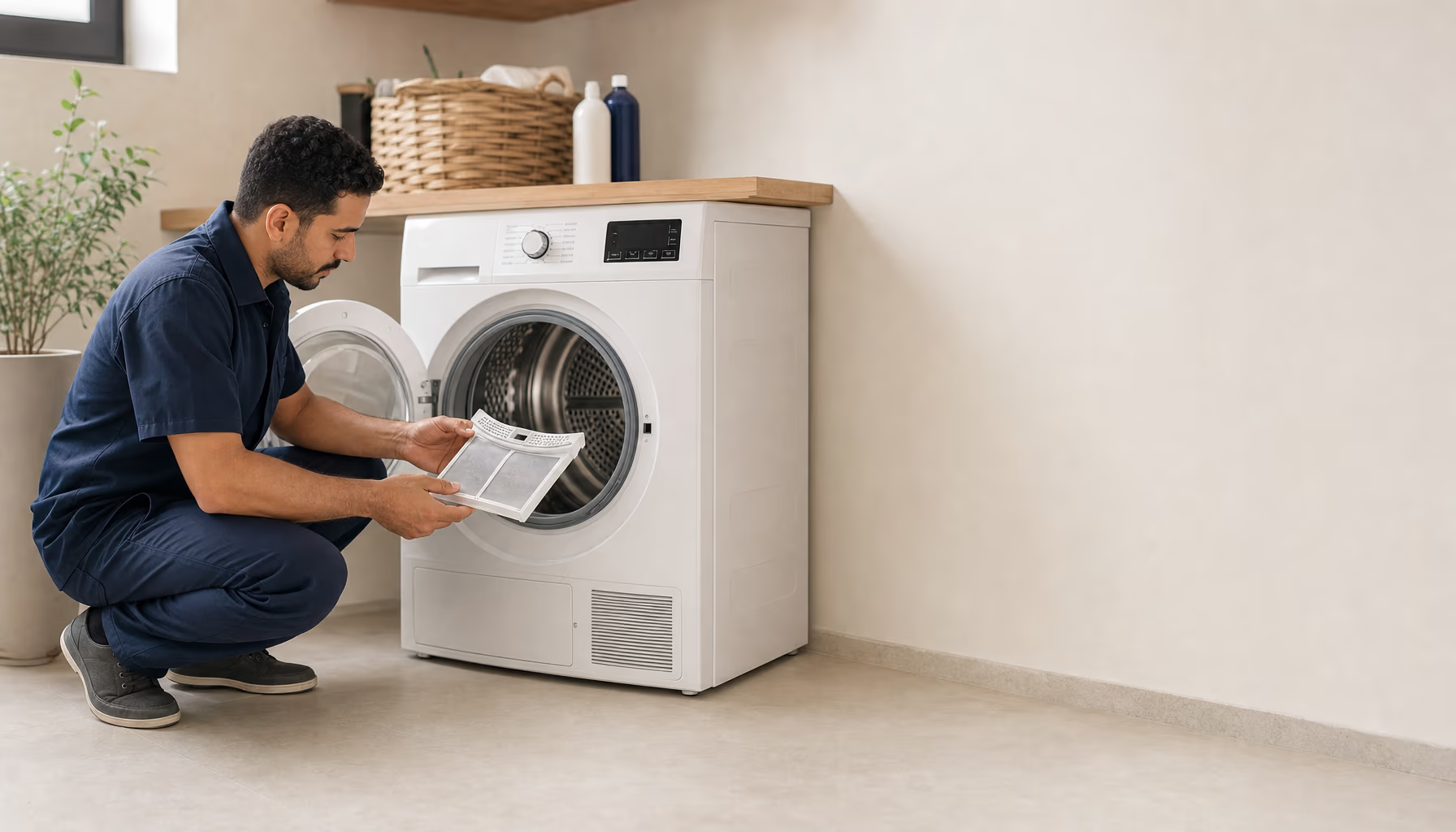
Clothes Dryer Repair
Vented, condenser and heat-pump dryers for every brand
6-month written warranty on the repair and the replaced part
Agent Site is an independent repair center — not the manufacturer's authorized service or warranty provider.
Repair for tumble dryers from most brands sold in Egypt: heating element replacement, condenser cleaning, drum belt replacement and heat-pump diagnostics — with original or compatible parts, depending on the part and model, and a 6-month written warranty.
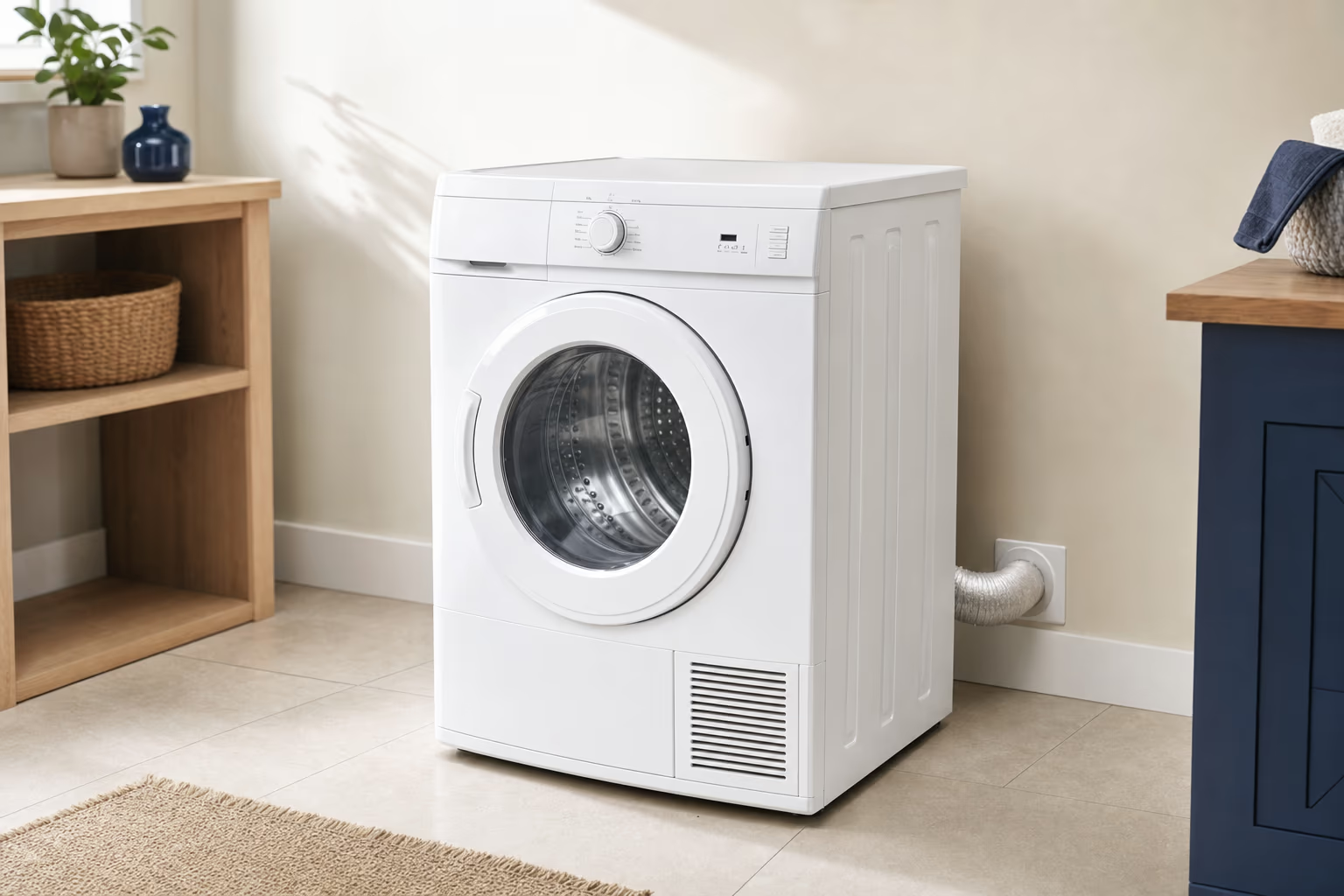
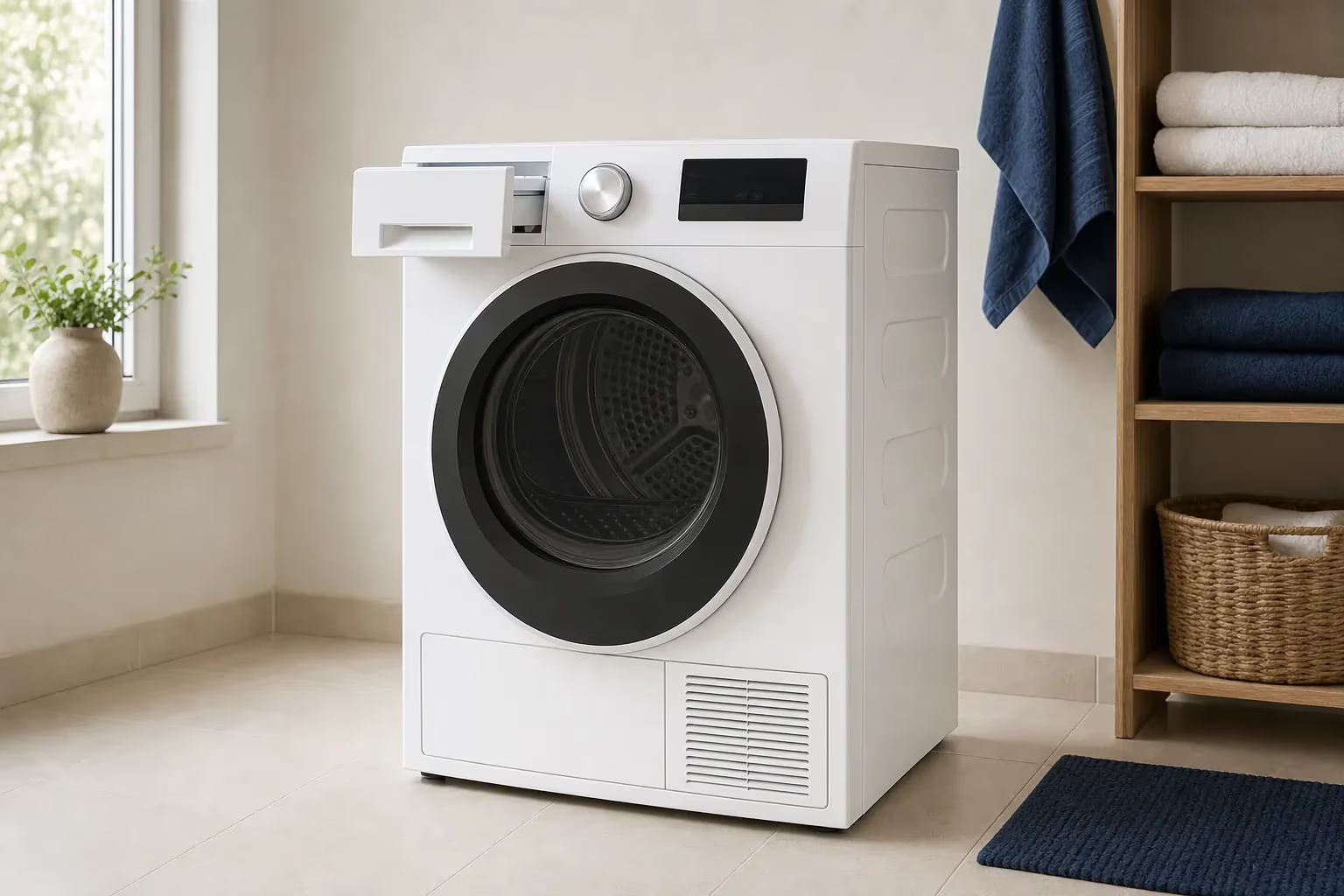
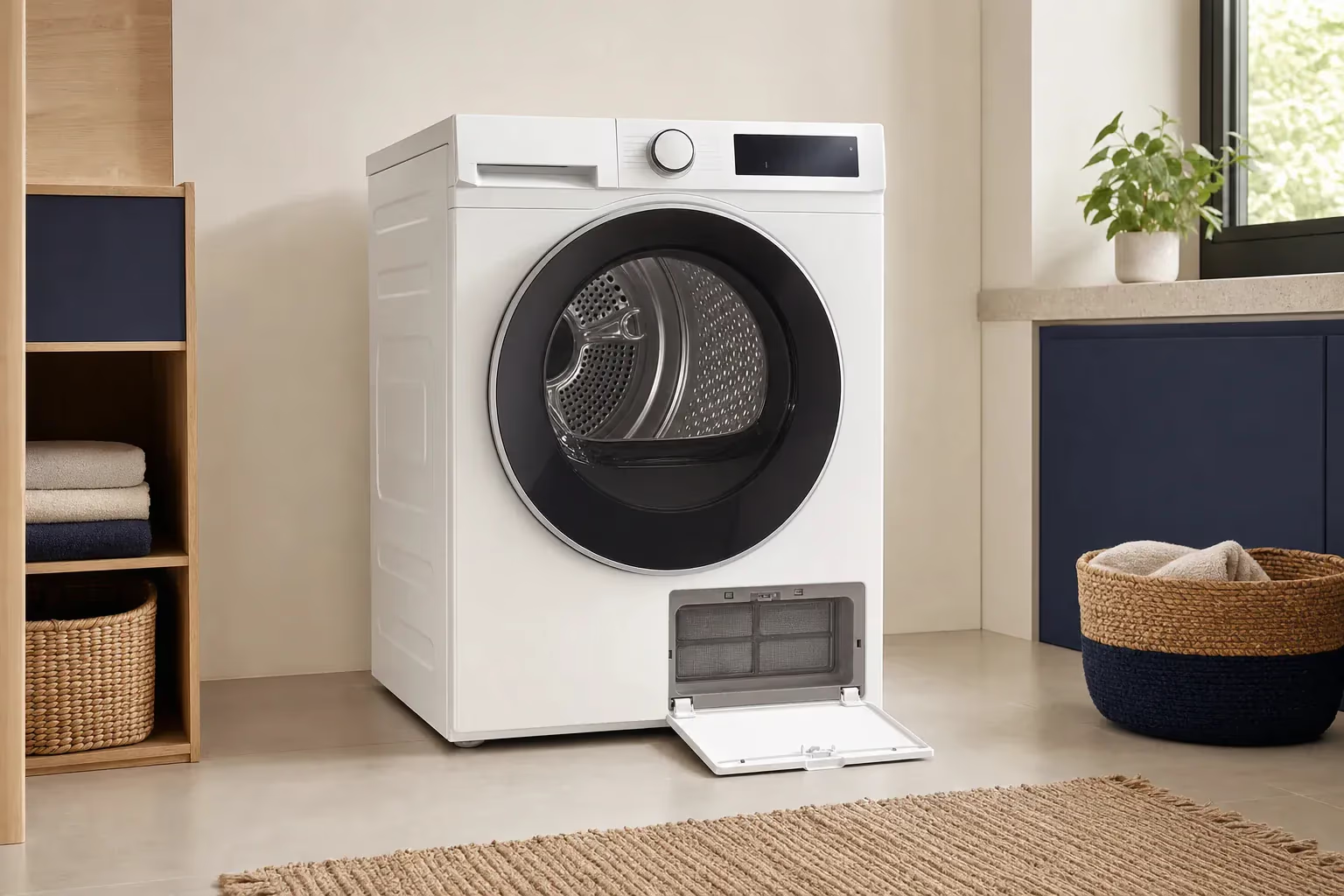
Dryer Types We Service
From vented dryers to condenser and heat-pump models — each type has its own faults and service needs.
Dryers brands
Service details for your appliance brand






Dryers service areas
We cover Cairo, Giza, Qalyubia, Alexandria, Matrouh (North Coast), Sharqia, Gharbia, Dakahlia. Not sure about your area? Call 16062 and we confirm before booking.
- Cairo
- Giza
- Qalyubia
- Alexandria
- Matrouh (North Coast)
- Sharqia
- Gharbia
- Dakahlia
Common Dryer Faults & Fixes
For each fault: the symptoms, the likely causes, safe checks you can do yourself, and when to call a technician.
Clothes still damp after drying
If clothes come out damp, start with the easy checks: the lint filter and the vent hose or condenser. If they are clean and the air isn't warm, the fault is usually the heating element or a thermostat on vented and condenser dryers, or the filters and heat exchanger on heat-pump models.
Symptoms
- Clothes almost as wet as they went in
- Clothes warm but not dry
- Some items dry, others damp
- The cycle runs longer but clothes are still damp
- The drum turns with no noticeable heat
Likely causes
- Clogged lint filter
- Blocked or kinked vent hose (vented dryers)
- Lint-clogged condenser (condenser dryers)
- Clogged filters or heat exchanger (heat-pump dryers)
- Burnt heating element or faulty thermostat
- Overloaded drum
- Faulty moisture sensor ending the cycle too early
Safe checks before you call a technician
- Clean the lint filter Unplug the dryer, take out the lint filter and wipe it. If there is a built-up film, wash it in warm water and let it dry fully before refitting it.
- Check the vent hose or condenser Unplug the dryer first. On a vented dryer, detach the hose at the back, check it for lint or kinks and clean it. On a condenser dryer, clean the condenser if your model's condenser is removable (see the manual).
- Reduce the load Don't pack the drum full — leave room for the clothes to tumble and for air to flow.
When to stop and call a technician
- You have cleaned everything and the problem remains
- The drum turns with no heat at all
- You smell burning — unplug it and don't run it
Dryer types where this fault is common: Vented DryerCondenser DryerHeat-Pump Dryer
Dryer runs but doesn't heat
If the drum turns but the clothes stay cold: on vented and condenser dryers the cause is usually the heating element, the thermal fuse or a thermostat — and the fuse often blows because the air path is blocked. Heat-pump dryers have no conventional heater, so the fault there is usually the compressor, the refrigerant or a sensor. A technician tests these parts with a meter.
Symptoms
- Clothes come out cold and as wet as they went in
- The drum turns normally
- The drum is cold inside
- Cold air comes out of the vent hose
- The programme ends with no drying at all
Likely causes
- Burnt heating element
- Blown thermal fuse (overheating protection)
- Faulty thermostat
- High-limit thermostat cutting the heat
- Disconnected or burnt heater wiring
- Faulty control board
- On heat-pump models: the compressor isn't running or the refrigerant is low
Safe checks before you call a technician
- Clean the lint filter Unplug the dryer and clean the lint filter. A clogged filter makes the dryer overheat, which can blow the thermal fuse.
- Check the programme and the socket Make sure you haven't picked a cold-air programme (such as Cool Air or Refresh). Plug the dryer directly into a sound wall socket — it draws a high load, so avoid extension leads and multi-plugs.
When to stop and call a technician
- You cleaned the filter and there is still no heat
- The breaker trips every time you switch it on
- You smell burning
Dryer types where this fault is common: Vented DryerCondenser DryerHeat-Pump Dryer
Drum not turning
A drum that won't turn usually means a snapped belt, a failed idler pulley or a motor fault. Replacing the belt or pulley means taking the dryer apart — a job for a technician.
Symptoms
- The drum stays still while the dryer runs
- Normal motor sound but no rotation
- A grinding noise as it tries to turn
- The drum is stiff when turned by hand
- Squealing at start-up
- The drum turns for a few seconds, then stops
Likely causes
- Snapped drum belt (most common)
- Faulty or worn idler pulley
- Faulty motor capacitor
- Burnt-out motor
- Worn drum rollers
- Something jammed in the drum or filter housing
Safe checks before you call a technician
- Turn the drum by hand Unplug the dryer first, open the door and turn the drum by hand. If it spins very freely, the belt is probably broken; if it is stiff, the idler pulley or rollers are likely worn.
- Check the filter housing With the dryer unplugged, look in the lint-filter housing — a button or coin can get stuck there and jam the drum.
When to stop and call a technician
- Any drum-rotation problem needs a technician
- Replacing the belt or pulley means taking the dryer apart
Dryer types where this fault is common: Vented DryerCondenser DryerHeat-Pump Dryer
Drying takes longer than usual
If drying now takes noticeably longer than usual for the same programme and load, there is usually a blockage in the air path or weak heating. Note that long cycles (two to three hours) are normal on heat-pump dryers — compare with the time in your model's manual.
Symptoms
- Cycles take noticeably longer for the same programme and load
- Clothes dry in the end, but only after a long time
- The dryer body gets very hot
- Electricity use has gone up
- The lint filter fills up unusually fast
Likely causes
- Clogged lint filter
- Blocked outside vent (the most common cause on vented dryers)
- Clogged condenser or heat exchanger (condenser and heat-pump dryers)
- An oversized load, or clothes going in too wet
- A weak heating element — many have two coils, and if one fails drying slows down
- Moisture sensor reading wrongly
- Faulty thermostat
Safe checks before you call a technician
- Clean the lint filter Clean it after every cycle — it matters more than anything else for drying efficiency.
- Inspect the vent hose Unplug the dryer first, detach the vent hose from the back and clean it, then clear the outside opening in the wall or window.
- Smaller loads, better spin Don't pack the drum full, and spin the clothes at a high speed in the washer before drying.
When to stop and call a technician
- Cleaning didn't help
- The heat seems weak
- The dryer ends cycles early or drags them out for no clear reason
Dryer types where this fault is common: Vented DryerCondenser DryerHeat-Pump Dryer
Burning smell from the dryer
A burning smell is a real danger: unplug the dryer at once and don't use it again until a technician has checked it. The usual causes are lint burning from the heater's heat, or the drum belt rubbing on metal.
Symptoms
- A smell like burnt rubber
- A smell of scorched fabric
- Light smoke from the vents
- The drum is extremely hot
- Crackling or popping sounds
Likely causes
- Built-up lint burning from the heater's heat
- A worn drum belt rubbing on metal
- The motor overheating under load
- Burnt electrical wiring
- Something flammable in the load (a lighter, paper tissues, clothes with oil or petrol on them)
- Lint trapped on the heating element itself
Safe checks before you call a technician
- Unplug immediately Unplug the dryer at once and don't run it again until a technician has checked it. If there is heavy smoke or fire, don't open the dryer door — get out and call the fire brigade on 180.
- Check the load Once it has cooled, take the clothes out and check for anything that could ignite (lighters, paper tissues). From now on, never tumble-dry clothes stained with petrol, solvents or cooking oil (even after washing), or items with foam rubber, and empty pockets before every load.
When to stop and call a technician
- Any burning smell: unplug the dryer and call a technician
- Don't run the dryer until the cause has been found
Dryer types where this fault is common: Vented DryerCondenser DryerHeat-Pump Dryer
Loud noise from the dryer
Strange noises usually mean a part is wearing out — the drum rollers, the idler pulley or the bearings. Caught early, the repair is simpler.
Symptoms
- Constant grinding
- Loud squealing as the drum turns
- Metallic banging or knocking
- A rubbing sound
- The drum turns with difficulty
- The noise gets worse as the dryer warms up
Likely causes
- Worn drum rollers (most common)
- Idler pulley needs replacing
- Broken drum bearings
- Worn drum belt
- A metal object stuck (a pin, a coin)
- Worn motor bearings
Safe checks before you call a technician
- Check the drum Unplug the dryer first, open the door and look inside and around the drum. Remove anything stuck (a pin, an earring) — but don't reach into any openings inside the machine.
- Empty the pockets Empty all pockets before drying — coins and keys cause a lot of noise problems.
When to stop and call a technician
- The noise continues
- The drum turns with difficulty
- You suddenly hear a metallic noise
Dryer types where this fault is common: Vented DryerCondenser DryerHeat-Pump Dryer
Dryer won't start
A dryer that won't start at all usually has a door that isn't fully closed or a faulty door switch — for safety, it won't run with the door open. A blown thermal fuse or a power-supply problem are the other usual suspects.
Symptoms
- No response when you press Start
- The display lights up but the drum doesn't turn
- An indicator light flashes
- A click, but it doesn't start
- It starts and stops straight away
Likely causes
- Faulty door switch (most common)
- Door not fully closed
- Faulty start button
- Blown thermal fuse
- Tripped breaker
- Faulty control board
- Damaged power cord
Safe checks before you call a technician
- Close the door properly Open the door and close it again firmly until it clicks. Remove any clothes caught in the door.
- Check the breaker Check the dryer's breaker in the fuse box. If it has tripped, reset it once; if it trips again, leave it off and call a technician — there is a wiring or appliance fault.
- Power reset Unplug it for a minute, then plug it back in — this restarts the control board.
When to stop and call a technician
- Nothing you tried worked
- The breaker keeps tripping
- You smell burning
Dryer types where this fault is common: Vented DryerCondenser DryerHeat-Pump Dryer
Clothes come out very creased
Creasing usually comes from an overloaded drum, too much heat, or clothes left in the dryer after the cycle ends. Most of the time it isn't a real fault.
Symptoms
- Clothes creased despite the anti-crease programme
- Cottons are affected most
- More creasing with large loads
- Creases set when clothes are left in the dryer
Likely causes
- Overloaded drum
- High heat on delicate fabrics
- Clothes left inside after the cycle ends
- The wrong programme for the fabric
- Moisture sensor ending the cycle early
Safe checks before you call a technician
- Reduce the load Don't pack the drum full — clothes need room to tumble freely so they don't crease.
- Choose the right programme Cottons: the Cotton programme. Synthetics and blends: Synthetics or Mixed. Delicates: the Delicates programme on low heat. Don't use high heat for everything.
- Take clothes out promptly Take the clothes out and hang them as soon as the cycle ends — if they sit in a heap inside, the creases set.
- Use anti-crease Turn on the anti-crease option if your dryer has one — it tumbles the drum now and then after the cycle ends.
When to stop and call a technician
- The same problem with a small load and the right programme
- The moisture sensor keeps ending cycles early
Dryer types where this fault is common: Vented DryerCondenser DryerHeat-Pump Dryer
Water tank problems
On condenser and heat-pump dryers, the water tank should be emptied after every cycle. If it fills faster than usual, the laundry is probably going in too wet (a weak washer spin). If "Tank Full" appears with an empty tank, the tank sensor or the pump is the usual suspect. A clogged condenser does the opposite — less water in the tank and longer drying.
Symptoms
- The tank fills before the cycle ends
- A "Tank Full" message while the tank is empty
- The dryer stops with a tank message
- Water leaking from under the dryer
- The pump runs non-stop
Likely causes
- Clothes going in too wet (a weak washer spin)
- Dirty or faulty tank sensor
- Broken float inside the tank
- Faulty water pump
- Blocked or kinked drain hose (on direct-drain set-ups)
- Tank not seated properly
Safe checks before you call a technician
- Clean the tank Take out the tank, wash it in warm water, dry it and push it fully back into place — sometimes the sensor is just dirty.
- Clean the condenser or second filter Unplug the dryer first. If your model has a removable condenser (see the manual), take it out and rinse it under lukewarm water until the lint is gone — no sharp tools. On heat-pump models the heat exchanger is fixed: clean only the second (sponge) filter.
- Check the drain hose If the dryer drains through a hose, make sure the hose isn't kinked or blocked.
When to stop and call a technician
- "Tank Full" keeps appearing after cleaning
- Water is leaking from the dryer
- The water pump isn't working
Dryer types where this fault is common: Condenser DryerHeat-Pump Dryer
Error code on the display
A code's meaning depends on the brand and model — the same letters can mean a different fault on another brand. Most codes relate to the door, heating, sensors or drainage. Take a photo of the code and send it to us on WhatsApp with the brand and model.
Symptoms
- A letter-and-number code on the display and the programme has stopped
- LG: dE means the door is not closed properly
- Samsung: hE or HC means a heating problem; dE or dC means the door is open
- The code comes back after a power reset
- A continuous beep with the code
Likely causes
- Every brand has its own codes
- Faulty temperature sensor
- Faulty door switch
- A communication fault between boards
- A compressor problem (heat-pump models)
- A drainage or tank problem
- Overheat protection has tripped
Safe checks before you call a technician
- Photograph the code Take a photo of the code together with the dryer's brand and model (from the label on the door frame or the back) — it helps the technician identify the fault and the part.
- Power reset Unplug it for 5 minutes, then plug it back in — a temporary code sometimes clears.
- Check the manual Most manuals include a code table, and the code may turn out to be something simple, like the door or the filter.
When to stop and call a technician
- The code comes back after a reset
- The code relates to heating or the compressor
- It is a heat-pump dryer (specialised repair)
Dryer types where this fault is common: Vented DryerCondenser DryerHeat-Pump Dryer
Dryer overheating
Overheating is dangerous and can lead to a fire. The most common causes are a blocked air path (lint filter, vent hose or condenser) or a faulty thermostat that doesn't cut the heat.
Symptoms
- The dryer body is extremely hot
- Clothes come out hot enough to burn
- A strong hot smell
- The thermal fuse blows and the dryer shuts off
- Ticking sounds from hot metal
- Light smoke from the vents
Likely causes
- Completely clogged lint filter
- Blocked vent hose (vented dryers)
- Faulty thermostat leaving the heat on high
- Faulty cycling thermostat
- Heating element touching the drum housing
- Faulty high-limit thermostat
- Temperature sensor reading wrongly
Safe checks before you call a technician
- Unplug immediately Unplug the dryer and let it cool down before any check. Don't run the dryer while it is extremely hot. If there is heavy smoke or fire, don't open the door — call the fire brigade on 180.
- Clear the air path Once it has cooled: clean the lint filter, the vent hose (on vented dryers) and the condenser if your model's condenser is removable. This often solves the problem.
When to stop and call a technician
- The dryer still overheats after cleaning
- The thermal fuse keeps blowing
- You smell smoke
Dryer types where this fault is common: Vented DryerCondenser DryerHeat-Pump Dryer
Door won't close
A door that won't close stops the dryer from running (a safety feature). The problem is usually a worn door catch or hinges, and the fix is usually simple.
Symptoms
- The door won't latch
- The door closes but pops open during a cycle
- No click when you close it
- The door creaks as it closes
- Loose hinges
- The magnet doesn't hold
Likely causes
- Faulty or worn door catch
- Loose door hinges
- Weak door magnet
- Broken strike plate on the cabinet
- Distorted door seal
- Door bent by a knock
Safe checks before you call a technician
- Clean the catch Clean lint or hair out of the door catch — sometimes dirt stops the door closing fully.
- Check the hinges Inspect the door hinges; if they are loose, tighten them with the correct screws.
When to stop and call a technician
- The door still won't close after cleaning
- The hinges are broken
- The door is bent and needs replacing
Dryer types where this fault is common: Vented DryerCondenser DryerHeat-Pump Dryer
Water leaking from the dryer
Water leaks happen on condenser and heat-pump dryers. The usual causes are a cracked tank, a loose drain hose or worn condenser seals. Unplug the dryer before you go near the water.
Symptoms
- A puddle under the dryer
- Water leaking near the door
- The tank stays empty despite the leak
- A wet patch that never dries
- Water dripping from the back
Likely causes
- A small crack in the tank
- Tank not seated properly
- Loose drain hose (on direct-drain set-ups)
- Worn condenser seals
- Worn door seal = leak at the door
- Damaged heat exchanger
Safe checks before you call a technician
- Inspect the tank Unplug the dryer first and dry the floor. Take out the tank and look for cracks — a cracked tank needs replacing.
- Check the drain hose If the dryer drains through a hose, make sure it is firmly connected and not loose.
When to stop and call a technician
- The leak comes from the condenser area
- The door seal needs replacing
- A lot of water is coming from the back
Dryer types where this fault is common: Condenser DryerHeat-Pump Dryer
How We Work
- 01
Call or WhatsApp
Reach us on 16062 or WhatsApp 01050887010, and describe the problem in a minute.
- 02
Your visit is scheduled
Technician visits daily from 9 AM to 9 PM — at the earliest available slot for your area.
- 03
Diagnosis + written quote
Instrument-based diagnosis and a written quote — set after inspection, before any work.
- 04
The repair
Original or compatible replacement parts, depending on the part and model, with a test run before handover.
- 05
6-month written warranty
Official invoice + 6-month written warranty on the repair and the replaced part.
Book your dryer service
at the earliest available slot for your area
- 6-month written warranty on the repair and the replaced part
- Technician visits daily from 9 AM to 9 PM
Dryer Service — Frequently Asked Questions
The questions that come to mind before requesting dryer service.
How much does dryer repair cost?
The price depends on the fault and the part. The technician inspects the dryer and gives you a written price before any work starts, with an official invoice and a 6-month written warranty on the repair and the replaced part.
How soon can a technician come for dryer repair?
Visits run daily from 9 AM to 9 PM, at the earliest available slot for your area in the governorates we cover. The 16062 hotline answers calls 24 hours a day and books your visit.
Do you service every dryer brand?
We repair dryers from most brands sold in Egypt, such as Bosch, LG, Samsung, Zanussi, Indesit, Beko, Miele and AEG. Parts are original or compatible, depending on the part and model. If your brand isn't listed, tell us the model and we'll confirm.
Is there a warranty on the service?
Yes — a 6-month written warranty on the repair and the replaced part, with an official invoice.
Do you clean the dryer's vent hose?
Yes — on vented dryers, the technician checks the hose and the vent opening and clears the lint as part of the visit. A blocked hose makes drying slower and raises the fire risk.
The dryer is smoking or smells of burning — what should I do?
Unplug it at once and don't run it again until a technician has checked it. If there is fire or heavy smoke, don't open the door — leave the room and call the fire brigade on 180. The usual causes are lint built up around the heater or in the hose, a rubbing belt or burnt wiring.
Need a dryer technician now?
A specialized technician at the earliest available slot for your area — visits daily from 9 AM to 9 PM. Call or send a WhatsApp.
← All devices