
Condenser (heat exchanger) lint cleaning
Dryers
Condenser Dryer Repair
Condenser dryer repair: damp clothes, false "Tank Full" alerts, lint-clogged condensers and water pumps. Clear price before repair, 6-month written warranty.
Agent Site is an independent repair center — not the manufacturer's authorized service or warranty provider.
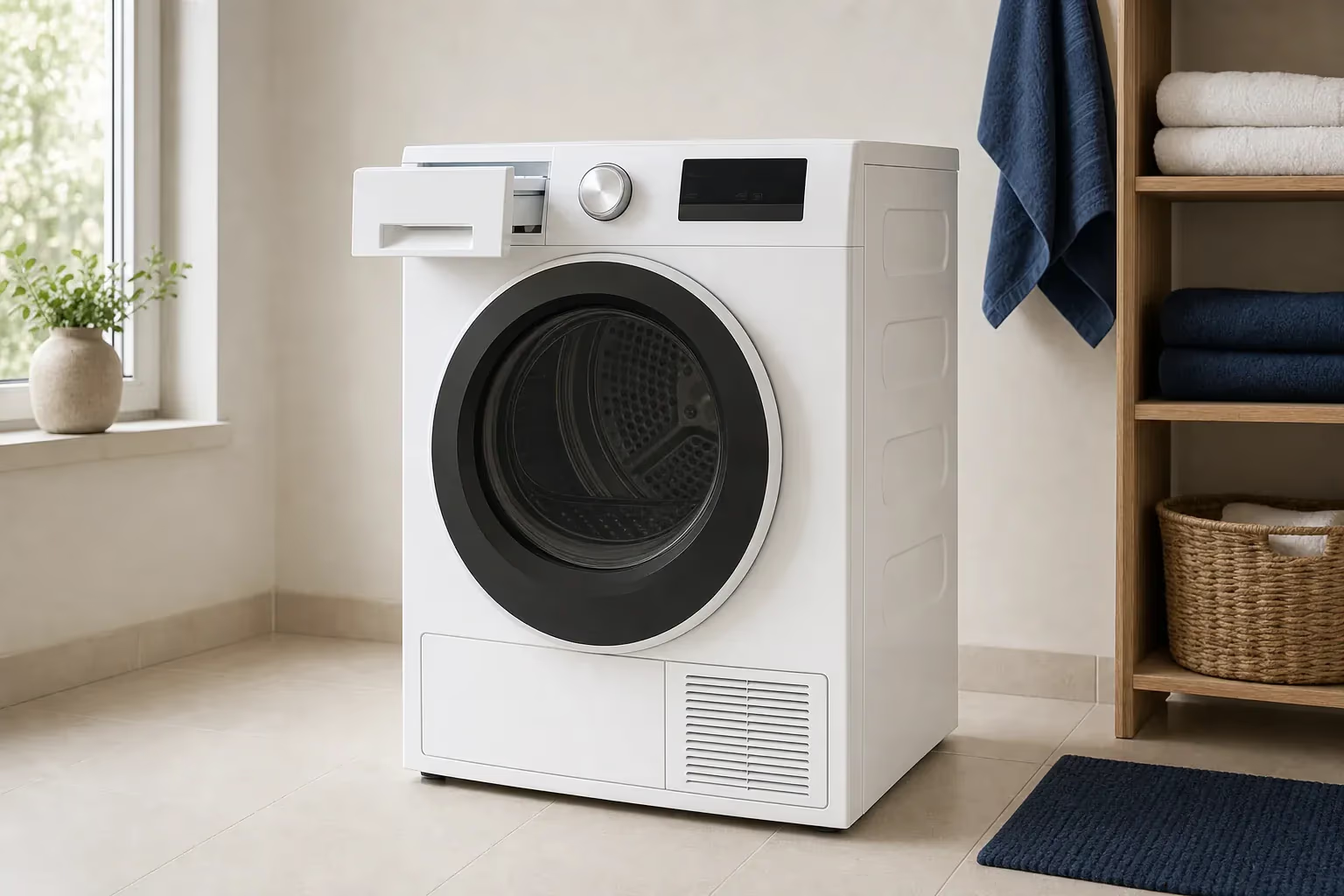
A condenser dryer needs no outside vent, which suits flats with no place for a vent opening. It heats the air with an electric heater, then passes the moist air over an air-to-air heat exchanger (the condenser) cooled by room air, so the moisture condenses into water that collects in a tank you empty by hand, or drains away through a hose on models that have one. Its components: a heater, the condenser (removable from behind a lower front flap on many models), a water tank, a small pump that lifts the water, a lint filter, a belt and a motor. It uses somewhat more electricity than a vented dryer. The most common faults: a lint-clogged condenser, a faulty tank sensor or a burnt heating element.
Signs your Condenser Dryer needs service
- Clothes come out damp
- The water tank fills unusually fast, or stays almost empty
- The dryer stops suddenly and shows a "Tank Full" message
- A strange noise from the condenser area or fan
- Heavy condensation on the glass door
- The dryer body gets very hot
- Water on the floor under the dryer
Common technical faults
Faults we often meet when servicing this type.
- 01
Condenser (heat exchanger) clogged with lint (most common)
- 02
Faulty tank sensor = false "Tank Full" message
- 03
Burnt heating element
- 04
Faulty condensate pump (lifts water to the tank or drain)
- 05
Faulty condenser cooling fan
- 06
Water leak from worn seals
Condenser Dryer repair services
Tank sensor replacement
Heating element replacement
Condensate pump replacement
Seal replacement to stop leaks
Full check after the repair + 6-month written warranty
Tips to keep your Condenser Dryer running
- Empty the water tank after every drying cycle
- Clean the condenser about once a month (or as your manual says): unplug → open the lower front flap → take out the condenser → rinse it with lukewarm water until the lint is gone (no sharp tools) → let it dry, refit it and lock the latches firmly
- Clean the lint filter after every cycle
- Run it in a ventilated room — the condenser is cooled by room air
- Use sensor drying (Sensor / Auto Dry) instead of the timer — it saves electricity
- Spin clothes at a high speed in the washer — less water in the tank and shorter drying
Dryer fault guides
Fault guides that apply to this type — causes, safe checks and when to call a technician.
Condenser Dryer repair by brand
Pick your brand to see its common faults and error codes.
Condenser Dryer — frequently asked questions
Why does the water tank fill so fast?
Usually the clothes go in too wet — spin them at a higher speed in the washer, and empty the tank after every cycle. A clogged condenser does the opposite: drying gets slower and less water reaches the tank; cleaning it about once a month fixes that.
Why does "Tank Full" show while the tank is empty?
Usually the tank sensor (float) is dirty or faulty, or the pump isn't lifting the water into the tank. Wash and dry the tank and refit it firmly; if the message stays, the technician checks the sensor and the pump.
Is a condenser dryer better than a vented one?
It depends on your space: a condenser dryer suits flats with no place for an outside vent. A vented dryer is cheaper and slightly cheaper to run, and a condenser dryer needs its condenser cleaned regularly.
Why aren't the clothes drying?
Usually a clogged condenser or lint filter is restricting the airflow, or the heating element or a thermostat has failed. Clean the filter and the condenser first; if that doesn't help, a technician pinpoints the cause.
Its electricity use is high — is that normal?
Yes — it uses somewhat more electricity than a vented dryer; that is the price of not needing an exhaust vent. If consumption jumps suddenly, the condenser or filter is probably clogged and cycles are running longer.
Do you repair Bosch and Zanussi condenser dryers?
Yes — we repair condenser dryers from most brands sold in Egypt, such as Bosch, Zanussi, Indesit and Beko.
Other Dryer types
Need a technician for your Condenser Dryer?
Inspection, a clear price before the repair, and a 6-month written warranty.