
Replacing heating elements with original or compatible parts for your model
Stoves
Electric Stove Repair
Electric stove repair: a plate or oven not heating, a tripping breaker or a burning smell. A clear price before work and a 6-month written warranty.
Agent Site is an independent repair center — not the manufacturer's authorized service or warranty provider.
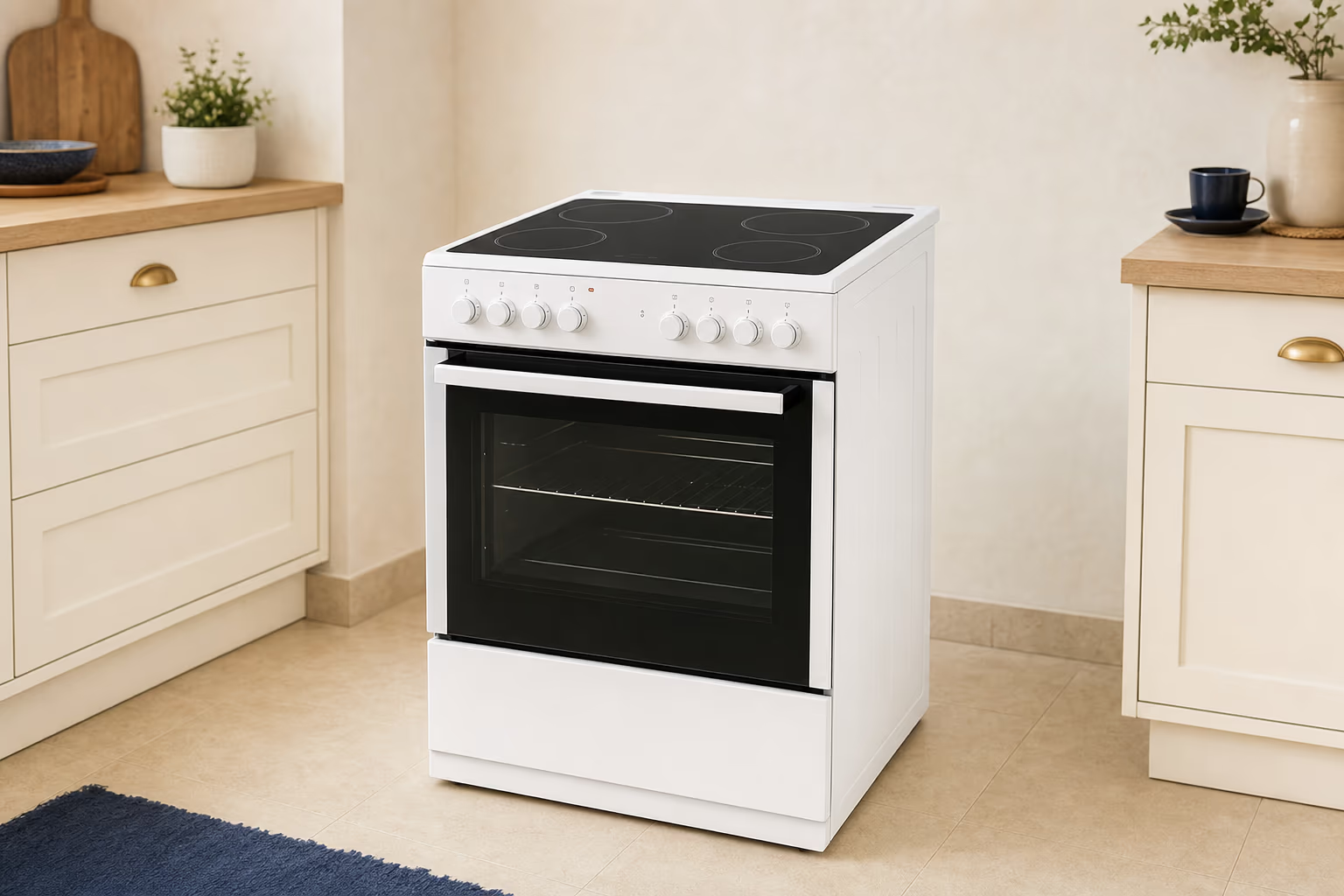
An electric stove suits flats without a gas supply and has no gas-leak risk, but it runs on a heavy-current circuit — so any check inside it is a technician's job, done with the breaker off. It has plates (coil, solid or ceramic), each with its own energy regulator that controls the heat, plus oven heating elements and an oven thermostat. The most common faults: a burnt-out element, a faulty energy regulator, or a burnt wire.
Signs your Electric Stove needs service
- A plate doesn't heat at all
- A plate only heats on full power and ignores the knob
- The plate heats in one spot but not another
- Very slow to heat up
- A sudden rise in the electricity bill
- The breaker trips when the oven or a plate is switched on
- A burnt-plastic or burning smell
Common technical faults
Faults we often meet when servicing this type.
- 01
A burnt-out plate or oven element (the most common)
- 02
A faulty plate energy regulator
- 03
A faulty oven thermostat
- 04
Burnt or corroded internal wiring or terminals
- 05
A blown internal fuse
- 06
A faulty selector switch
- 07
A faulty control board on newer models
Electric Stove repair services
Replacing plate energy regulators
Replacing the oven thermostat
Repairing internal wiring
Replacing selector switches
Deep cleaning of the plates and oven
Installing a new electric stove
Tips to keep your Electric Stove running
- Set only the heat you need — a higher setting than necessary wastes electricity
- Make sure the stove is earthed — it's there for your safety
- Clean the plates after each use, once they are cool, so stains don't build up
- Don't use pans with a warped (uneven) base
- Unplug the stove if you will be away for a long time
Stove fault guides
Fault guides that apply to this type — causes, safe checks and when to call a technician.
Electric Stove repair by brand
Pick your brand to see its common faults and error codes.
Electric Stove — frequently asked questions
One plate doesn't heat but the others work — what's the cause?
Usually the plate's element has burnt out, its energy regulator has failed, or a wire terminal underneath is burnt. A technician tests the element with a multimeter after switching off the breaker, then fits a matching part for your model.
The plate only heats on full power and ignores the knob — why?
Usually the plate's energy regulator — it switches the power on and off to set the heat. When it fails, the plate either stays on full power or doesn't heat at all. Replacing it is a technician's job, done with the breaker off.
The breaker trips when the oven or a plate is switched on — what's the cause?
Usually an element that has burnt out or is shorting to the stove's body. Dangerous — switch off the breaker and don't use the stove until a technician has checked it.
The ceramic glass over the plates has cracked — what should I do?
Stop using the plates and switch off the stove's breaker straight away — a crack can expose live parts. A cracked top is replaced, not repaired, and the technician tells you its price for your model so you can compare it with a new stove.
My electricity bill went up — is the stove the cause?
Possibly. If the oven thermostat or a plate's energy regulator is faulty, the stove draws more power than it needs. An inspection will tell.
There's a burning smell the first time I used my new stove — is that normal?
On first use, the protective coating on new elements can give off a smell and a little smoke for a short time — ventilate the kitchen. If the smell continues, or you see sparks or heavy smoke, switch off the breaker and call a technician.
Other Stove types
Need a technician for your Electric Stove?
Inspection, a clear price before the repair, and a 6-month written warranty.