A white wall-mounted split air conditioner in a light limestone living room
Calls 24h · Visits 9 AM–9 PM

AC Repair in Egypt

Repair, installation and refrigerant recharge for all AC types

6-month written warranty on the repair and the replaced part

Agent Site is an independent repair center — not the manufacturer's authorized service or warranty provider.

Written warranty6 months
Formal invoiceOn every visit
Correct refrigerantMatched to your unit
Spare partsOriginal or compatible

Service and installation for every AC type and brand — split, window, central, and desert — with refrigerant matched to your unit, original or compatible parts depending on the part and model, a formal invoice, and a 6-month written warranty on the repair and the replaced part.

AC Repair & Service

Everything your AC may ever need — diagnostics, repair, new installation, refrigerant charging, or deep cleaning. All in one place, with a documented warranty.

Book a service

AC Fault Repair

Instrument-based diagnostics for every fault: weak cooling, refrigerant leaks, unusual noise, the compressor not engaging, or the remote not responding — on every brand.

See common faults
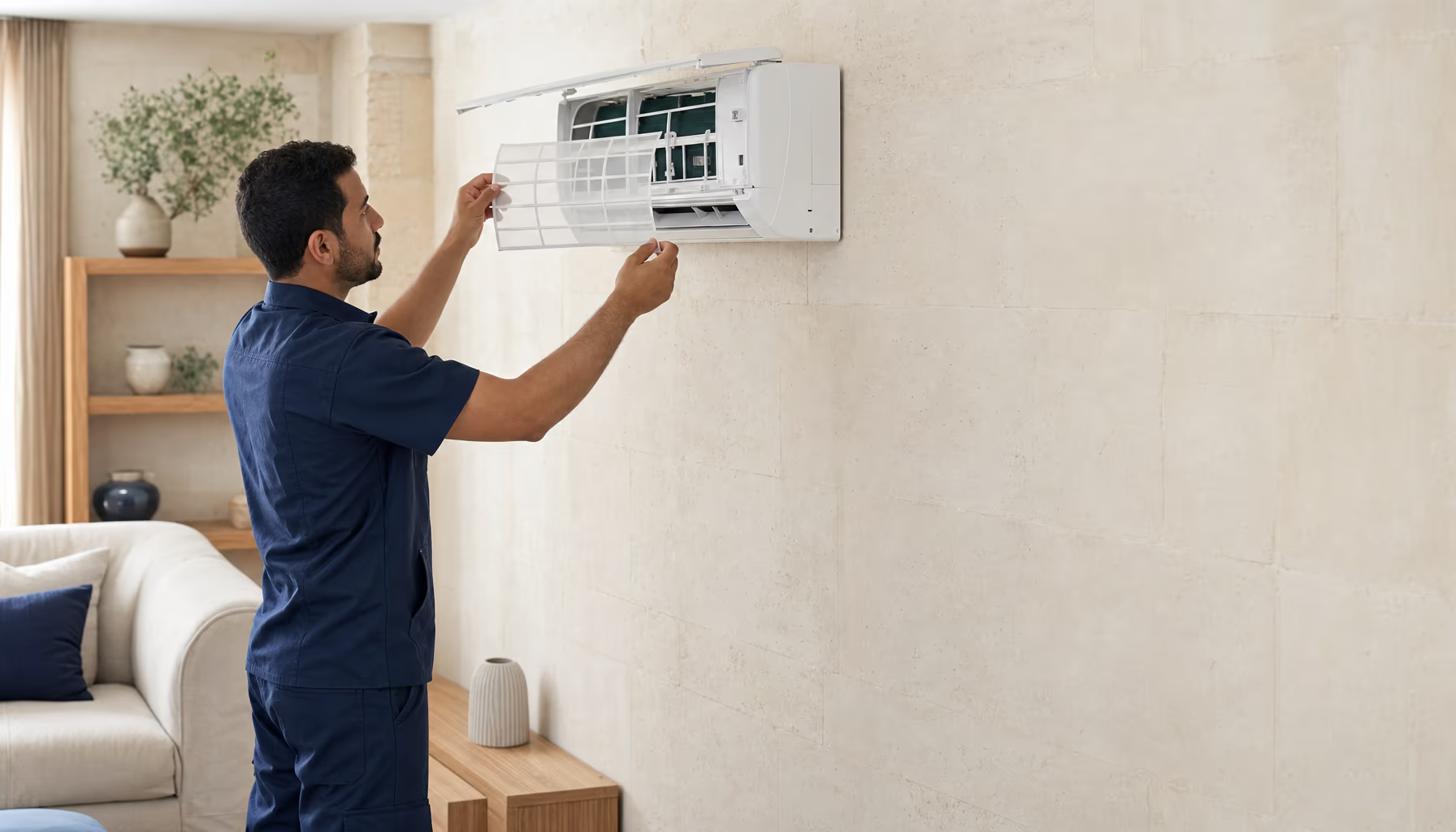
New AC Installation

Split or window unit installation with insulated copper lines, a sturdy metal bracket, and a full test run.

Refrigerant Charging

The refrigerant type on your unit's rating label (R-410A, R-32, R-22 and others), charged to the amount on the nameplate — after the leak is found and fixed.

Deep Cleaning & Sanitization

Indoor and outdoor unit cleaning, evaporator wash, and antimicrobial treatment for healthier air.

Preventive Maintenance Contracts

Monthly or quarterly preventive contracts for offices, restaurants, and hotels — pressure checks and a written status report on every visit.

Businesses & restaurants

Original or Compatible Parts

Compressors, capacitors, fans, sensors, and control boards for every major brand — original or compatible depending on the part and model, and we tell you the part type before installing it.

AC Types We Service

A specialized technician for every type — pick your AC type to see common faults and service details.

Service for Every AC Type

Repair, installation and cleaning — split, central and desert units, with technicians specialized in each type.
Book a visit — 16062
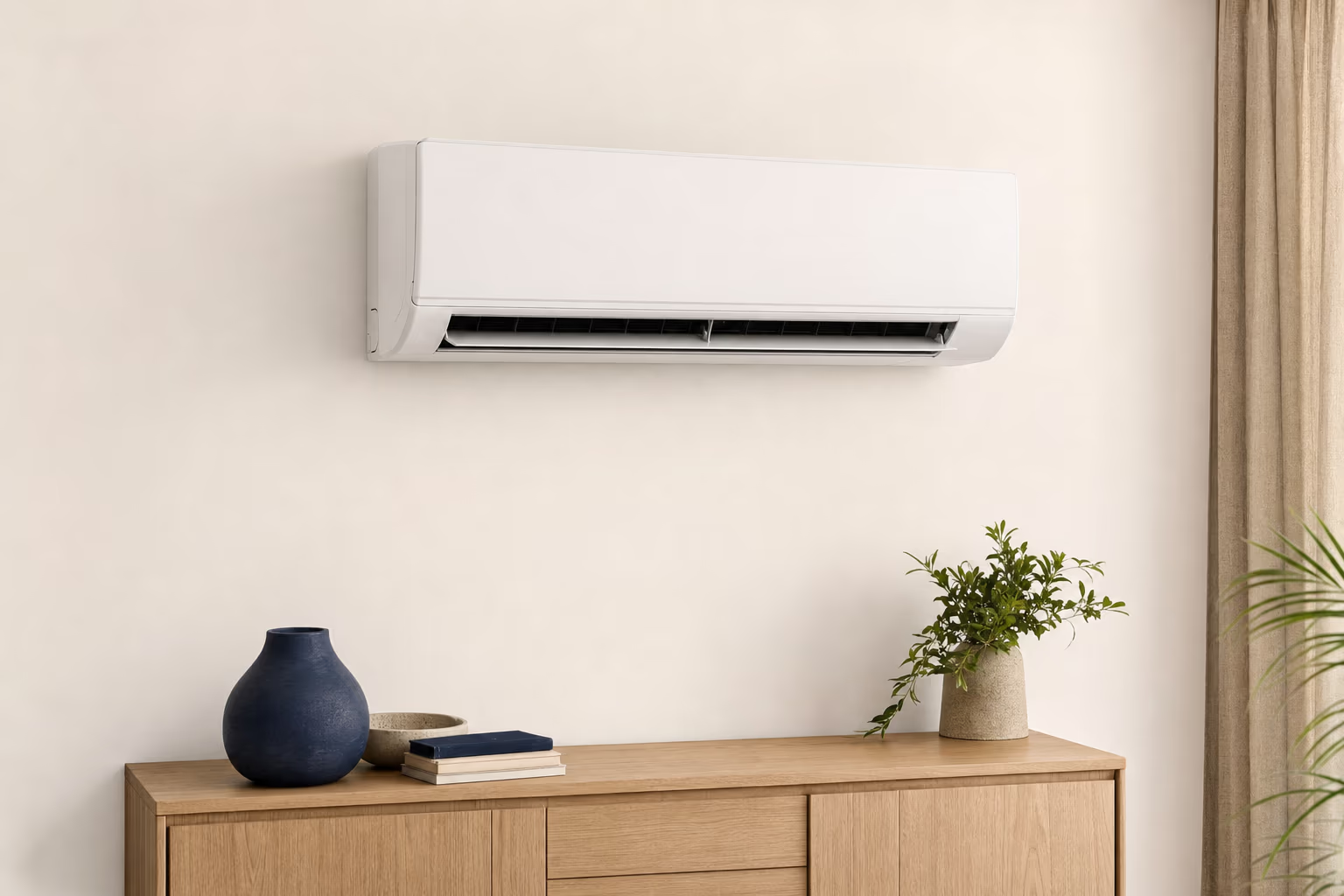
A single white wall-mounted split air conditioner installed high on a warm white wall above a small oak sideboard
Split AC serviceInstrument diagnosis + repair with original or compatible parts
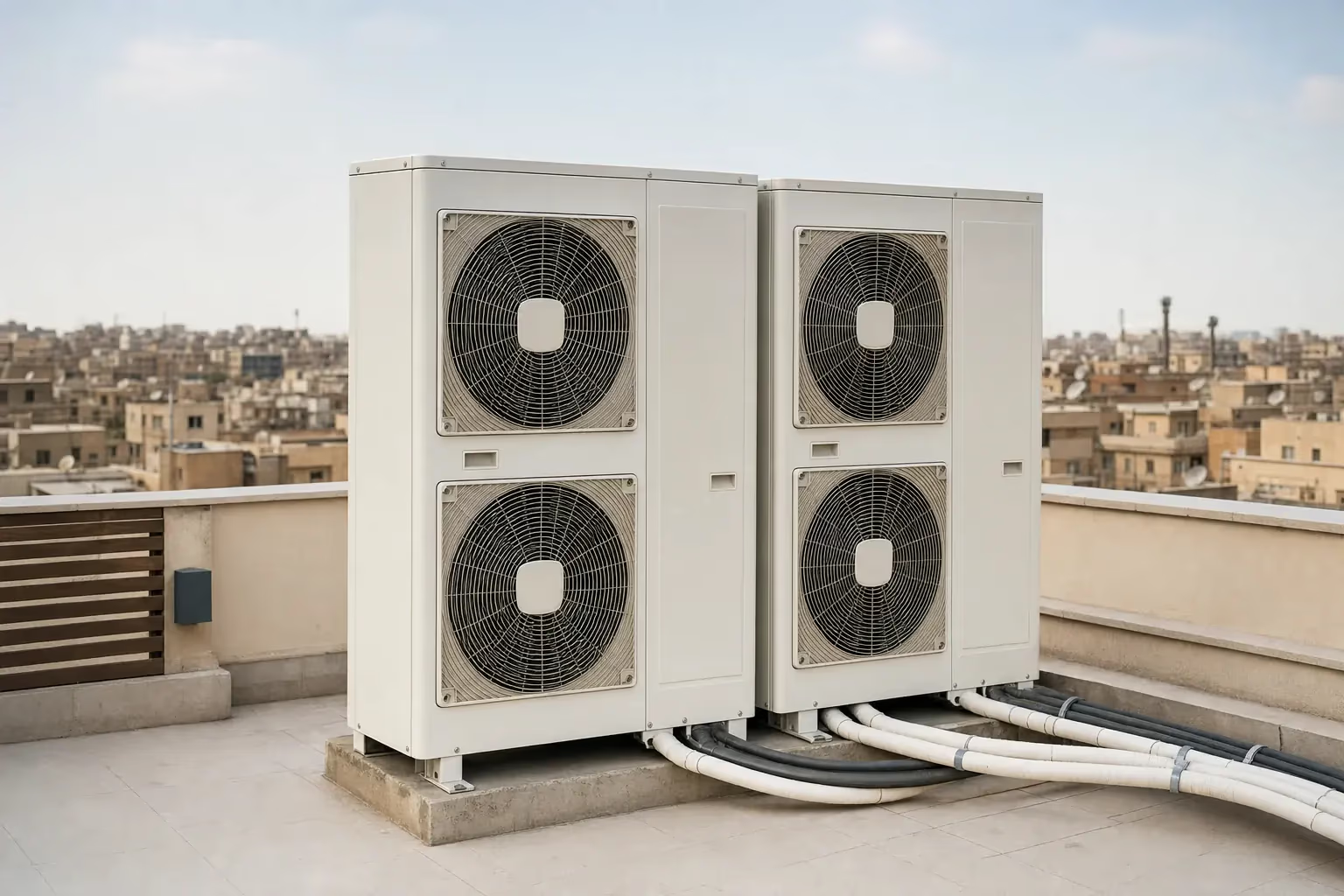
Two tall outdoor VRF central air conditioning cabinets on a neat urban rooftop, rectangular light gray bodies, real protective fan grilles, organized insulated pipes entering the base, distant Cairo rooftops softly blurred
Central ACDucted and VRF systems with specialist technicians
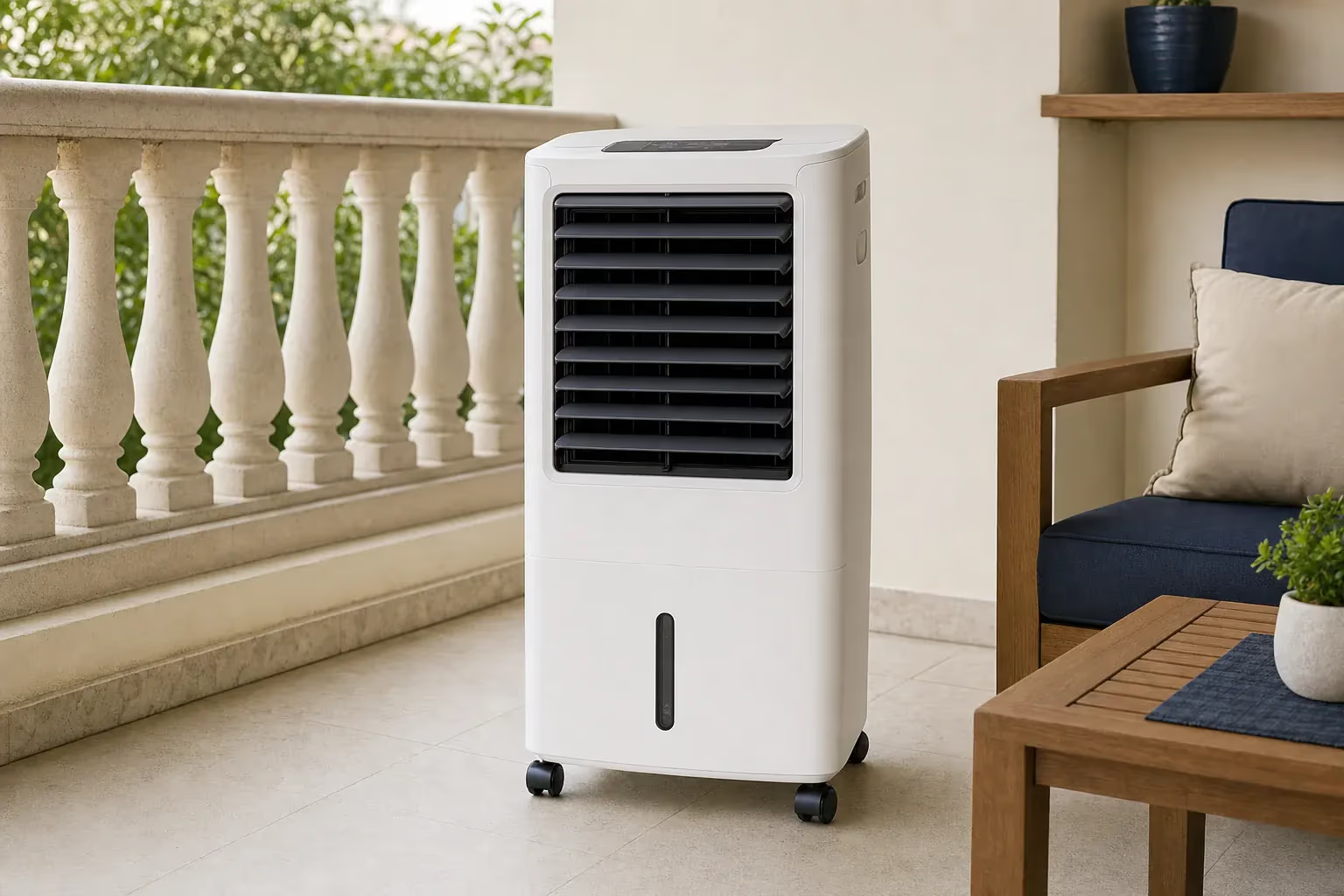
A portable evaporative desert air cooler, white rectangular floor-standing body, dark horizontal outlet louvers, visible water-level window near the bottom, small caster wheels, on a shaded apartment balcony
Desert coolerPad replacement, cleaning and tuning

Air Conditioners service areas

We cover Cairo, Giza, Qalyubia, Alexandria, Matrouh (North Coast), Sharqia, Gharbia, Dakahlia. Not sure about your area? Call 16062 and we confirm before booking.

  • Cairo
  • Giza
  • Qalyubia
  • Alexandria
  • Matrouh (North Coast)
  • Sharqia
  • Gharbia
  • Dakahlia

Every AC Fault & Its Fix

Before you call, check whether your fault is listed below. Each one covers the symptoms, likely causes, safe checks you can do yourself, and when to switch the AC off and call a technician.

AC running but not cooling

Most searchedMedium Your AC runs but blows warm air? The 6 most common causes, safe DIY checks before calling a technician, and when to switch the AC off and call 16062.

When your AC runs and the fan spins but the air is warm — it's usually low refrigerant, a clogged filter, or a compressor that isn't engaging. Run through the safe checks first; if it looks mechanical, call a technician right away.

Technician measuring refrigerant pressure on an AC that runs but does not cool

Symptoms

  • Air from the indoor unit feels lukewarm or warm
  • The outdoor compressor doesn't start, or cuts out quickly
  • Frost or ice builds up on the copper refrigerant line
  • Electricity bill rose without any change in usage
  • Outdoor unit blows warm — not hot — air

Likely causes

  1. Low refrigerant from a leak in the copper lines or fittings
  2. Indoor filter clogged — blocking airflow across the evaporator
  3. Compressor start capacitor weak or burnt out
  4. Outdoor condenser coil clogged with dust and needs deep cleaning
  5. Indoor temperature sensor (thermistor) failing — reading wrong temp
  6. Compressor itself weak — needs proper pressure-side diagnosis

Safe checks before you call a technician

  1. Power off and check filter Cut power at the breaker. Open the indoor unit's front cover and pull the filter. If it's dusty, wash with warm water and mild soap, then dry fully before reinstalling. Never run the AC with a wet filter — it will damage the indoor fan.
  2. Inspect the outdoor unit If the outdoor unit sits on a balcony floor or roof you can reach safely, switch it off at the breaker and check for heavy dust on the condenser coil; brush it gently from the outside only — never spray water onto the electrics. If the unit hangs outside a window or on an upper floor, do not try to reach it — that is a job for a technician with a safety harness.
  3. Verify remote settings Confirm Mode is Cool (not Fan), the target temperature is at least 5°C below room temperature, and fan speed is on Auto.

When to stop and call a technician

  • Oily stains at the pipe joints or valves = likely refrigerant leak (water alone is not a sign)
  • Compressor clicks and shuts off within seconds
  • Visible ice on the thin copper line
  • Burnt-plastic smell from either unit
  • Breaker trips immediately when you power the AC on
Call now 16062

AC types where this fault is common: Split ACWindow ACCentral AC

AC leaking water

Simple AC dripping water from indoor or outdoor unit? Main causes, safe inspection steps, and when to call a technician on 16062.

Water leaks from your AC are usually caused by a clogged drain hose or a frozen evaporator. Common in summer when humidity peaks, easy to diagnose but needs prompt repair to prevent ceiling and wall damage.

Water dripping from an AC indoor unit while a technician inspects the drain hose

Symptoms

  • Water droplets from the indoor unit's edges
  • Damp patch on the wall below the unit
  • Pooled water in the indoor drain tray
  • Gurgling or bubbling sound inside the unit
  • Heavy dripping from the outdoor drain hose

Likely causes

  1. Drain hose blocked by dust or algae
  2. Evaporator frozen due to low refrigerant or clogged filter
  3. Drain pan cracked or installed at the wrong angle
  4. Drain pump failed (cassette / ceiling units)
  5. Indoor unit installed without correct drain slope

Safe checks before you call a technician

  1. Check the drain hose outside Locate the drain hose exiting through the window or wall. If it is kinked, straighten it; if the tip is blocked with mud or debris, clear it. With the AC switched off, you can pull the blockage out from the hose end with a wet/dry vacuum — do not blow into it by mouth. If the drain line is buried in the wall, don't disassemble — call a technician.
  2. Run in Fan-only mode If the evaporator is frozen, run Fan mode without cooling for 30 minutes to thaw the ice. If freezing was the cause, the leak will stop.

When to stop and call a technician

  • Ice on the evaporator remains even after 1 hour of Fan-only
  • Outdoor drain barely drips but indoor unit leaks heavily
  • Damp patches forming on the wall below the unit
  • Hear a drain pump cycling on/off repeatedly
  • Leak is from the outdoor unit instead of indoor
Call now 16062

AC types where this fault is common: Split ACWindow ACCentral AC

AC making unusual noise

Medium Clicking, hissing or grinding noise from your AC? Identify the sound, its technical meaning, and when you need a technician before it gets worse.

An unusual AC sound usually points to where the problem is: clicking is different from hissing, which is different from grinding. Identify the exact sound you hear — we explain the likely causes and when to switch the unit off.

Technician inspecting an AC fan and motor because of abnormal noise

Symptoms

  • Clicking from the outdoor unit at startup
  • Continuous high-pitched hissing
  • Grinding or metallic scraping
  • Regular knocking or banging
  • Loud vibration from the outdoor unit
  • Persistent water or bubbling sounds

Likely causes

  1. Repeated clicking while the compressor will not run = usually a weak compressor start capacitor
  2. Continuous hissing with weak cooling = possible refrigerant leak — the technician confirms it with a pressure reading
  3. Grinding or metallic scraping = usually worn fan-motor bearings or a blade rubbing
  4. Knocking or banging = a loose part, a fan blade striking something, or a compressor problem — the technician pins it down
  5. Heavy vibration = loose mounting brackets or unit not installed level
  6. A light gurgle or bubbling at start-up = usually normal (refrigerant flow or air in the drain hose); if it persists with weak cooling, it may be low refrigerant

Safe checks before you call a technician

  1. Locate the source Stand next to the indoor unit and listen, then move to the outdoor. Where exactly is the sound — compressor, fan, pipe, or housing?
  2. Look at the outdoor unit from a safe spot If the noise and shaking come from the outdoor unit, the bracket bolts have probably loosened. Look from the balcony or window only — do not climb out or try to tighten the bolts if the unit hangs outside a window or on an upper floor; that is a job for a technician with a safety harness. Switch the AC off and call 16062.

When to stop and call a technician

  • Any grinding or metal-on-metal sound — call immediately
  • Repeated clicking + compressor not engaging
  • Continuous hissing with reduced cooling
  • Regular knocking from the compressor
  • Sound started suddenly after a storm or power surge
Call now 16062

AC types where this fault is common: Split ACWindow ACCentral AC

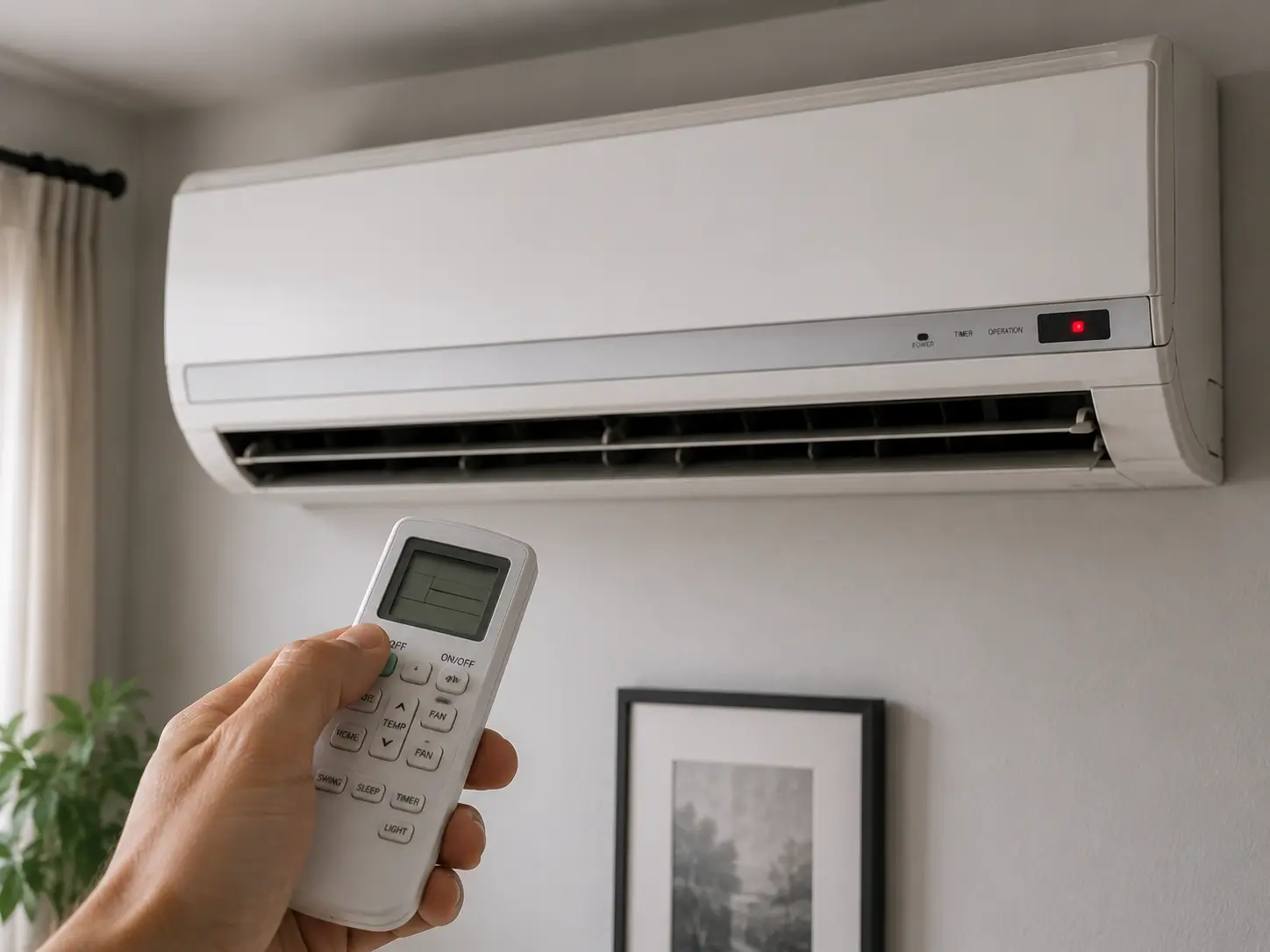
AC remote not working

Simple AC remote unresponsive? Check 3 things before buying a new remote, and when you need a technician to check the receiver.

A non-responsive remote is usually batteries or the receiver sensor in the indoor unit. In many cases you can fix it yourself; if the receiver is dead you'll need a technician.

AC remote opened for battery replacement and IR receiver check

Symptoms

  • Remote shows a signal but AC doesn't respond
  • Some buttons work, others don't
  • Remote display dim or blank
  • Must be very close to the unit for it to receive
  • AC responds to manual buttons on unit but not the remote

Likely causes

  1. Weak batteries (even if the display still lights up)
  2. IR emitter on the remote burnt out
  3. IR receiver inside the indoor unit failed
  4. Remote LCD damaged
  5. Direct strong light (sunlight) on the receiver causes interference

Safe checks before you call a technician

  1. Replace batteries Even if the display lights, batteries can be too weak to send the IR signal. Use fresh Alkaline batteries from a known brand.
  2. Test the IR signal with your phone camera Open your phone's camera, aim the remote at the lens, and press a button. White light on screen = remote works (receiver is the issue). No light = remote is dead.
  3. Try the manual buttons Most indoor units have a manual (emergency) button. Open the front cover to find it. If it works, the problem is the remote or receiver only.

When to stop and call a technician

  • Remote emits IR (verified by camera) but unit doesn't respond
  • Replacing batteries + remote didn't solve it
  • Unit works via manual button but no remote works (even a new one)
  • The remote LCD is damaged and you need a replacement that matches your model
Call now 16062

AC types where this fault is common: Split ACWindow ACCentral AC

Low AC refrigerant — when does it need a recharge?

Technician Need to recharge your AC's refrigerant? Understand R-22 vs R-410a vs R-32, why refrigerant drops, and when recharging alone isn't the solution.

Refrigerant doesn't deplete like fuel — if it's low, there's a leak. Recharging without finding the leak is wasted money. A specialist tests pressures with a gauge and locates the leak before charging.

AC refrigerant recharge using manifold gauges and a gas cylinder

Symptoms

  • Cooling gradually weakens over weeks
  • Frost forming on the thin cold copper line
  • Compressor runs longer than usual cycles
  • Outdoor unit blows less hot air than before
  • Electricity bill noticeably higher than usual

Likely causes

  1. Leak at the copper flare fittings from poor installation
  2. Leak in the indoor evaporator from humidity corrosion
  3. Leak from the service valves on the outdoor unit
  4. Leak from the condenser coil due to impact damage
  5. Loose Schrader valve in the service port

Safe checks before you call a technician

  1. Identify the refrigerant type Check the rating label on the indoor or outdoor unit (R-22, R-410A, R-32 or R-407C). The charge must be the same type as the label — any other refrigerant damages the system. Never mix refrigerant types — it ruins the compressor.
  2. Look for oily stains at the joints Look at the pipe joints at the indoor unit, and at the outdoor unit if you can reach it safely. Oily stains at joints or valves usually mark the leak — water on its own is usually normal condensation. Take a photo for the technician.

When to stop and call a technician

  • Symptoms of low refrigerant — call right away; recharging alone won't fix it
  • Frost on the line during operation — stop using the AC
  • Compressor starts struggling to engage
  • A persistent hiss from the pipes — possibly a leak
  • Refrigerant is pressurized gas — never disconnect lines yourself
Call now 16062

AC types where this fault is common: Split ACWindow ACCentral AC

Bad smell from AC

Medium Musty, burnt or rotten-egg smell from your AC? Each odor means something different — learn the cause and when to schedule a deep clean or call a technician.

A musty smell usually means bacteria on the evaporator. A burnt smell = electrical problem, act now. Rotten-egg smell = a dead pest or drain issue. Never ignore an AC smell — especially burnt.

Cleaning and sanitising an AC evaporator to remove bad smells

Symptoms

  • Musty or mildew smell when the unit runs
  • Burnt plastic or electrical smell
  • Rotten-egg or sulfur smell
  • Gasoline or motor oil odor
  • Smell intensifies after the AC has been running

Likely causes

  1. Bacteria and mold on the evaporator from humidity + dust = musty smell
  2. Overheated wire or motor = burnt plastic odor (fire risk)
  3. Dead small animal inside the outdoor unit or ductwork
  4. Sewer gas coming back through a drain hose connected to a floor drain without a trap
  5. Stagnant water sitting in the drain pan

Safe checks before you call a technician

  1. Cut power immediately if you smell burning Any burnt or melting-plastic smell = fire risk. Cut the breaker immediately and call a technician. Don't power on the AC until inspection. Never ignore a burning smell — even a faint one.
  2. Clean the filter and drain pan For musty smells, pull the filter and clean it. Inspect the indoor drain pan — drain any stagnant water and dry it with a cloth.
  3. Run in Fan mode to dry humidity Run Fan-only for 30-60 minutes after using Cool mode. This dries the evaporator humidity and prevents bacterial growth.

When to stop and call a technician

  • Any burnt or melting-plastic smell — call immediately
  • Smell persists after cleaning the filter and drain pan
  • Strong sulfur or rotten-egg odor
  • Gasoline or oil smell
  • Smell accompanied by sparks or popping sounds
Call now 16062

AC types where this fault is common: Split ACWindow ACCentral AC

AC freezing up / ice on lines

Technician Found ice on your AC's copper line? It signals low refrigerant or restricted airflow. Stop the AC immediately and learn the causes.

Ice on the AC line is NOT normal — it's not a "sign of strong cooling." It's a serious symptom meaning the evaporator is freezing below 0°C, which can damage the compressor if not addressed quickly.

Ice build-up on AC refrigerant lines and evaporator coil

Symptoms

  • White ice frozen on the thin copper line
  • Ice on the service valves at the outdoor unit
  • Indoor unit drips more water than usual
  • Cooling effectiveness dropped suddenly
  • Fan motor sound changes as ice builds up

Likely causes

  1. Low refrigerant = low suction pressure = freezing
  2. Indoor filter completely clogged = insufficient airflow over evaporator = ice
  3. Indoor fan motor weak or dust-clogged
  4. Running at a too-low setting (16°C in cool weather)
  5. Expansion valve failure or contamination

Safe checks before you call a technician

  1. Power off immediately Running with ice will damage the compressor. Switch to Fan-only for an hour to safely thaw the ice. Don't use a hairdryer or flame to melt the ice — it will crack the copper.
  2. Clean the air filter After the ice melts, pull the filter and wash it with warm water. Replace if damaged.

When to stop and call a technician

  • Ice comes back after you clean the filter and restart the AC
  • Ice on the outdoor service valves
  • Oil dripping near the line
  • Cooling was already weak weeks before — sign of refrigerant loss
  • Compressor sound is louder than usual
Call now 16062

AC types where this fault is common: Split ACWindow ACCentral AC

Breaker trips when AC starts

Technician Breaker trips every time you turn on the AC? It's a serious electrical signal. Understand the safety reasons and when not to retry.

A tripping breaker means the AC draws more current than its safe limit. NEVER keep resetting and retrying — you risk burning the wiring or the compressor. A technician must inspect immediately.
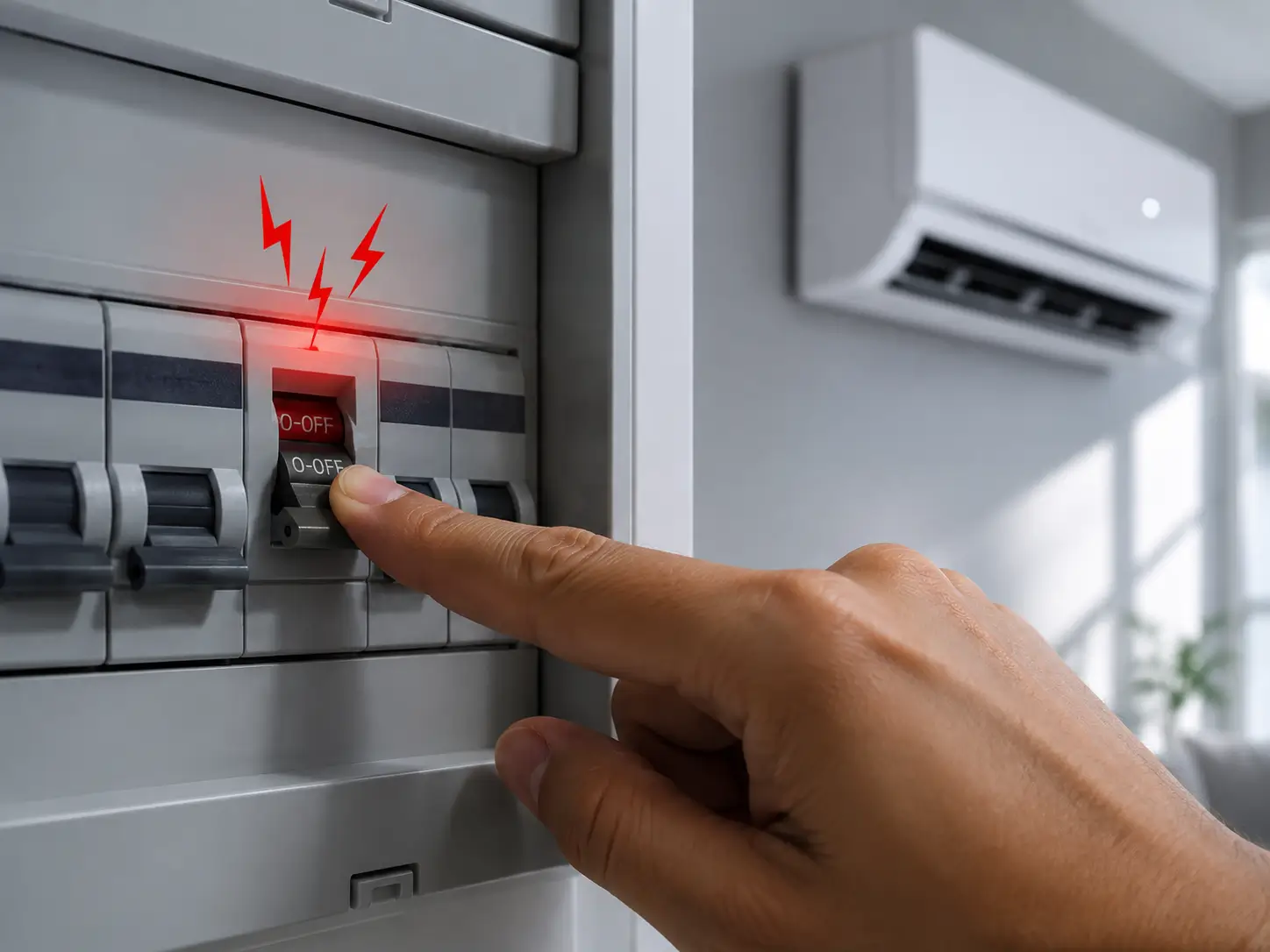
Circuit breaker tripping when the AC starts while a technician measures the load

Symptoms

  • Breaker trips within seconds of turning on the AC
  • Breaker trips 10-20 minutes after startup
  • The breaker is very hot to touch
  • Power cuts in the whole apartment, not just the AC
  • Clicking or sparking sounds at the breaker

Likely causes

  1. Compressor needs high inrush current; breaker is old or wrong amperage
  2. Short circuit in the outdoor unit's wiring
  3. Compressor motor burnt and shorted to ground = dangerous current
  4. Damaged power cable from rodents or moisture
  5. Capacitor blown = sudden current spike
  6. Indoor unit wiring contacted water = short

Safe checks before you call a technician

  1. Reset the breaker once only If the breaker trips, reset it once only. If it trips again, leave it off and do not retry — repeated resets can overheat the wiring and start a fire. If the breaker is hot, don't touch it — call an electrician now.
  2. Disconnect the AC from power If there's a plug, unplug it. If it's wired to an isolator switch, turn it off. This prevents further short attempts.

When to stop and call a technician

  • Breaker trips more than once
  • Breaker is hot or smells like plastic
  • Breaker trips and takes other circuits with it
  • Smoke or sparks from the outdoor unit
  • It tripped again after one reset — leave it off and call
Call now 16062

AC types where this fault is common: Split ACWindow ACCentral AC

AC fan not spinning

Most searchedTechnician Indoor or outdoor fan stopped spinning? The cause is in the motor, capacitor or bearings. Learn the differences and the safe checks before you call a technician.

If the outdoor fan stopped but the compressor still runs — switch off immediately, heat will destroy the compressor. If only the indoor fan stopped, air won't reach the room but the unit isn't in immediate danger.

Symptoms

  • Compressor runs but outdoor fan is stationary
  • Indoor fan doesn't spin when AC turns on
  • Fan spins unusually slowly
  • Metallic buzzing at fan startup
  • Fan hums but will not start spinning on its own

Likely causes

  1. Fan capacitor burnt out or weak
  2. Fan motor completely burned
  3. Bearings worn out — locking up rotation
  4. Disconnected or broken motor wire
  5. Control board PCB failed and isn't sending the signal
  6. Object stuck in the fan blades (paper, twig, insect)

Safe checks before you call a technician

  1. Switch off if it's the outdoor fan The outdoor unit needs its fan to cool the compressor. Running without it for 30 minutes kills the compressor. Even on a cool day — switch the AC off.
  2. Check for stuck debris After switching off at the breaker, inspect the blades from outside — only if you can reach the unit safely. Remove any stuck object carefully, then power on and test. If the unit hangs outside a window, leave it to the technician.

When to stop and call a technician

  • Fan spins slowly with a buzzing sound = bad capacitor
  • Fan hums but will not start on its own = usually the capacitor. Never push the fan by hand while the unit is powered
  • Burnt-plastic smell from the motor = burnt motor
  • Outdoor fan stopped while compressor runs = call now
  • Indoor fan won't spin at any speed
Call now 16062

AC types where this fault is common: Split ACWindow ACCentral AC

AC error codes displayed

Technician Error code on your AC display? Code meanings differ by brand and model — how to record it, when a reset clears it, and when you need a technician.

Error codes on the AC display help pinpoint the fault — but the same code means different things on different brands and models (E1 on one brand is not E1 on another). Note the code and the model from the rating label and send them to us on WhatsApp, or check the code table on your brand's page.
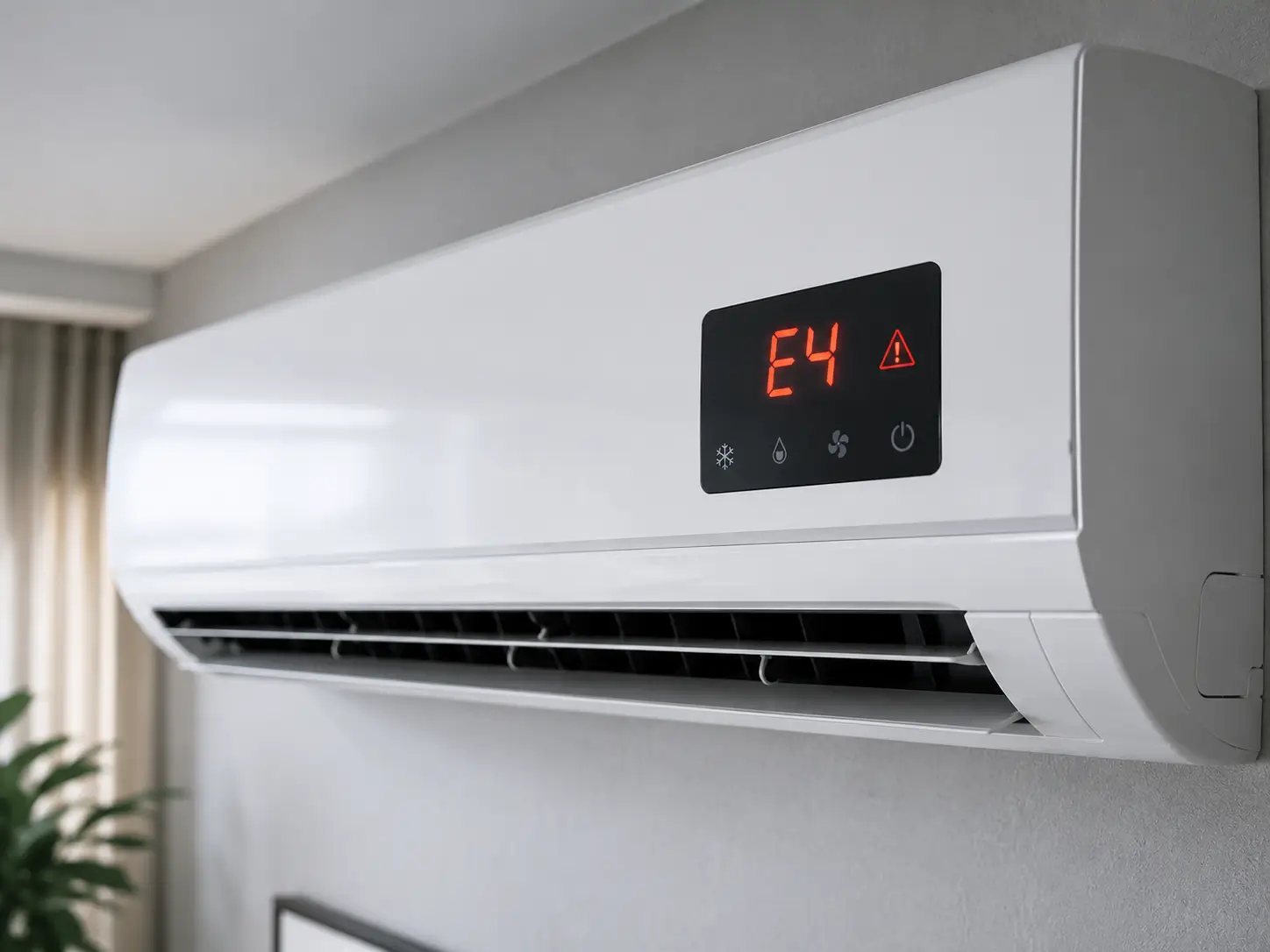
AC display showing an error code while a technician reads it

Symptoms

  • Code E1 / E2 / E3 shown on the indoor display
  • Code F1 / F2 / F3 appears continuously
  • LED indicators flashing in a specific rhythm
  • AC auto-shuts after the code appears
  • Code only appears in Cool or Heat mode

Likely causes

  1. Indoor/outdoor communication error (interconnecting cable or boards) — the code differs by brand: e.g. CH05 on LG, E101 on Samsung
  2. A failed temperature sensor (room, evaporator or outdoor unit)
  3. Compressor protection: higher-than-normal current draw, or high temperature and pressure
  4. A supply problem: voltage too low or too high
  5. A control board (PCB) or inverter board fault
  6. The indoor or outdoor fan not running as it should

Safe checks before you call a technician

  1. Record the code and your AC model Write down the exact code (E1, E2, F2…) and your AC model from the unit label. This helps the technician bring the likely part on the first visit.
  2. Perform a hard reset Cut power at the breaker for 5 minutes, then power back on. This clears some temporary codes that aren't real faults.
  3. If the code returns, call a technician Codes usually don't return if they were temporary. If yours comes back after a reset, there's a real fault that needs a technician.

When to stop and call a technician

  • Code persists after a hard reset
  • Code appears alongside AC shutdown
  • Your brand's code table links the code to the compressor or power supply — do not keep restarting
  • Multiple codes alternating
  • The code comes and goes for no clear reason — possibly a control board fault
Call now 16062

AC types where this fault is common: Split ACCentral AC

Weak AC airflow

Medium Cool air comes from your AC but airflow is weak? The issue is in the filter, fan or ductwork. Inspection steps and DIY checks.

If the air from your AC is cool but weak — it can't cool the room. Usually a clogged filter or a weak indoor fan, occasionally a duct issue in central systems.

A dust-clogged AC filter causing weak airflow

Symptoms

  • Air from the side vents is weaker than usual
  • Louver fins move slowly
  • Room takes longer to cool
  • Fan sound is quieter than before
  • Strong airflow in one corner, weak in another

Likely causes

  1. Indoor air filter fully blocked
  2. Indoor fan blade caked with dust
  3. Fan motor weak — needs replacement
  4. In central systems: return air filter clogged
  5. Duct damper failed or stuck half-open
  6. Dust-clogged evaporator restricting airflow

Safe checks before you call a technician

  1. Clean the filter Pull the filter and wash with warm soapy water. If torn or worn, replace it. A clean filter alone often fixes the issue.
  2. Check the air outlets Make sure nothing blocks the louvers or vents. Furniture near the AC can obstruct airflow — keep 80 cm clear.

When to stop and call a technician

  • Cleaning the filter didn't help
  • Fan motor sound has changed
  • Strong from one vent, weak from another (central)
  • Louvers won't move
  • You can see dust caked on the evaporator
Call now 16062

AC types where this fault is common: Split ACWindow ACCentral AC

AC won't turn on at all

Most searchedMedium Pressed Power but the AC doesn't respond? Check the power, remote and breaker before calling a technician.

If your AC is completely unresponsive — no display, no sound — it's usually a simple power issue. Check 3 things before assuming it's broken.
Technician checking the control board and power supply of an AC that will not start

Symptoms

  • Indoor display is completely dark
  • No sound from the remote or unit
  • No beep when you press Power
  • Other appliances work but AC doesn't
  • Remote works but the unit doesn't respond

Likely causes

  1. AC's breaker has tripped
  2. Plug not properly seated (for plug-in units)
  3. Internal fuse blown in the indoor unit
  4. PCB transformer failed
  5. Main board (PCB) completely burned
  6. Loose connection in the inter-unit cable

Safe checks before you call a technician

  1. Check the breaker Go to the panel and check the AC breaker. If tripped, push fully down then up. If it trips again immediately, call a technician — no need to retry.
  2. Check plug and isolator If there's a plug, unplug and reseat. If there's a wall isolator switch, make sure it's On.
  3. Try the manual button Open the indoor cover and find the small AUTO / Manual button. Press it — if the unit starts, the issue is the remote or receiver.

When to stop and call a technician

  • Breaker won't stay up
  • Tripped breaker + burning smell
  • Manual button doesn't start the unit
  • Display flickers briefly then dies
  • Clicking sound from the indoor board
Call now 16062

AC types where this fault is common: Split ACWindow ACCentral AC

Water dripping from AC vents

Simple Noticed water droplets coming out with the air from your AC vents? Sign of high humidity or evaporator freezing. Tell the difference between normal and a problem.

The difference matters: light mist in very humid weather = normal. Full droplets blown out with the air = a problem. Know when to keep running and when to stop.

Symptoms

  • Water droplets ejected with the airflow
  • Light mist accumulating on the floor below
  • Damp patches on furniture near the AC
  • More from lower vents than upper
  • Only happens in strong cooling mode

Likely causes

  1. Very high ambient humidity (common in Alexandria, coastal cities)
  2. Clogged filter makes the evaporator too cold
  3. Mild evaporator frosting thawing into the airflow
  4. Set temperature too low
  5. Indoor drain hole blocked

Safe checks before you call a technician

  1. Raise the temperature setting If set at 16°C, raise to 22-24°C for an hour and see if it improves. Condensation increases when the gap is large.
  2. Clean the filter A clogged filter can cause mild evaporator freezing. Clean it and the problem usually doesn't return.

When to stop and call a technician

  • Heavy water (not just mist) being ejected
  • Visible ice on the evaporator
  • Musty smell along with the moisture
  • Sudden dripping with reduced cooling
  • Indoor drain pan is full of water
Call now 16062

AC types where this fault is common: Split ACWindow ACCentral AC

AC vibrating heavily

Most searchedMedium Indoor or outdoor unit vibrating noticeably? Mounting, compressor or fan balance issue. Causes and solutions.

Mild vibration is normal. Heavy shaking that rattles the wall or makes the unit "dance" = a problem. Usually mounting or compressor age — sometimes a fan that lost balance.

Technician re-securing an AC outdoor unit that vibrates

Symptoms

  • Indoor unit makes the wall ring
  • Outdoor unit physically shifts on its mount
  • Pictures or shelves nearby rattle when AC runs
  • Vibration eases after a few minutes
  • Vibration is strongest at compressor start

Likely causes

  1. Outdoor bracket bolts loosened
  2. Rubber compressor mounts deteriorated
  3. Outdoor fan lost a blade or its balance
  4. Compressor internal imbalance (older models)
  5. Indoor unit installed flush to wall without isolator

Safe checks before you call a technician

  1. Inspect the brackets Switch off at the breaker and look at the bracket bolts. If the unit sits on a balcony floor or roof you can reach safely, you can tighten loose bolts with the right wrench — if you are not sure, leave it. If the unit hangs outside a window or on the facade of an upper floor, do not try to reach it — that is a job for a technician with a safety harness.
  2. Locate the source Is the vibration from indoor or outdoor? From the compressor or the fan? This saves the technician significant diagnostic time.

When to stop and call a technician

  • Vibration so heavy the unit moves
  • Metallic sound with the vibration
  • Vibration started suddenly after years of quiet operation
  • Visible cracks at the bracket mounts
  • Outdoor fan blade shows cracks
Call now 16062

AC types where this fault is common: Split ACWindow ACCentral AC

AC temperature sensor failure

Technician AC cycles randomly or doesn't stop at the set temperature? Usually a failed thermistor sensor. Learn the symptoms and fix.

The thermistor sensor tells the AC the room and evaporator temperatures. When it fails, cooling becomes erratic, the AC may not stop at the set temperature, or shuts down randomly.
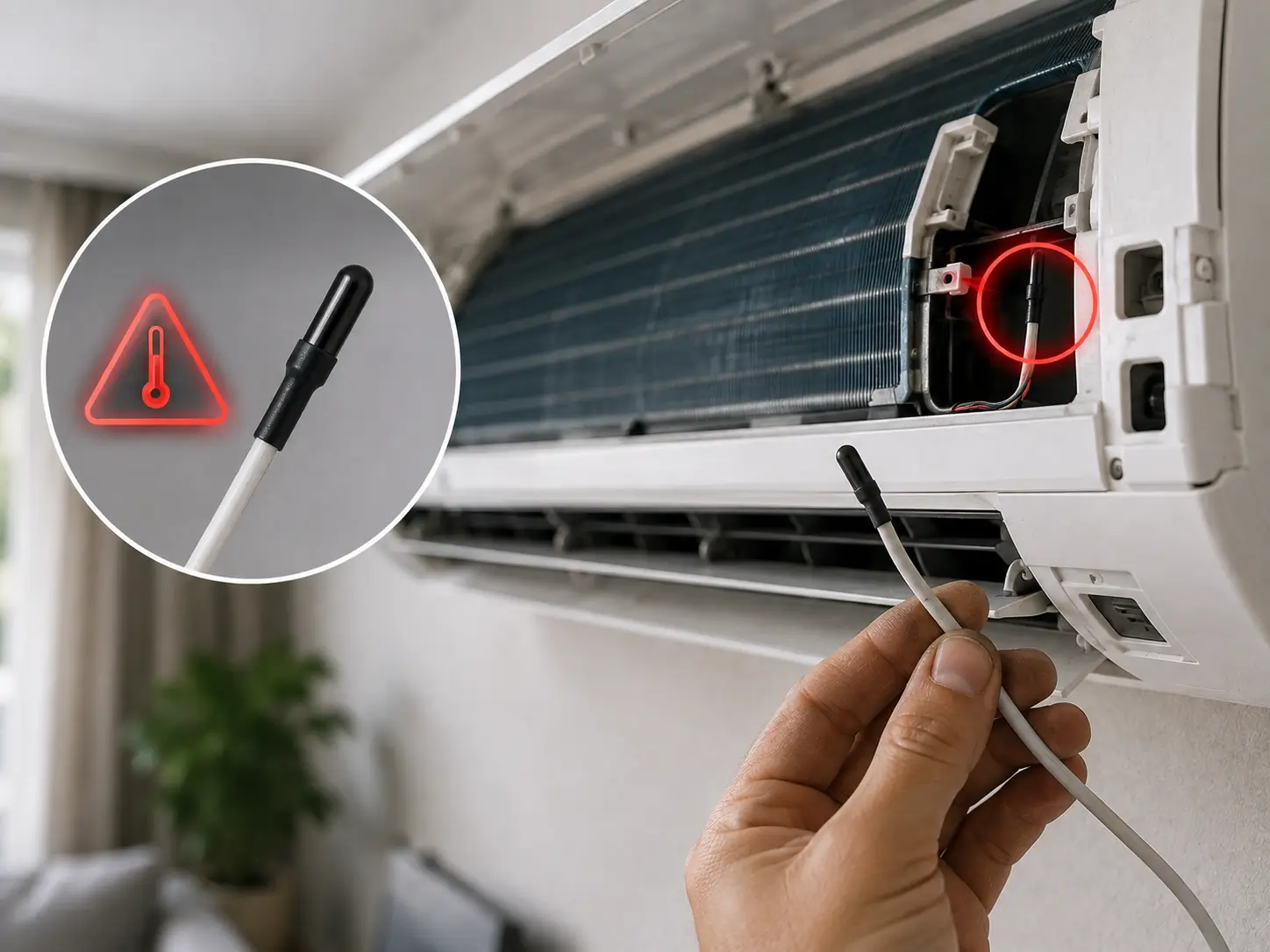
Technician testing an AC temperature sensor and its wiring

Symptoms

  • AC never stops even when room reaches 18°C
  • Shuts off before cooling the room
  • Room temperature stays far from the set point despite long running
  • Compressor short-cycles (on/off rapidly)
  • A sensor-fault code on the display (varies by brand)

Likely causes

  1. Room thermistor failed
  2. Evaporator coil thermistor failed
  3. Sensor wire broken internally
  4. PCB can't read the sensor signal
  5. Humidity damage to the sensor

Safe checks before you call a technician

  1. Try a hard reset Cut power for 10 minutes and restart. Sometimes the PCB recovers the sensor reading after a reset.
  2. Compare the room temperature Place a thermometer in the middle of the room, away from the airflow, and compare it with the room reading if your remote or display shows one (most displays show the set temperature, not the room temperature). A large, persistent gap is a reason for a technician check, not proof that the sensor is faulty.

When to stop and call a technician

  • The room stays far from the set temperature after long running
  • Compressor cycles on/off every few minutes
  • The sensor code returns after a reset
  • Multiple codes alternating
  • Thermistor is small but replacing it requires opening the unit
Call now 16062

AC types where this fault is common: Split ACWindow ACCentral AC

How We Repair Your AC

5 clear steps from the first call to the written warranty.

  1. 01

    Call or WhatsApp

    Reach us on 16062 or WhatsApp 01050887010, and describe the issue in 30 seconds.

  2. 02

    Your visit is scheduled

    A specialist AC technician visits at the earliest available slot for your area — visits run daily from 9 AM to 9 PM.

  3. 03

    Diagnosis + Written Quote

    Diagnostics with a pressure gauge, multimeter, and leak detector — followed by a written price set after inspection.

  4. 04

    Repair with Original or Compatible Parts

    Parts from trusted suppliers, with a full test run confirming the issue is resolved before the technician leaves.

  5. 05

    6-Month Written Warranty

    A formal invoice and a 6-month written warranty on the repair and replaced part, subject to the warranty terms stated on the invoice.

Book Your AC Service Visit

Technician visits daily from 9 AM to 9 PM. Appointments depend on your area and available slots.

  • Diagnosis and a quote before any repair work
  • 6-month written warranty on the repair and the replaced part
  • Booking and enquiries: 16062
Call now16062

Your service details

We save your request and call you to confirm the appointment; WhatsApp opens with the details too.

Why Agent Site?

6 things that matter when you book an AC technician.

9–9daily

Fixed Visit Hours

Technician visits daily from 9 AM to 9 PM, and the 16062 hotline answers around the clock to book your earliest slot.

6-Month Written Warranty

A formal invoice and a written warranty on the repair and the replaced part — a document you can claim against throughout the warranty period.

Specialist AC Technicians

Technicians who specialize in air conditioners, read the fault codes and diagnose with instruments before any repair.

Every Brand

Unionaire, Tornado, Sharp, Carrier, Samsung, LG, Toshiba, Midea, Fresh, Gree, York, Haier, Panasonic, Hisense and more.

Transparent Pricing

The price is shared in writing before any work — no hidden fees, no surprises on the invoice.

7days

Full-Week Service

Available all week — Fridays and holidays included, with a 24-hour hotline.

How Our Pricing Works

The first question on every customer's mind — and our straight answer.

Our clear policy

The price is set after the on-site inspection

There is no fixed price for any fault before the technician sees the unit. This isn't to hide anything — it's because every fault has different components. A simple refrigerant leak is nothing like a compressor replacement, and weak cooling from a clogged filter is not the same as weak cooling from a burnt-out control board.

  • The technician diagnoses with instruments — not by sight
  • Written cost: spare part + technician labor
  • You decide — no obligation
  • The quoted price = the invoiced price
Calls 24h

Need a cost idea before the visit?

Call 16062 or WhatsApp — describe the problem and we explain the likely fix before the visit.

Call now WhatsApp — 01050887010

AC Maintenance Guide — From Our Technicians

Field experience across every AC type, distilled: when to schedule maintenance, and when a fault needs a technician right away.

The right seasonal maintenance schedule

Before summer (March–April): a full wash of both units + a refrigerant pressure and electrical check — it reduces peak-summer breakdowns. After the season (October): clean the outdoor unit, and if it will sit unused all winter, cover only the top with a breathable cover. In between, clean the air filter yourself every two weeks during daily use.

What does an AC wash actually change?

A dust-clogged evaporator makes the compressor run much longer to reach the same cooling — meaning a higher electricity bill and a shorter unit life. A deep wash restores cooling efficiency and stops bad odors and water dripping from the indoor unit.

When do you need a refrigerant recharge?

Refrigerant does not run out on its own — a low charge means a leak. The signs: weak cooling, ice on the pipes, or a faint hissing sound. Recharging without fixing the leak is money wasted, which is why our technicians check with a leak detector before any recharge.

Habits that cut your electricity bill

Set the thermostat to 24–26°C (each degree lower means higher consumption), use the fan’s Auto mode, close unused rooms, and clean the filter regularly. If the unit is old and trips often, periodic maintenance costs less than repeated repair bills.

When to call a technician immediately

A burning smell or sparks from the unit, a very hot plug or cable, a sudden loud metallic noise, or the power tripping whenever the AC starts — these are electrical faults you should not try to fix yourself. Switch the AC off at the breaker and call 16062.

Not sure what the fault is?

Browse the common faults with causes and safe checks — or call and we diagnose it by phone.

AC Service — Frequently Asked Questions

The questions that come to mind before requesting AC service.

My AC runs but does not cool — what should I do?

The most common causes: a clogged filter, low refrigerant due to a leak, or a compressor problem. Clean the filter first; if cooling is still weak, see the "not cooling" fault section or call 16062.

How often should my AC be serviced?

Once before summer (wash + refrigerant and pressure check) and once after the season. If usage is heavy or your area is dusty, clean the air filter yourself every two weeks in between.

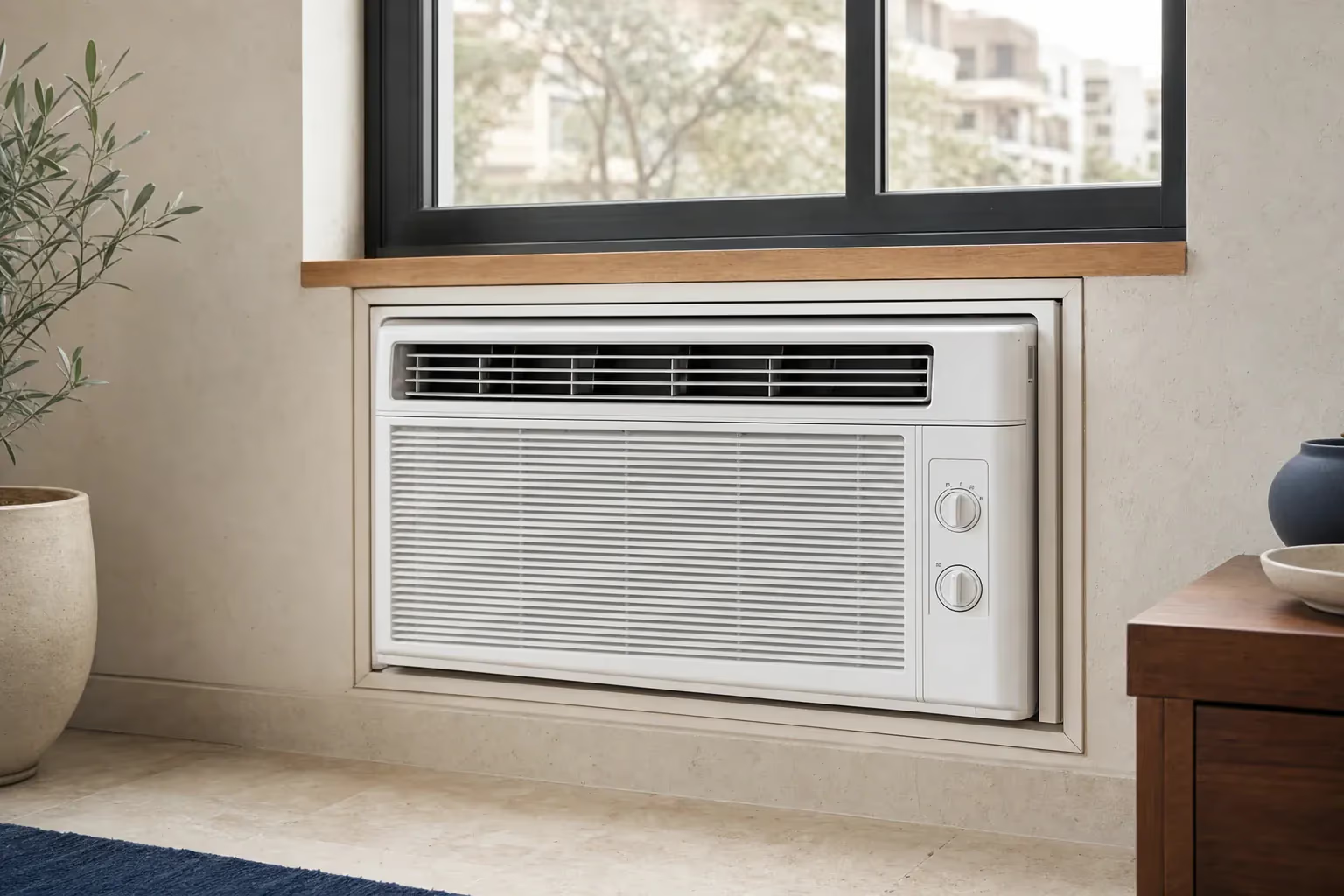
Do you repair window and desert units, or only split ACs?

Every type: split, window, central (ducted/VRF), and desert coolers — with specialist technicians and the right parts for each.

How much does AC repair cost?

The cost is determined after the on-site inspection, because every fault has different components. The technician visits, inspects, and gives you a written price before any work starts — no surprises.

When does the technician arrive?

Visits run daily from 9 AM to 9 PM, at the earliest available slot for your area. Call 16062 (the line answers around the clock) and we will book your visit.

Do you service every AC brand?

Yes. We repair Unionaire, Tornado, Sharp, Carrier, Samsung, LG, Toshiba, Midea, Fresh, Gree, York, Haier, Panasonic, Hisense, and more.

Do you handle new installations or repairs only?

Both. We install new ACs (split, window, central) with insulated copper lines, a metal bracket, and a full test run before handover.

Is there a warranty on the service?

Yes — a 6-month written warranty on the repair and the replaced part, with a formal invoice. If the same fault returns or the replaced part fails within the 6 months, we fix it at no cost under the warranty terms on your invoice.

Can you charge refrigerant for every type?

Yes — we charge the type on your unit's rating label (R-410A, R-32, R-22 and others). The technician locates and fixes the leak before charging, because refrigerant does not run out on its own.

What are the key signs my AC needs service?

Weak cooling, unusual noise, water leaks, bad odors from the fan, a sudden spike in your electricity bill, or a compressor that cuts out quickly.

Do you work on Fridays and holidays?

Yes — visits are available 7 days a week including Fridays and official holidays, from 9 AM to 9 PM.

The same technician on every visit?

For clients on a maintenance contract — yes. For one-off visits, the available technician closest to your area.

Split vs. window vs. central — what is different?

Split units have two parts, with typical faults in the compressor and capacitors. Window units are a single unit with simpler faults. Central / VRF systems have ducts and need a specialist technician.

A white wall-mounted split air conditioner in a light limestone living room
Hotline 16062 answers calls around the clock

AC not cooling?

A specialized AC technician at the earliest available slot, diagnosis with a clear price, and a 6-month written warranty.

← All devices