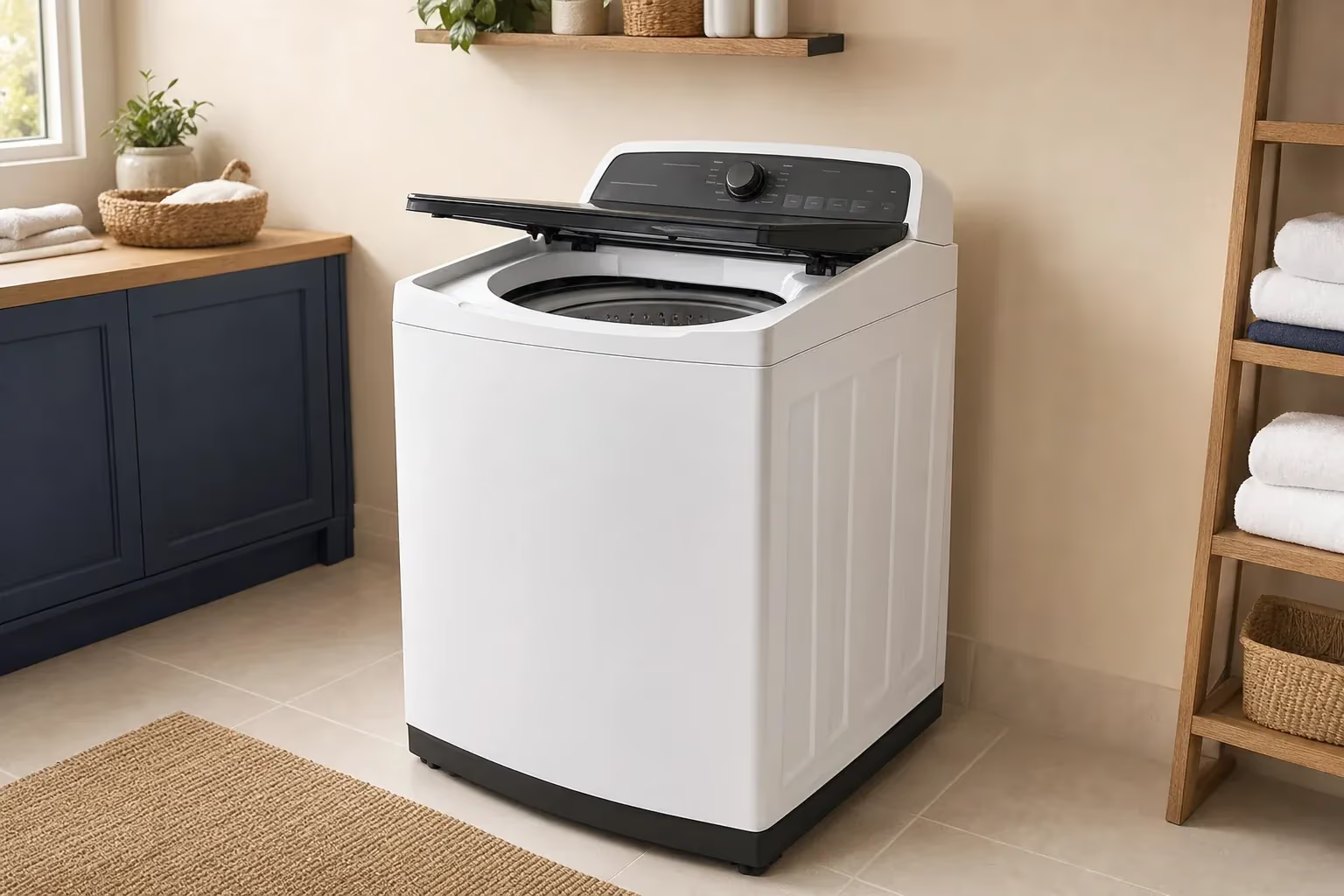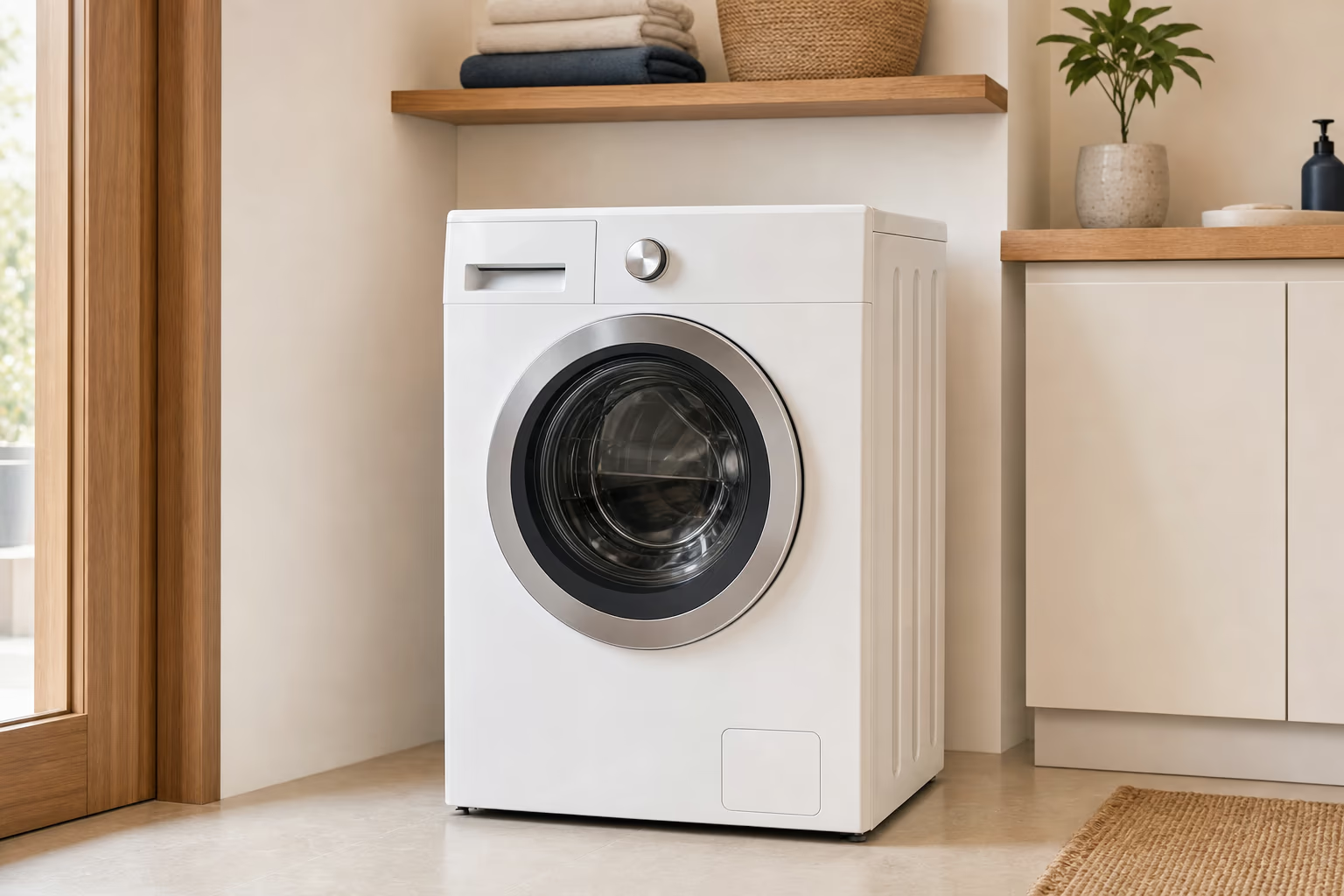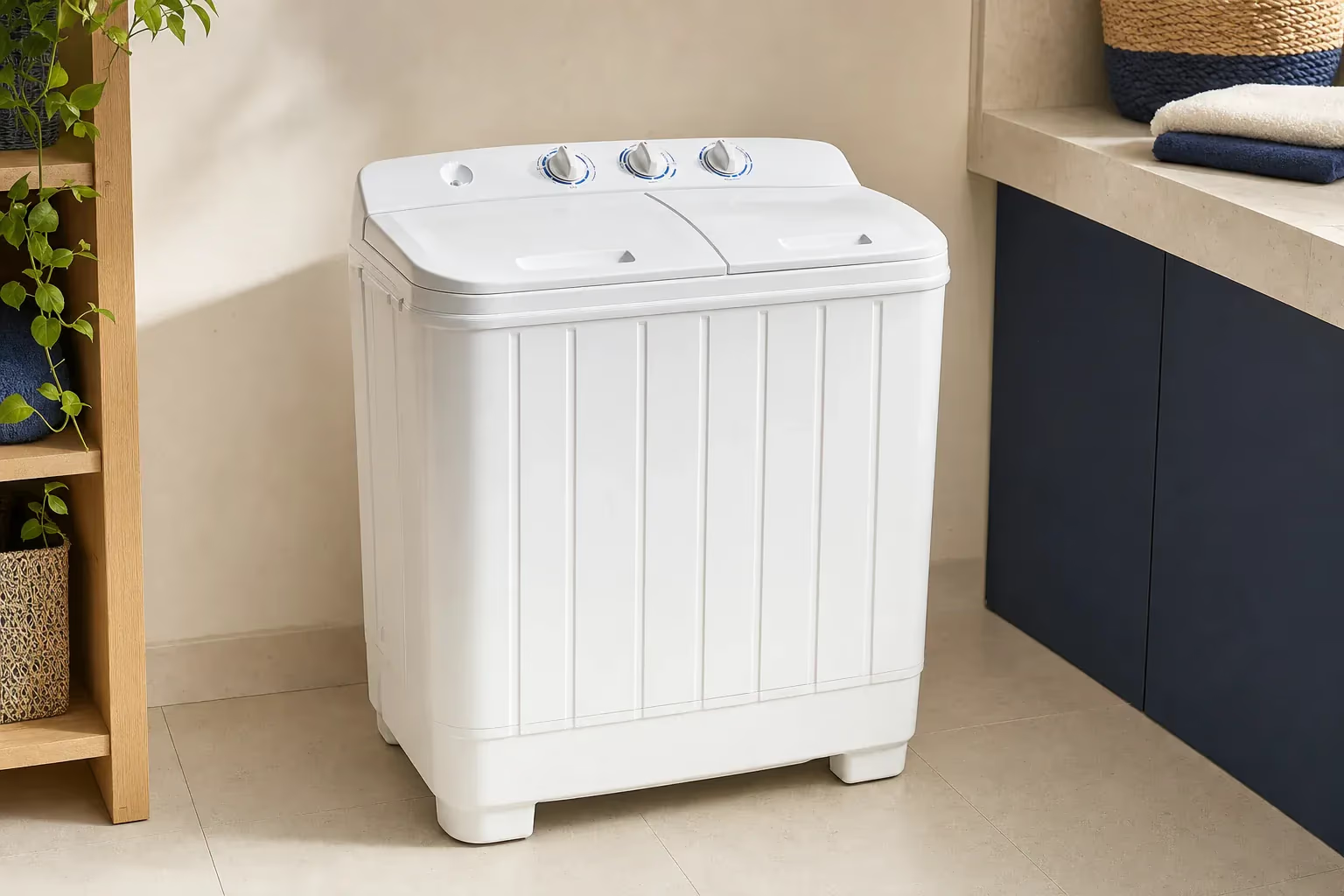
A white front-loading washing machine in a bright realistic laundry nook
Calls 24h · Visits 9 AM–9 PM

Washing Machine Repair in Egypt

Automatic and semi-auto washing machine repair with warranty

6-month written warranty on the repair and the replaced part

Agent Site is an independent repair center — not the manufacturer's authorized service or warranty provider.

Written warranty6 months
Formal invoiceOn every visit
Spare partsOriginal or compatible
Visit hoursVisits 9 AM–9 PM

Repair and installation for automatic and semi-automatic, front-load and top-load washers — with original or compatible spare parts, a formal invoice, and a 6-month written warranty for all major brands in the Egyptian market.

Washing Machine Services

From fault diagnostics to installing a new washer, deep drum cleaning, or part replacement — all in one place with a documented warranty.

Book a service

Fault Repair

Diagnosis with measuring instruments: not spinning, water leaks, loud noise, a door that won't open, error codes, or a motor that keeps cutting out.

See common faults
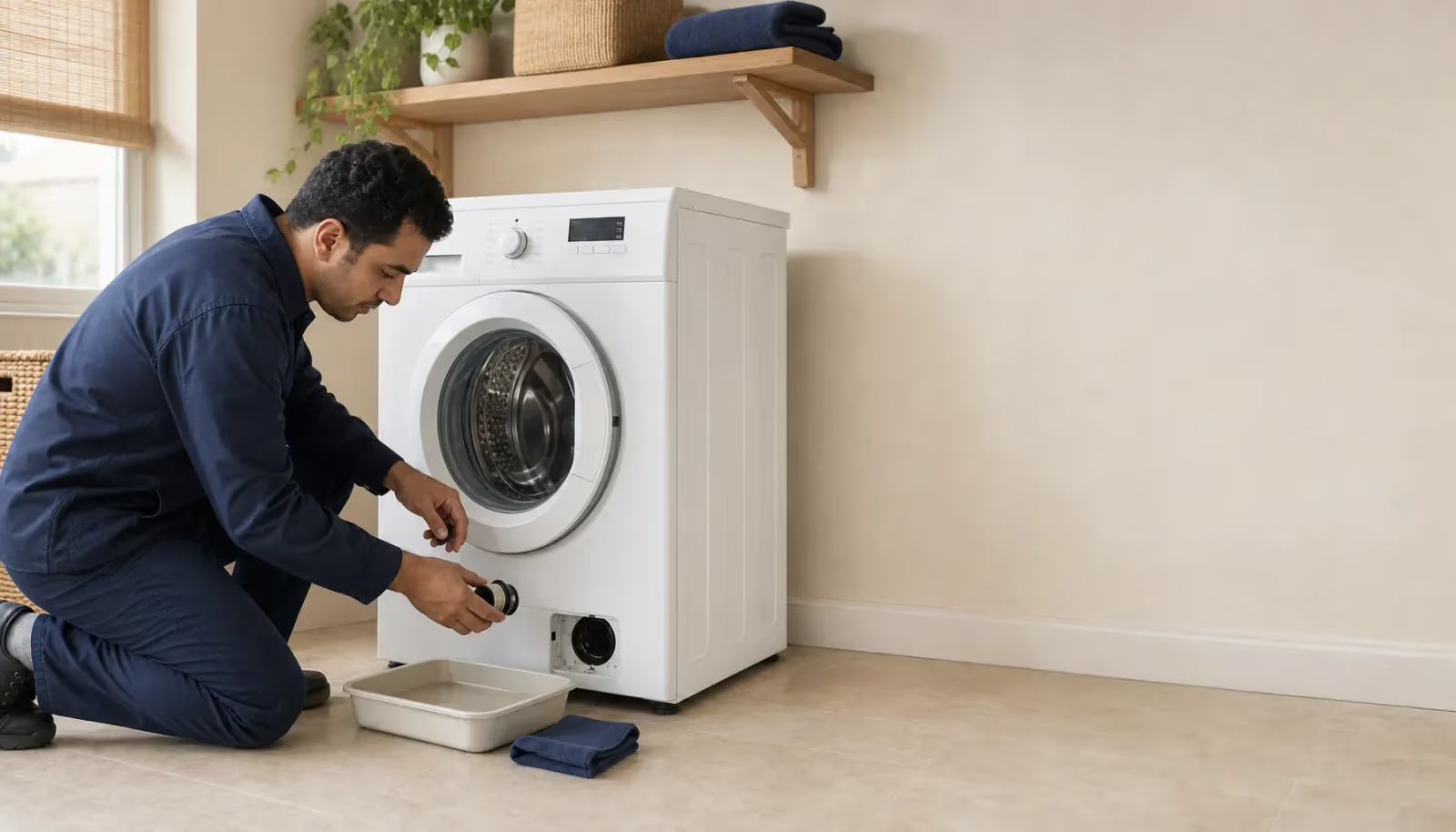
New Washer Installation

Front-load or top-load installation with leg leveling, water and drain hookup, and a full test run.

Drum & Pump Cleaning

Deep cleaning of drum scale, the pump filter, and removal of odors and mildew.

Belts & Bearings Replacement

Motor belt, drum bearings, door gasket, and any component causing noise or leaks.

Periodic Washer Check-Up

A check of the hoses, door gasket, pump filter and shock absorbers, plus a drum clean — fewer sudden breakdowns.

For homes

Original or Compatible Parts

Motors, pumps, control boards, gaskets, belts, and sensors for all washer brands — and we tell you the part type before installing it.

Most Common Washer Repairs

The repairs we carry out almost daily on washers in Egyptian homes.

Replacing a burnt-out washer heater

A new heating element + a polyphosphate filter to reduce scale.

Control board repair

Repair or replacement of the electronic control board, plus advice on a voltage stabilizer if your supply fluctuates.

Bearings + oil seal replacement

A full overhaul that ends the loud spin-cycle noise.

Unclogging the drain pump

Removing trapped coins and lint buildup.

Solenoid valve replacement

The electromagnetic water-inlet valve, with an original or compatible part.

Treating body rust

Professional bodywork + primer + enamel paint.

Washing Machine Types

Pick your washer type to see its common faults and service details.

Washing Machines brands

Service details for your appliance brand

52 brands
All supported brands 52

Washing Machines service areas

We cover Cairo, Giza, Qalyubia, Alexandria, Matrouh (North Coast), Sharqia, Gharbia, Dakahlia. Not sure about your area? Call 16062 and we confirm before booking.

  • Cairo
  • Giza
  • Qalyubia
  • Alexandria
  • Matrouh (North Coast)
  • Sharqia
  • Gharbia
  • Dakahlia

Common Washing Machine Faults

Before calling, check whether your fault is listed below — each one shows its likely causes and safe checks you can do first.

Heater burnt out by hard-water scale

Technician Laundry coming out cold on hot programs? In Egypt the usual cause is hard-water scale on the heater. The signs, and when to call a technician.

A burnt-out heater is one of the most common faults on front-load washers in Egypt, and hard-water scale is the usual cause. Water in many governorates is rich in minerals; when it is heated, they settle on the heater as an insulating white layer. That layer stops heat reaching the water, so heating takes longer and uses more electricity, and the element itself overheats until it burns out.

Symptoms

  • Laundry comes out cold on hot programs
  • Cycles take longer than usual
  • The breaker trips when a hot program starts
  • Visible white scale in the drum or the detergent drawer
  • Clothes feel rough and have white spots (a sign of hard water)
  • A heating error code on the display (such as F19 or E19 on Bosch)

Likely causes

  1. Hard water — the mineral content is high in many governorates
  2. Frequent hot washes without a polyphosphate filter
  3. Skipping the Tub Clean cycle with a washer cleaner
  4. Too much detergent, or powders not made for automatic washers
  5. The heater reaching the end of its normal life

Safe checks before you call a technician

  1. Look for signs of scale Unplug the washer, pull out the detergent drawer and look inside the opening and the drum. A thick white layer means your water is hard and the heater is probably scaled — mention it to the technician.
  2. Observe, don't test Just note whether laundry comes out cold on hot programs and tell the technician. If the breaker trips or you suspect the heater, do not run hot programs — unplug the washer and call a technician

When to stop and call a technician

  • Laundry is cold on every hot program
  • The breaker trips on hot programs — leave it off and unplug the washer
  • The technician replaces the heater, cleans off the scale and can fit a polyphosphate filter to reduce repeat failures
Call now 16062

Washing Machine types where this fault is common: Front-Load Washing Machine

Control board burnt out by voltage surges

Technician Dead display or unresponsive buttons after a power cut? The control board was probably hit by a voltage surge. When a restart helps and when you need a technician.

The control board runs every stage of the program on an automatic washer. In Egypt it is a common failure because of frequent power cuts. The danger is not the outage itself but the voltage spike that can hit the moment power returns: the capacitors and processor on the board are not built to take it and can fail instantly.

Symptoms

  • The washer is dead and the display is dark
  • The buttons do not respond
  • The program gets stuck at one stage
  • Random error codes that come and go
  • The washer starts or stops on its own
  • A burning electrical smell
  • Intermittent electrical crackling

Likely causes

  1. A voltage spike when power returns after a cut — one of the most common causes in Egypt
  2. No voltage stabilizer or surge protector
  3. Heavy appliances on the same circuit
  4. High humidity when the washer is in a bathroom
  5. Corrupted memory data (EEPROM) from voltage fluctuations
  6. Loose board connectors or cables

Safe checks before you call a technician

  1. Unplug for half an hour Unplug the washer completely for 30 minutes, then plug it back in and try again. This sometimes clears minor software glitches.
  2. Check the breaker once If the washer's breaker in the fuse box has tripped, reset it once only. If it trips again there is a short circuit — leave it off, unplug the washer and call a technician. If there is a burning smell, do not reset the breaker at all

When to stop and call a technician

  • The washer is still dead after being unplugged for half an hour
  • The breaker trips again after you reset it
  • You smelled burning
  • The technician repairs the board or replaces it with an original or compatible part, depending on the model
  • We recommend a voltage stabilizer and a surge protector to reduce repeat failures
Call now 16062

Washing Machine types where this fault is common: Front-Load Washing MachineTop-Load Washing Machine

Loud noise on spin — worn drum bearings

Technician A loud grinding noise on spin? The drum bearings and oil seal are usually worn. How to check safely, and why waiting makes the repair bigger.

A loud noise on spin is a common front-load fault, and in many cases the cause is worn drum bearings, the bearings that let the drum turn smoothly. The deeper cause is usually a failed oil seal, the rubber ring that keeps water away from the bearings. Once chlorine, scale and age crack the seal, water washes the grease out and the bearings slowly rust; the noise starts faint and grows into a loud grind on every spin.

Symptoms

  • A loud, jet-engine-like grinding on spin
  • The noise started faint and grew over time
  • Clear play or metallic clicking when you move the drum by hand
  • Dark brown water under the machine
  • Brown rust spots on light-coloured clothes
  • More vibration than usual

Likely causes

  1. A cracked oil seal from chlorine and scale — the root cause
  2. Water reaching the bearings and washing out the grease
  3. Rusted bearings
  4. Heavy bleach use
  5. Loads above the rated capacity
  6. The washer not standing level
  7. Normal wear with age

Safe checks before you call a technician

  1. Hand test on the drum With the washer unplugged and empty, move the drum up and down. Clear play or metallic clicking usually points to the bearings — the technician confirms, because a little movement is normal and worn shock absorbers can feel similar.
  2. Check under the washer With the washer unplugged, look at the floor underneath and behind it. Dark brown or black stains usually mean the oil seal is leaking and the bearings have started to rust.

When to stop and call a technician

  • A clear grinding noise on spin
  • Rust spots on clothes
  • A bearing change means taking the washer apart; it usually covers two bearings, an oil seal and fresh grease
  • On some models the tub is sealed, so the bearings are replaced together with the tub — the technician confirms the cost before starting
  • Waiting too long can damage the drum spider and make the repair bigger
Call now 16062

Washing Machine types where this fault is common: Front-Load Washing Machine

Washer stopped full of water — blocked drain pump

Simple Washer stopped mid-cycle full of water? A coin or button in the drain pump filter is the usual cause. Safe steps to clean the filter yourself.

A washer that stops mid-cycle full of water is alarming, but in Egypt the most common cause is not a real fault: the drain pump filter gets blocked by something from a pocket — a coin, button, key or hair clip — or by built-up lint. Cleaning it is easy and takes a few minutes if you follow the steps safely.

Symptoms

  • The washer stopped mid-cycle with water inside
  • A humming noise from underneath
  • The door stays locked
  • A drain error code on the display (such as E18 or F18 on Bosch, E20 on Electrolux and Zanussi, OE on LG and 5E on Samsung)
  • The washer skips the spin stage
  • Water left standing in the drum for hours

Likely causes

  1. A coin in the drain pump filter (the most common)
  2. A button or pin from a pocket
  3. A hair clip or small earring
  4. Built-up lint
  5. Hardened detergent or grease residue
  6. Scale in the drain hose, or a kinked hose
  7. A filter that has not been cleaned for years
  8. A failed drain pump (rarely)

Safe checks before you call a technician

  1. Step 1: Cut the power and the water Unplug the washer and close the water tap. If a hot program was running, wait until the water cools before opening the filter. Required before any other step
  2. Step 2: Get a tray and towels ready A lot of water will come out — put a shallow tray and towels under the filter.
  3. Step 3: Open the filter cover On front-loaders the filter is usually behind a small cover at the bottom front. On top-loaders check the manual — many have a lint filter inside the drum.
  4. Step 4: Unscrew the filter slowly Turn the filter anticlockwise slowly and water will start to flow. When the tray is full, close it a little, empty the tray and carry on.
  5. Step 5: Clean the filter Take the filter out and rinse off any coins and lint under running water.
  6. Step 6: Look at the pump impeller Shine a torch into the opening and gently turn the impeller with a finger: it normally turns with a light, stepped resistance. If it will not turn, something is probably jammed — do not use sharp tools; call a technician.
  7. Step 7: Refit and test Refit the filter and close it firmly, open the water tap, plug the washer in and run a rinse or drain program.

When to stop and call a technician

  • After cleaning, the pump still hums without draining
  • The pump impeller will not turn
  • The error code comes back
  • A leak from the drain hose or the filter housing
  • A metallic grinding noise from the pump
Call now 16062

Washing Machine types where this fault is common: Front-Load Washing MachineTop-Load Washing Machine

Door won't open after the cycle

Simple Front-loader finished but the door won't open? Usually water is left inside or the door lock has failed. Safe steps, in order.

A door that won't open after the cycle is a common front-load problem. It usually comes down to one of two things: (1) water is still inside, so the lock stays shut to stop it flooding the floor — the most common; or (2) the door lock itself has failed. The fix depends on which one it is.

Symptoms

  • The display shows End but the door stays locked
  • The lock clicks but does not release
  • The door moves slightly when pulled
  • A door or lock error code on the display (it varies by brand)
  • Water visible inside the drum
  • A bad smell and standing water

Likely causes

  1. Water left inside, so the lock stays engaged
  2. A failed door-lock solenoid
  3. A disconnected door-lock wire
  4. The board not sending the unlock signal
  5. Mechanical damage to the latch
  6. A faulty door switch

Safe checks before you call a technician

  1. Step 1: Run a drain program If the washer has a Drain or Spin program, run it: it pumps the water out and the lock usually releases a few minutes later.
  2. Step 2: Power cycle Unplug the washer for 5 minutes and plug it back in. This resets the board and sometimes releases the lock.
  3. Step 3: Drain through the filter Unplug the washer. If a hot program was running, wait until the water cools. Put a tray and towels under the drain filter (bottom front) and unscrew it slowly until the water is out — the lock usually releases afterwards.
  4. Step 4: Manual release cord Many models have a manual release cord or tab next to the drain filter. With the washer unplugged and the water drained, pull it gently. Never force the door or open it while there is water inside

When to stop and call a technician

  • The water is drained but the door is still locked
  • There is no manual release, or it does not work
  • Replacing the door lock is usually a simple repair
  • The technician checks the wiring and the board
Call now 16062

Washing Machine types where this fault is common: Front-Load Washing Machine

Washer not filling — inlet (solenoid) valve

Medium Washer not filling, or filling slowly? Usually the inlet-valve filter is clogged with scale, or the valve itself has failed. Safe checks before you call.

The electromagnetic inlet valve (solenoid valve) lets water into the washer, and in Egypt it often fails because of scale. The most common cause is the mesh filter at the valve inlet clogging with limescale. A second cause: the rubber diaphragm inside the valve stiffens with scale and stops sealing, so water keeps trickling into the drum even when the washer is off.

Symptoms

  • The program starts but no water comes in
  • Water enters very slowly
  • A humming noise from the top of the washer
  • A water-inlet error code (such as 4E on Samsung or IE on LG)
  • Water reaches the detergent drawer without flushing it
  • Water trickles into the drum while the washer is off

Likely causes

  1. A filter clogged with scale (the most common)
  2. A stiff diaphragm that no longer seals
  3. A burnt valve coil
  4. Low water pressure
  5. The tap not fully open
  6. A kinked inlet hose
  7. A disconnected valve wire
  8. The control board not signalling the valve

Safe checks before you call a technician

  1. Step 1: Check the tap and the pressure Open the tap fully and try a nearby tap: if the flow there is weak too, the problem is the water pressure in the building, not the washer.
  2. Step 2: Clean the valve filter Unplug the washer and close the tap, then unscrew the inlet hose at the back. There is a small mesh filter in the valve opening: take it out, rinse it under running water and put it back.
  3. Step 3: Air test With the washer unplugged and the hose off, blow into the valve opening. If air passes, the valve is not sealing and needs a technician. If air is blocked, that is normal; testing whether the valve opens needs a technician with a meter.

When to stop and call a technician

  • The filter is clean but filling is still slow
  • The valve keeps dripping
  • The error code comes back
  • The technician replaces the valve with an original or compatible part, depending on the model
  • A polyphosphate filter on the inlet hose reduces repeat clogging
Call now 16062

Washing Machine types where this fault is common: Front-Load Washing MachineTop-Load Washing Machine

Failed capacitor — the motor hums but won't turn

Medium Strong humming but the drum won't turn? The motor capacitor has usually failed, especially on twin-tub and top-load washers. A simple replacement that protects the motor.

The start/run capacitor is a small part on washers with a standard induction motor (not an inverter motor) — most twin-tub models and many top-loaders. It gives the motor the push it needs to start turning. Low and unstable voltage weakens or swells it over time. The clearest sign is a strong hum as the washer starts: the motor is getting power and trying to turn, but without the capacitor it cannot.

Symptoms

  • A strong, muffled hum as soon as the cycle starts
  • The drum does not turn at all
  • The washer starts and then stops suddenly
  • The drum turns easily by hand with the washer unplugged (so it is not a mechanical jam)
  • A faint burning smell after several attempts
  • The breaker trips after a start attempt

Likely causes

  1. Voltage fluctuations — one of the most common causes in Egypt
  2. Low voltage in crowded areas
  3. Normal ageing of the capacitor
  4. Heat and humidity when the washer is in a bathroom
  5. A previous replacement with the wrong rating (microfarads)

Safe checks before you call a technician

  1. Don't keep restarting while it hums Every failed start draws a high current and heats the motor. After two or three attempts, stop and unplug; carrying on can burn out the motor itself, and a capacitor costs far less than a motor. Do not remove the capacitor yourself — it can hold an electrical charge even with the washer unplugged

When to stop and call a technician

  • You hear humming and the drum will not turn — stop the washer and call a technician
  • The technician tests the capacitor with a meter and replaces it with an original or compatible part of the same rating (microfarads)
  • A voltage stabilizer is recommended to reduce repeat failures
Call now 16062

Washing Machine types where this fault is common: Top-Load Washing MachineSemi-Auto Washing Machine

Broken drum spider (older front-loaders)

Technician Loud metallic banging on spin? The aluminium drum spider may have corroded and broken. Stop using the washer and call a technician.

The drum spider is a three-armed metal bracket fixed to the back of the inner drum on front-loaders; it connects the drive shaft to the drum. It rarely breaks from mechanical stress alone, but over the years scale and detergent residue corrode the aluminium and make it brittle, and an unbalanced load on spin can then snap one of its arms.

Symptoms

  • Loud, repeated metallic banging on spin
  • The drum shakes hard and hits the outer tub
  • The washer jumps during spin
  • Grey or white marks on clothes
  • Rattling when you move the drum by hand with the washer unplugged

Likely causes

  1. Aluminium corrosion from scale and detergent residue
  2. Detergent build-up between the spider arms
  3. Skipping drum-clean cycles
  4. Repeated unbalanced loads
  5. Heavy bleach use
  6. The age of the washer

Safe checks before you call a technician

  1. Prevention: drum-clean cycle Every month or two, run the Tub Clean cycle on an empty washer with a dedicated washer cleaner, as your model's manual recommends. It reduces scale and detergent build-up.

When to stop and call a technician

  • Metallic banging means stop using the washer immediately
  • A broken spider can tear the outer tub and make the damage worse
  • Replacement means fully dismantling the washer and fitting an original or compatible spider, depending on the model
  • On some models the cost approaches a new washer — the technician tells you before starting
Call now 16062

Washing Machine types where this fault is common: Front-Load Washing Machine

Body rust from a damp bathroom installation

Technician Brown rust on the washer body? It usually comes from bathroom humidity. Treating rust early, when bodywork is needed, and what to do if you feel a tingle.

Rust on the washer body is not just cosmetic: once it reaches the wiring or the base, it can become an electrical hazard. In many Egyptian homes the automatic washer is installed in the bathroom, a small closed space with little ventilation. Shower steam, splashing water and chlorine cleaners create a damp environment where rust spreads.

Symptoms

  • Brown or red rust on the sides or back
  • Bubbles swelling under the paint
  • Paint flaking off with rust underneath
  • Holes through the metal (advanced cases)
  • Rust around the base
  • A tingle or shock when you touch the body — this is dangerous; see the first point below

Likely causes

  1. Installing the washer inside the bathroom (the most common in Egypt)
  2. Condensation from shower steam
  3. Chlorine cleaners splashing onto the body
  4. Not drying the body after washing
  5. Years without any preventive check

Safe checks before you call a technician

  1. Daily prevention After each wash, wipe the body with a dry cloth, keep the bathroom ventilated and cover the washer when it is not in use.
  2. Treat surface rust early Unplug the washer first. For small, early spots: clean them with fine sandpaper, wipe and dry well, then apply a rust-treatment pen or paint. Do not spray cheap paint over active rust — it will come back quickly

When to stop and call a technician

  • If you feel a tingle or shock when touching the washer: do not touch it with wet hands, switch off the breaker, unplug it and do not use it until a technician checks the earthing and wiring
  • Large swollen bubbles or flaking paint
  • Holes through the metal
  • The technician does the bodywork: removing the rust, filler, an anti-rust primer and a top coat
  • Move the washer out of the bathroom to a dry spot if you can
Call now 16062

Black mould in the front-load door gasket

Medium Black mould and a bad smell in the front-load door gasket? Regular cleaning and leaving the door ajar after every wash solve most cases.

On front-loaders, the door gasket has folds that trap moisture. Many people close the glass door as soon as the cycle ends, so moisture stays in the folds and lets black mould and odour-causing bacteria grow (the musty smell Egyptians call "makmaka"). Left alone, the rubber hardens and cracks, and water starts to leak from the front.

Symptoms

  • Black or green spots in the gasket folds
  • A musty smell when you open the door
  • Clean laundry comes out smelling bad
  • The gasket has lost its colour
  • Cracks in the rubber
  • Water leaking from the front of the washer
  • The door is hard to close tightly

Likely causes

  1. Closing the door right after the cycle (the most common)
  2. Not wiping and drying the gasket after washing
  3. Too much detergent
  4. Washing on cold programs only
  5. Fabric-softener residue
  6. Bathroom humidity
  7. Skipping the drum-clean cycle

Safe checks before you call a technician

  1. The golden rule After every wash, leave the door and the detergent drawer ajar for a few hours until the moisture dries. This prevents most mould problems.
  2. Weekly cleaning Unplug the washer, open the gasket folds by hand and wipe the black spots with a cloth and warm water with mild soap or a gasket cleaner, then dry thoroughly.
  3. Monthly drum-clean cycle Once a month, run the Tub Clean program on an empty washer with a dedicated washer cleaner, following your model's manual. It cleans the gasket, the drum and the hoses.

When to stop and call a technician

  • The mould will not come off with cleaning
  • Visible cracks in the gasket
  • Water leaking from the front
  • The technician replaces the gasket with an original or compatible part, depending on the model
Call now 16062

Washing Machine types where this fault is common: Front-Load Washing Machine

Washer keeps filling — the siphon effect

Simple Washer filling non-stop? The drain hose is usually fitted too low and siphons the water out. The fix is usually raising the hose to the height in the manual.

A washer that keeps filling and never stops usually has a siphon problem. In many cases it is not a fault but a badly fitted drain hose: the hose must be fixed at the height given in the manual (usually 60–90 cm above the floor). Left on the floor next to the drain, it lets water siphon out of the washer while it fills. The second cause is a faulty water-level sensor (pressostat).

Symptoms

  • Water keeps flowing in without stopping
  • The water level never reaches the mark
  • The water bill has gone up
  • Running water can be heard long after the program starts
  • The washer never moves on to the wash phase
  • Lots of water going down the drain while it fills

Likely causes

  1. The drain hose lying on the floor next to the drain (the most common)
  2. The hose sitting lower than the height in the manual, or its end submerged in the drain
  3. A faulty pressostat that is not signalling the board
  4. A blocked pressure-switch tube
  5. An inlet valve stuck open
  6. A faulty control board (rarely)

Safe checks before you call a technician

  1. Step 1: Measure the drain-hose height The manual gives the height (usually 60–90 cm above the floor). Measure the actual height; if it is lower, that is probably the cause.
  2. Step 2: Raise the hose Fix the hose with a plastic hook or tie it to the drain pipe at the height in the manual, and do not let its end sit in the water in the drain.
  3. Step 3: If it continues If the hose is raised and the problem continues, the pressostat has probably failed — this needs a technician.

When to stop and call a technician

  • The problem continues after raising the hose
  • A pressostat is usually an inexpensive part
  • The technician checks the pressure-switch tube and the inlet valve
  • Only rarely is the control board the cause
Call now 16062

Washing Machine types where this fault is common: Front-Load Washing MachineTop-Load Washing Machine

Weak or no spin — worn shock absorbers

Technician Clothes still soaking after the spin? Usually an unbalanced load, a washer that is not level or worn shock absorbers make it cancel the spin. Safe checks first.

A weak spin, or a washer that skips the spin, is a common daily annoyance. Mechanically, the shock absorbers or the springs holding the drum wear out, the drum shakes hard and the safety sensors stop the spin. The washer also detects when the load is unevenly spread — like a heavy blanket that soaked up water and bunched on one side — and cancels or retries the spin.

Symptoms

  • Clothes come out wet at the end of the cycle
  • The washer skips the spin stage
  • The drum shakes hard and hits the outer tub
  • The washer moves across the floor
  • An unbalance code on the display (UE on LG; UE or UB on Samsung)
  • It tries to spin, stops, and tries again

Likely causes

  1. Worn shock absorbers whose damping oil has dried out
  2. A broken spring (rarely)
  3. Repeated unbalanced loads
  4. A washer that is not level
  5. Transit bolts still fitted on a new or moved washer
  6. A damaged drum pulley
  7. A slack drive belt

Safe checks before you call a technician

  1. Check the washer is level Unplug the washer, place a spirit level on the top front-to-back and side-to-side, and adjust the feet until it is level and steady.
  2. Spread the load Do not wash a heavy blanket on its own — add a few towels to balance the load.
  3. Transit bolts On a new or recently moved washer, make sure the transit bolts at the back have been removed before use.

When to stop and call a technician

  • The washer is level, the load is spread and the problem continues
  • Replacing the shock absorbers means removing panels
  • Technicians replace the shock absorbers as a set to keep the drum balanced
Call now 16062

Washing Machine types where this fault is common: Front-Load Washing MachineTop-Load Washing Machine

F error codes on Electrostar and Indesit washers

Technician An F code on an Electrostar or Indesit washer? Its meaning depends on the board generation and model. Send a photo of the code and the model number.

Electrostar and Indesit washers show error codes that start with F (such as F03 or F05). The same code can mean different things depending on the board generation and model, so no single table fits every washer. The safest step: photograph the code and send it with the model number (from the label inside the door rim or on the back) on WhatsApp 01050887010, so the technician can identify it before deciding on any part.

Symptoms

  • An error code starting with F on the display
  • On many models without a display: lights flashing in a fixed pattern
  • The washer stopped mid-program
  • The code comes back after a restart

Likely causes

  1. A problem with the motor or its wiring
  2. The temperature sensor (NTC) or the heater
  3. A blocked or faulty pressure switch
  4. A blocked or failed drain pump
  5. The door lock
  6. Corrupted board memory (EEPROM) from voltage fluctuations

Safe checks before you call a technician

  1. Step 1: Record the code and the model Photograph the code and note the full model number from the label.
  2. Step 2: Try a restart Unplug the washer for 30 minutes and plug it back in. A one-off glitch sometimes clears; if the code returns, it needs a technician.

When to stop and call a technician

  • The code returns after a restart
  • The washer stopped with water inside or the door locked
  • The technician reads the code for your board generation and identifies the part before replacing anything
Call now 16062

Washing Machine types where this fault is common: Front-Load Washing Machine

Gearbox or clutch failure — top-load washer

Technician Top-loader washes but won't spin, or water keeps going in and out without washing? Usually the gearbox, the clutch or the water-level sensor.

On top-load washers, the characteristic failure is the gearbox, which turns the motor's drive into a back-and-forth wash motion and then into fast spinning, or the clutch that switches between the two. Another recurring fault is water going in and out continuously, usually caused by the water-level sensor (pressostat).

Symptoms

  • The washer washes but will not spin
  • A loud grinding noise from underneath
  • Water goes in and out continuously without washing
  • The motor runs but the agitator or pulsator does not turn
  • Dark oil leaking from underneath
  • Strong, unusual vibration

Likely causes

  1. Gearbox wear after years of use
  2. Gearbox oil leaking and worn gears
  3. A worn clutch
  4. A faulty pressostat
  5. A blocked pressure-switch tube
  6. A broken motor coupler
  7. Repeated overloading

Safe checks before you call a technician

  1. Don't run it if it grinds underneath Running with a damaged gearbox can harm the motor. Stop the washer and unplug it — it keeps the repair cost down.

When to stop and call a technician

  • Grinding from underneath — stop the washer and call a technician
  • A gearbox is expensive and on some models approaches the price of a new washer
  • The technician tells you whether the repair is worth it before starting
  • A pressostat is usually an inexpensive part
Call now 16062

Washing Machine types where this fault is common: Top-Load Washing Machine

Too much foam and overflowing suds

Simple Lots of foam coming out of your front-loader? Usually a powder not made for automatic washers, or too much of it. Simple fixes to try yourself.

Over-sudsing is a common problem in Egypt, especially with front-loaders. The usual cause is using regular or hand-wash powder in an automatic washer that needs low-foam detergent. A second cause: hard-water minerals stop the powder dissolving properly, so the foam stays thick.

Symptoms

  • Foam coming out of the detergent drawer or the door
  • Undissolved powder left on clothes
  • The washer stops suddenly with a suds code (such as Sud or SUdS on Samsung)
  • Foam spilling onto the floor
  • Rough clothes with powder marks
  • Rinsing takes much longer
  • A strong detergent smell after drying

Likely causes

  1. Powder not made for automatic washers (high foam) — the most common
  2. More powder than needed
  3. Hard water stopping the powder dissolving
  4. Built-up fabric-softener residue
  5. Using soap or hand-wash powder
  6. Very hot water making the detergent foam more

Safe checks before you call a technician

  1. Step 1: Run an extra rinse Run a rinse program without detergent; clean water breaks down the excess foam.
  2. Step 2: Use low-foam detergent only Buy detergent labelled "Low Foam" or "for automatic washers", or with the front-loader symbol, and never use hand-wash powder.
  3. Step 3: Use less Stick to the dose on the pack for your load size — more detergent does not clean better, it only makes foam.
  4. Step 4: Clean the detergent drawer Take out the detergent drawer and wash off hardened powder and softener residue with warm water.

When to stop and call a technician

  • The foam persists after changing the detergent
  • Hardened softener inside the drawer channels
  • A polyphosphate filter reduces the effect of hard water and eases the problem
Call now 16062

Washing Machine types where this fault is common: Front-Load Washing MachineTop-Load Washing Machine

How We Repair Your Washer

5 clear steps from the first call to the written warranty.

  1. 01

    Call or WhatsApp

    Reach us on 16062 or WhatsApp 01050887010, and describe the issue in 30 seconds.

  2. 02

    Your visit is scheduled

    A washer technician visits at the earliest available slot for your area — visits run daily from 9 AM to 9 PM.

  3. 03

    Diagnosis + Written Quote

    Diagnostics with a Multimeter, PCB tester, and measurement tools — followed by a written price set after inspection.

  4. 04

    Repair with Original or Compatible Parts

    Parts from trusted suppliers, with a full test cycle confirming the washer runs correctly across every program phase.

  5. 05

    6-Month Written Warranty

    A stamped formal invoice + a written warranty. If the same fault returns or the replaced part fails within 6 months, we fix it free under the written warranty.

Book your washing machine service

at the earliest available slot for your area

  • 6-month written warranty on the repair and the replaced part
  • Technician visits daily from 9 AM to 9 PM
Call now16062

Your service details

We save your request and call you to confirm the appointment; WhatsApp opens with the details too.

Why Agent Site for Washer Service?

6 things that matter when you book us.

9–9daily

Fixed Visit Hours

Technician visits daily from 9 AM to 9 PM, and the 16062 hotline answers around the clock to book your earliest slot.

6-Month Written Warranty

A formal invoice and a 6-month written warranty on the repair and the replaced part — a document you can claim against throughout the warranty period.

Specialist Washer Technicians

Technicians who know the fault patterns and error codes of the washer brands common in Egypt.

The Brands Common in Egypt

Samsung, LG, Bosch, Beko, Electrolux, Indesit, Kiriazi, Haier, Hisense, Midea, Candy and more.

Transparent Pricing

The price is written and shared before any work — no hidden fees, no invoice surprises.

7days

Full-Week Service

Available all week — including Fridays and holidays, with a 24-hour hotline.

Pricing Transparency

The first question on every customer's mind — here's our straight answer.

Our clear policy

The price is set after technical inspection

There's no fixed price for any fault before the technician sees the washer. This isn't to hide anything — it's because every fault has different components. Cleaning a pump filter isn't the same as replacing a motor, and a door gasket issue isn't the same as a fault on the electronic control board.

  • The technician diagnoses with instruments — not by sight
  • Written cost: spare part + technician labor
  • You decide — no obligation
  • The quoted price = the invoiced price
Calls 24h

Need a cost idea before the visit?

Call 16062 or WhatsApp — describe the problem and we explain the likely fix before the visit.

Call now WhatsApp — 01050887010

Frequently Asked Questions

The questions that come to mind before requesting washer service.

How much does washing machine repair cost?

The cost is determined after the technical inspection. The technician visits, inspects, and gives you a written price before any work starts — no surprises on the invoice.

When does the technician arrive?

Visits run daily from 9 AM to 9 PM, at the earliest available slot for your area. Call 16062 (the line answers around the clock) and we will book your visit.

Do you service every washer brand?

Yes — Samsung, LG, Bosch, Beko, Electrolux, Indesit, Kiriazi, Haier, Hisense, Midea, Candy, Ideal Zanussi, Toshiba, and many others.

Do you install new washing machines?

Yes. Installation and connection for automatic washers (front-load and top-load) including leg leveling, water and drain hookup, electrical connection, and a test run.

Is there a warranty on the service?

A 6-month written warranty on the repair and the replaced part, on a formal invoice. If the same fault returns or the replaced part fails within that period, we fix it free under the written warranty.

My washer smells bad — what's the cause?

The most common cause is residue and mildew buildup in the drum and pump. A deep clean + an empty cycle with a specialized cleaner usually solves it.

What are the key signs a washer needs service?

Water leaks, not spinning, unusual loud noise, the door not opening, error codes on the display, severe vibration, the washer not heating water, or a sudden spike in your electricity bill.

What most often burns out a washer heater in Egypt?

Hard-water scale forms an insulating layer around the heater, so heat cannot reach the water and the element overheats until it burns out. The fix: replace the heater; a polyphosphate filter reduces repeat failures.

Are control boards often damaged by power fluctuations in Egypt?

Yes — voltage spikes when power returns after an outage are one of the most common causes of control-board failure in Egypt. We recommend a voltage stabilizer and a surge protector.

Do you work on Fridays and holidays?

Yes — visits are available 7 days a week including Fridays and public holidays, from 9 AM to 9 PM.

The same technician on every visit?

Not necessarily. We send the available technician closest to your area, and the repair and warranty details are written on your invoice.

Front-load vs. top-load — what is the difference?

A front-loader usually uses less water and is gentler on clothes. A top-loader usually has shorter cycles and costs less. Each type has its own service details — see front-load washer repair and top-load washer repair.

Hotline 16062 answers calls around the clock

Washer not working?

A specialized washer technician at the earliest available slot, diagnosis with a clear price, and a 6-month written warranty.

← All devices