
Full removal and washing of the unit plus cleaning the evaporator and condenser
Air Conditioners
Window AC Repair
Window AC repair: vibration, loud noise and water leaks, capacitor and fan replacement, and a full unit wash. Clear price first and a 6-month written warranty.
Agent Site is an independent repair center — not the manufacturer's authorized service or warranty provider.
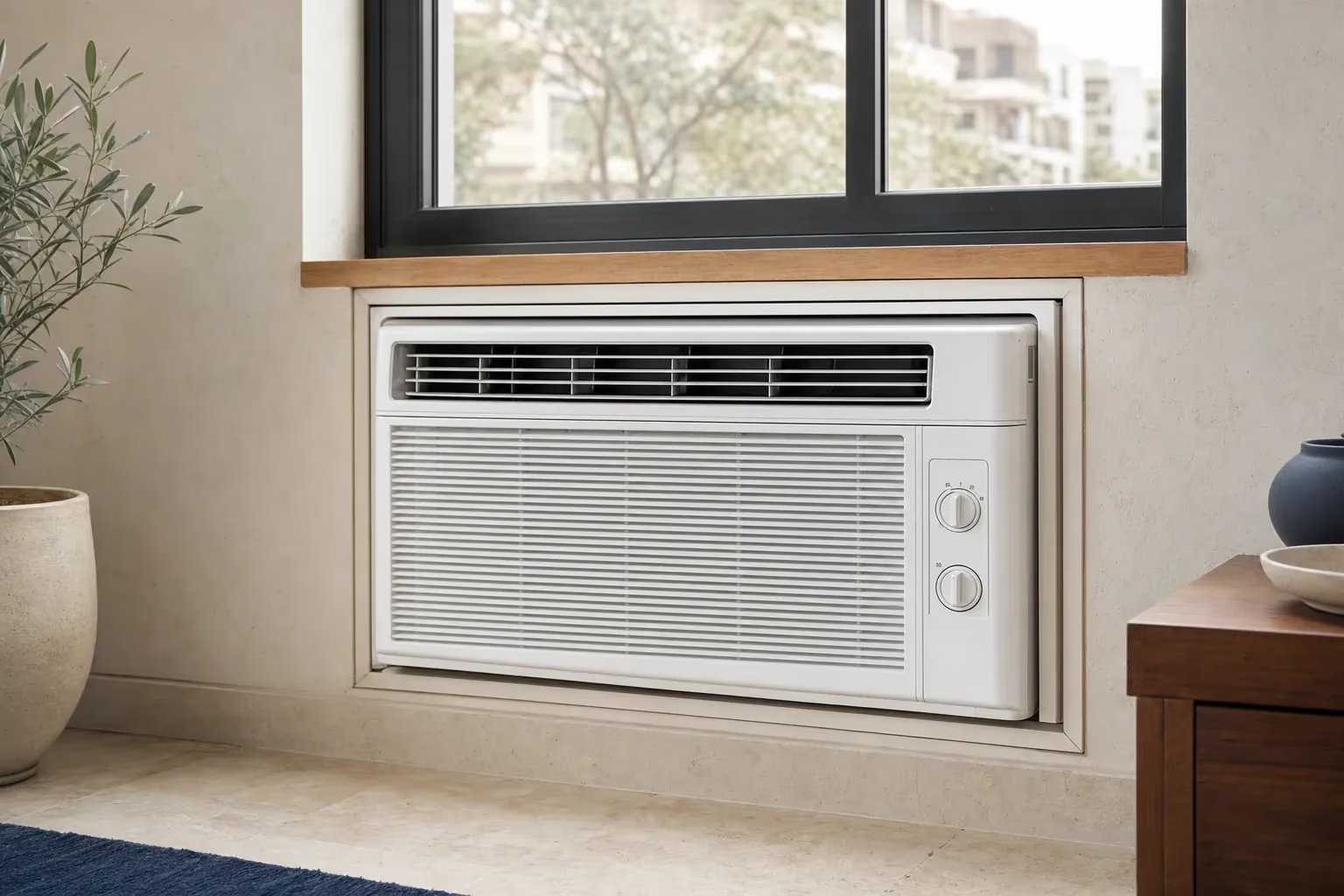
A window AC is a self-contained, single-unit appliance that fits into a window opening or wall, and it is still common in older apartments and shops. It combines the evaporator, condenser and compressor in a single box, so it is simpler and faster to service than a split — there is no long refrigerant line between two units. Its drawbacks: more noise and higher power use. The most common faults: unit vibration, water leaks and capacitor failure.
The Window AC Still Has Its Place — When Is It the Right Choice?
Despite the spread of split units, the window AC is still found in many Egyptian homes and shops — and deservedly so. There are no long refrigerant lines to leak and no two units needing a complex installation: one self-contained unit sits in the window opening and runs. That is why servicing it is simpler and faster, and spare parts are available for most brands, even older ones.
Most of the window AC faults we see are straightforward mechanical ones: a weakened start capacitor, a dust-clogged fan, or vibration from a loosened bracket. These repairs are usually finished in a single visit — unlike a split, which sometimes needs leak detection, brazing and a recharge.
Vibration and Noise — The Top Window AC Problem, and Its Fix
If your window AC shakes or runs loud, in most cases the cause is one of three things: the metal mounting bracket has loosened over time, the rubber gaskets that absorb vibration have worn out, or the rear condenser fan has become coated in dust and lost its balance. All three are simple to fix — but neglecting them passes the vibration on to the compressor itself and shortens its life.
- A metallic rattling sound = a bracket or screws that need tightening
- A constant vibration you can feel in the wall = worn rubber gaskets that need replacing
- A grinding or loud whooshing sound = a dusty rear fan or a broken blade
- A faint bubbling water sound = completely normal; that is the refrigerant circulating
Signs your Window AC needs service
- The unit vibrates heavily when running
- Water leaks from the edges of the unit into the room
- A grinding or rattling noise from the fan
- Cold air but at a weak volume
- The unit overheats and shuts off automatically
- A bad smell from the air vents
- The compressor does not start at all after several minutes of running
Common technical faults
Faults we often meet when servicing this type.
- 01
Loose metal mounting brackets causing vibration
- 02
Damaged or dust-clogged rear condenser fan
- 03
Clogged front air filter blocking cooling
- 04
Weak start capacitor
- 05
Incorrect mounting angle preventing drainage
- 06
Dusty rear condenser blocking heat exchange
Window or Split AC — A Practical Comparison Before You Decide
| Window | Split | |
|---|---|---|
| Installation | Simpler — fits into a window opening and is up and running quickly | Requires running refrigerant pipes and installing two units |
| Noise inside the room | Louder — the compressor is in the same unit, right next to you | Very quiet — the compressor is outside |
| Power consumption | Relatively higher for the same capacity | More economical — especially inverter models |
| Maintenance | Simpler and cheaper — one unit, with parts readily available | More complex — refrigerant circuits and leak detection |
| Lifespan | 8-10 years with regular maintenance | 10-12 years with regular maintenance |
| Best for | Rentals, a limited budget, a single room | A permanent home and long daily use |
You do not need to replace a window AC just because it is old — as long as the compressor is sound and it cools well, regular maintenance keeps it going for years. The right economic decision comes after a technical inspection that tells you the real condition of the compressor.
Window AC repair services
Replacing the capacitor and dust-clogged fans
Re-mounting the brackets with rust-resistant screws
Correcting the mounting angle to ensure drainage
Recharging refrigerant when needed plus leak detection
Replacing the whole unit if the compressor is dead
Simple Window AC Care That Extends Its Life
Safe steps you can do yourself between services — anything more complex, leave it to the technician on 16062.
- 1
Clean the front filter every two weeks
Remove the front grille, wash the filter under running water and let it dry. A clogged filter = weaker cooling and a higher electricity bill.
- 2
Check that the unit tilts outward
The unit should tilt slightly outward (as the manual specifies) so the condensation water drains away from you. If water is dripping inside the room, the tilt was set incorrectly.
- 3
Leave clearance behind the unit
At least 60 cm behind the unit on the outside — anything that blocks the rear airflow chokes the condenser and raises the temperature.
- 4
Tighten the bracket screws once a season
Before summer, go over the frame screws you can reach from inside — seasonal vibration gradually loosens them. Leave the outside bracket to the technician if you live on an upper floor.
- 5
Cover the unit in winter with a breathable cover
If you will not use it all winter, cover only the top of the outside part or use a cover that lets air through — it protects the condenser and fan from rain and dust, while a fully sealed cover traps moisture and speeds up rust.
Do not open sealed units or touch electrical, gas or refrigerant circuits yourself — that is specialist work with measuring instruments.
AC fault guides
Fault guides that apply to this type — causes, safe checks and when to call a technician.
Window AC repair by brand
Pick your brand to see its common faults and error codes.
Window AC — frequently asked questions
My window AC vibrates heavily — what is the fix?
The vibration is caused by loose brackets or a fallen rubber gasket. The technician tightens the screws and redistributes the weight.
Water leaks into the room — why?
An incorrect mounting angle, a clogged rear drain hole, or an internal drain pan full of dust.
Do you install a window AC to replace the old one?
Yes. We remove the old one, test the window opening, and install the new one with a new metal bracket.
The window AC starts and shuts off every few minutes — what is the cause?
Short cycling — usually a weak capacitor, a temperature sensor giving wrong readings, or an overheating condenser.
Should I repair my old window AC or replace it (or buy a split)?
If the compressor is sound and the fault is in the capacitor or a fan, repairing it is far more economical. If the compressor itself has failed and the unit is over 10 years old, then compare the repair cost with the price of a replacement — the technician gives you the full picture after the inspection, and you make the decision.
Other AC types
Need a technician for your Window AC?
Inspection, a clear price before the repair, and a 6-month written warranty.