
Recharging the correct refrigerant (R134a or R600a) after a leak test
Deep Freezers
Chest Freezer Repair
Chest freezer repair: weak cooling, heavy ice, worn lid seals, compressor and relay faults, and leak-tested gas recharges, with a 6-month written warranty. A chest freezer is the go-to for storing large amounts of meat and vegetables at home or in a shop. It opens from the top, and because cold air is heavy it stays inside when you lift the lid, so it holds temperature better than an upright.
Agent Site is an independent repair center — not the manufacturer's authorized service or warranty provider.
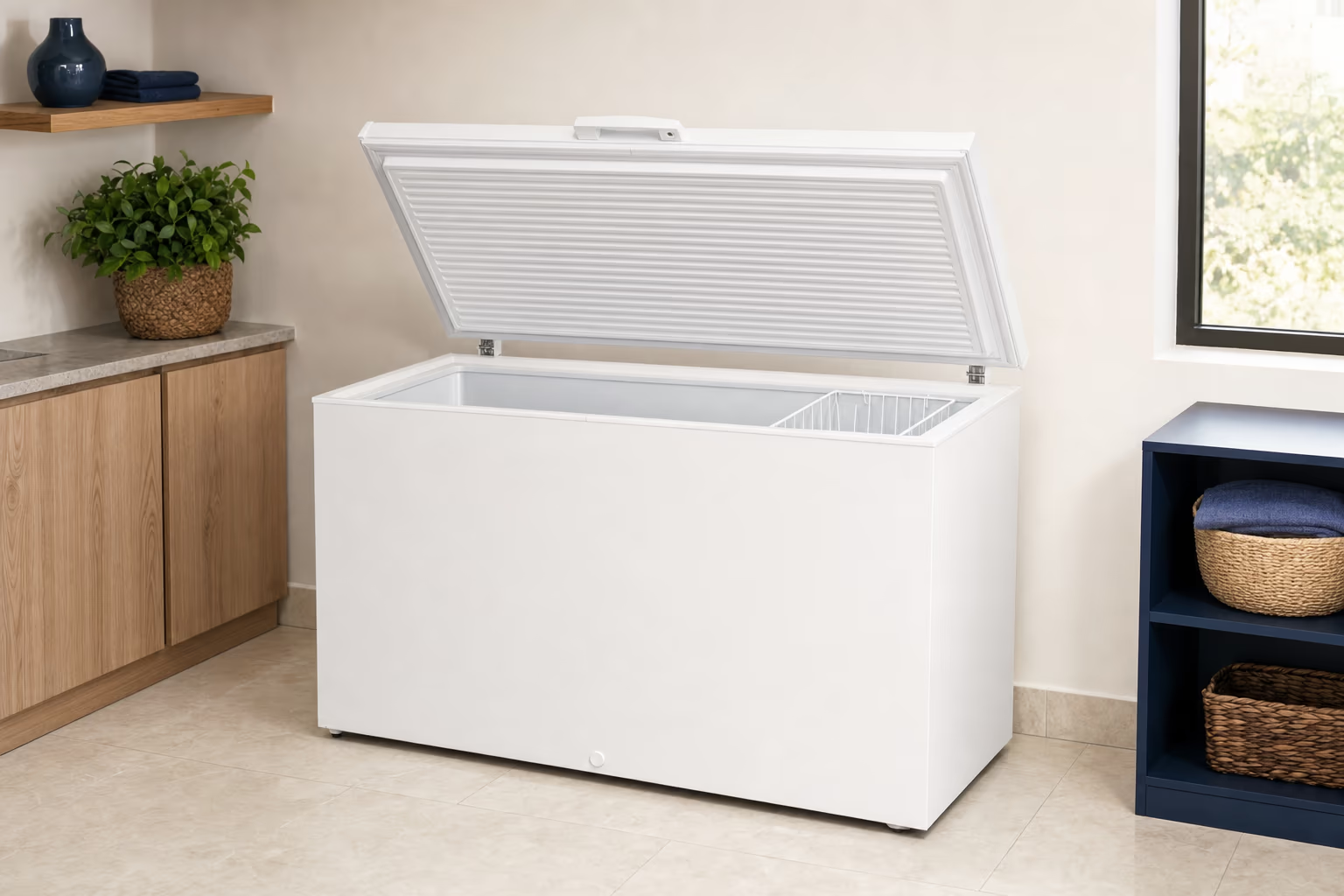
Things specific to chest freezers: the side walls get warm while it runs — that is normal, because the condenser is built into the walls, but it needs space around it so the heat can escape. If the lid does not close properly, the cause is usually the seal, the hinges or the lid springs. Ice forms on the inner walls and needs a manual defrost once it is about 5 mm thick; if there is a drain plug at the bottom, open it during defrosting with a container underneath, and put it back afterwards. The most common chest freezer faults: weak cooling from a refrigerant leak or a weak compressor, a faulty thermostat, a worn lid seal, and the start relay or capacitor.
Signs your Chest Freezer needs service
- The freezer does not get cold enough
- It cools, but the compressor runs non-stop
- A very loud compressor
- Thick ice on the inner walls
- A loose or worn lid seal
- Water on the floor around the freezer
- Repeated clicking from the relay
- A suspected gas leak (weak cooling with hissing or oily spots): on R600a models the gas is flammable — keep flames and sparks away, ventilate, unplug and call a technician
- A sudden jump in the electricity bill
- The lid does not close fully (hinges or lid springs)
Common technical faults
Faults we often meet when servicing this type.
- 01
A refrigerant leak (a common cause)
- 02
A weak or burnt-out compressor
- 03
A faulty thermostat that no longer controls the temperature
- 04
A worn lid seal letting the cold escape
- 05
A failed start relay, so the compressor will not start
- 06
A blocked drain plug or drain hole
- 07
Heavy ice from late manual defrosting or a worn seal
- 08
Weak lid hinges or springs
- 09
A failed capacitor
- 10
A blown internal fuse
Chest Freezer repair services
Replacing the compressor with an original or compatible part, depending on the model, with a 6-month written warranty
Replacing the thermostat
Replacing the lid seal
Replacing the start relay and capacitor
Adjusting or replacing lid hinges and springs
Safely defrosting and cleaning the freezer
Clearing a blocked drain
A full check of the cooling circuit
Levelling and test-running the freezer after a move
Tips to keep your Chest Freezer running
- Do not keep opening the lid — the cold escapes and the bill goes up
- Check the lid seal every few months with the paper test: close the lid on a sheet of paper; if it slides out easily, the seal needs cleaning or replacing
- Defrost once the ice is about 5 mm thick — never with a knife or screwdriver (they puncture the gas tubing) and never with a hair dryer or flame; a pan of hot water inside speeds it up
- Do not put hot food in the freezer — let it cool first
- Leave space on all sides so the walls can shed heat, and clean the compressor grille underneath if there is one, with the plug out
- If your power supply fluctuates, use a suitable voltage protector
- Do not overfill it to the point that the lid will not close properly, and add fresh food in batches
- During a power cut, keep the lid closed until power returns — a closed freezer stays cold longer
Deep Freezer fault guides
Fault guides that apply to this type — causes, safe checks and when to call a technician.
Chest Freezer repair by brand
Pick your brand to see its common faults and error codes.
Chest Freezer — frequently asked questions
My chest freezer is not cooling — where do I start?
Check that the lid closes properly, that the thermostat is not on its warmest setting, and that there is space around the freezer. If the compressor runs but cooling stays weak, a technician measures the pressure and finds the leak before any recharge.
The compressor is very loud — is it dangerous?
If the noise is loud and the inside is warming up, the compressor may be near the end of its life or the start relay may have failed. If you smell burning, unplug it; either way it needs a technician to check.
There is a lot of ice inside — what should I do?
Ice in a chest freezer is normal, because most are manual-defrost. Once it is about 5 mm thick: unplug the freezer, take the food out, open the lid and the drain plug if there is one, and let it melt (a pan of hot water inside speeds it up). Never chip the ice with a knife or screwdriver — you can puncture the gas tubing, and R600a gas is flammable.
Do you recharge freezer gas?
Yes — once the technician has found and repaired the leak and pressure-tested with nitrogen, they charge the same gas stated on the rating plate (R134a or R600a) in the correct amount.
The lid does not close tightly — what is the fix?
Usually the seal is worn or the hinges and springs have weakened. Replacing the seal is simple and inexpensive, and a good seal saves electricity.
Which brands do you repair?
Most deep freezer brands sold in Egypt, such as Kiriazi, Universal, Fresh, Toshiba and Indesit — pick yours in the brands section on this page.
How long does a deep freezer last?
It depends on use and on how stable the power supply is. Most faults are in the seal, the start relay or the thermostat, and repairing them is usually economical compared with a new freezer.
What should I do after moving a freezer or buying a new one?
Let it stand upright for a few hours before switching on (see your model manual) so the compressor oil settles, level it, and leave space around it for ventilation. Run it empty until it reaches freezing temperature, then load the food.
Other Deep Freezer types
Need a technician for your Chest Freezer?
Inspection, a clear price before the repair, and a 6-month written warranty.