
Replacing the door seal
Deep Freezers
Defrost Deep Freezer Repair
Manual-defrost freezer repair: fast ice build-up, thermostat, door seal and compressor faults — plus how to defrost safely and when ice means a fault. A manual-defrost freezer is the simpler, cheaper type: it has no defrost heater, so ice builds up slowly and you defrost it by hand once or twice a year. It uses less power and its parts are cheaper, but food can stick to the ice.
Agent Site is an independent repair center — not the manufacturer's authorized service or warranty provider.
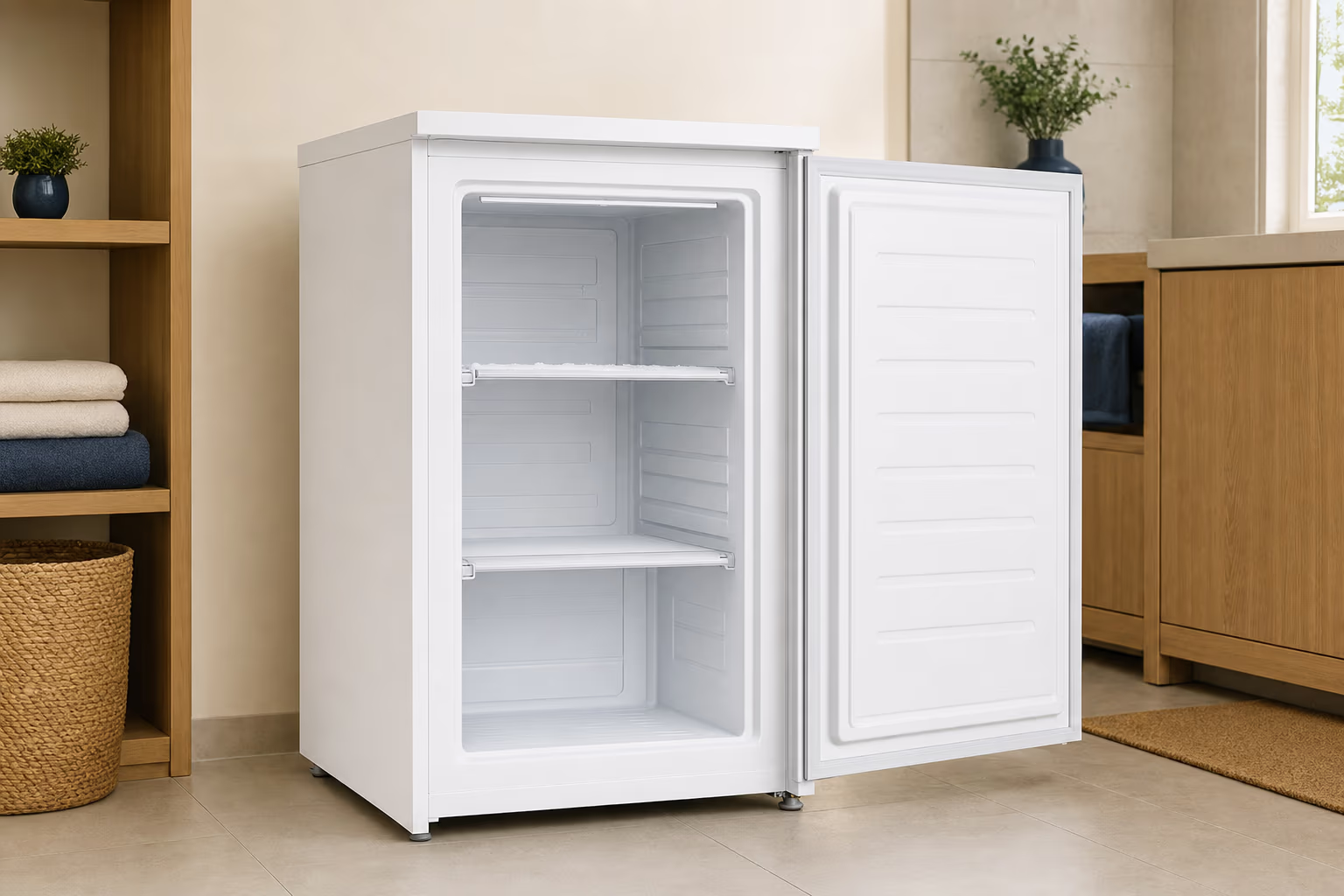
How to defrost properly: unplug the freezer, move the food to a cool box or the fridge, and open the door and the drain plug if there is one, with a container and towels underneath. Let the ice melt on its own, or put a pan of hot water inside and close the door to speed it up. Lift out loosened ice by hand or with a plastic scraper only, clean and dry the inside, then switch on and wait until it is cold before putting the food back. Never use a knife or screwdriver (they puncture the gas tubing, and on R600a models the gas is flammable), and never a hair dryer, heater or flame. When is ice a fault? If it comes back thick within a few days of defrosting, or collects around the door — usually the seal, or a door that does not close properly. Manual defrost is common in both chest and upright freezers, in household and commercial sizes.
Signs your Defrost Deep Freezer needs service
- Very thick ice after a short time (some ice is normal, but fast build-up means a problem)
- The freezer does not get cold enough
- A loud compressor
- The door will not close because of ice
- The thermostat does not control the temperature
- A high electricity bill (the compressor runs all the time)
- A worn door seal
- Ice concentrated around the door
Common technical faults
Faults we often meet when servicing this type.
- 01
A worn door seal (ice forms quickly)
- 02
A faulty thermostat
- 03
A refrigerant leak
- 04
A weak or burnt-out compressor
- 05
A failed start relay
- 06
A failed capacitor
- 07
Poor ventilation around the freezer
- 08
Loose door hinges
Defrost Deep Freezer repair services
Replacing the thermostat
Leak detection and recharging the correct refrigerant for the model
Replacing the compressor with an original or compatible part
Replacing the start relay and capacitor
Safely defrosting and cleaning the freezer
Adjusting the door hinges
A full check of the cooling circuit
Tips to keep your Defrost Deep Freezer running
- Defrost once the ice is about 5 mm thick — usually once or twice a year, depending on use
- Unplug the freezer and move the food to a cool box or the fridge before defrosting
- Never use a knife or screwdriver to break the ice — they puncture the gas tubing (and R600a gas is flammable) — and never a hair dryer or flame
- A pan of hot water inside with the door closed speeds up defrosting safely
- Clean the freezer with warm water and a little baking soda, and dry it well before switching on
- If there is a drain plug in the floor, open it while defrosting and put it back afterwards
Deep Freezer fault guides
Fault guides that apply to this type — causes, safe checks and when to call a technician.
Defrost Deep Freezer repair by brand
Pick your brand to see its common faults and error codes.
Defrost Deep Freezer — frequently asked questions
Is a manual-defrost freezer right for me?
It suits you if you do not open it often and want a simple freezer that uses less power and has cheaper parts. The drawback is that you need to defrost it by hand from time to time.
Can I convert it to no-frost?
No — no-frost needs a different evaporator design, a fan and a complete defrost system. Servicing a manual-defrost freezer is simpler and cheaper.
Ice builds up very quickly — what is the cause?
Usually a worn door seal letting humid air in, the door being opened too often, or a very humid room. Do the paper test on the seal: close the door on a sheet of paper; if it slides out easily, the seal is not closing.
Do you recharge gas on manual-defrost freezers?
Yes — after the leak is found, repaired and pressure-tested, the technician charges the same gas stated on the rating plate (R134a or R600a). R600a is flammable: if you smell gas, keep flames and sparks away, ventilate the room, unplug the freezer and never try to recharge it yourself.
The door seal is worn — is it hard to replace?
No — replacing the seal is simple and inexpensive, and a good seal means the compressor runs less and the bill goes down.
How long does a manual-defrost freezer last?
It depends on use and power stability. It has simpler parts than a no-frost freezer, so fewer things fail; most faults are in the seal, the thermostat and the start relay.
Other Deep Freezer types
Need a technician for your Defrost Deep Freezer?
Inspection, a clear price before the repair, and a 6-month written warranty.