
Replacing the thermocouple or flame sensor (original or compatible, depending on the model)
Water Heaters
Gas Water Heater Repair
Gas water heater repair: a flame that keeps going out, lukewarm water, a yellow flame or a gas smell. Leak test after every repair, 6-month written warranty. Gas heaters are common in Egyptian homes because they are usually cheaper to run than electric ones, and servicing them needs a technician trained in gas work — any gas leak is extremely dangerous.
Agent Site is an independent repair center — not the manufacturer's authorized service or warranty provider.
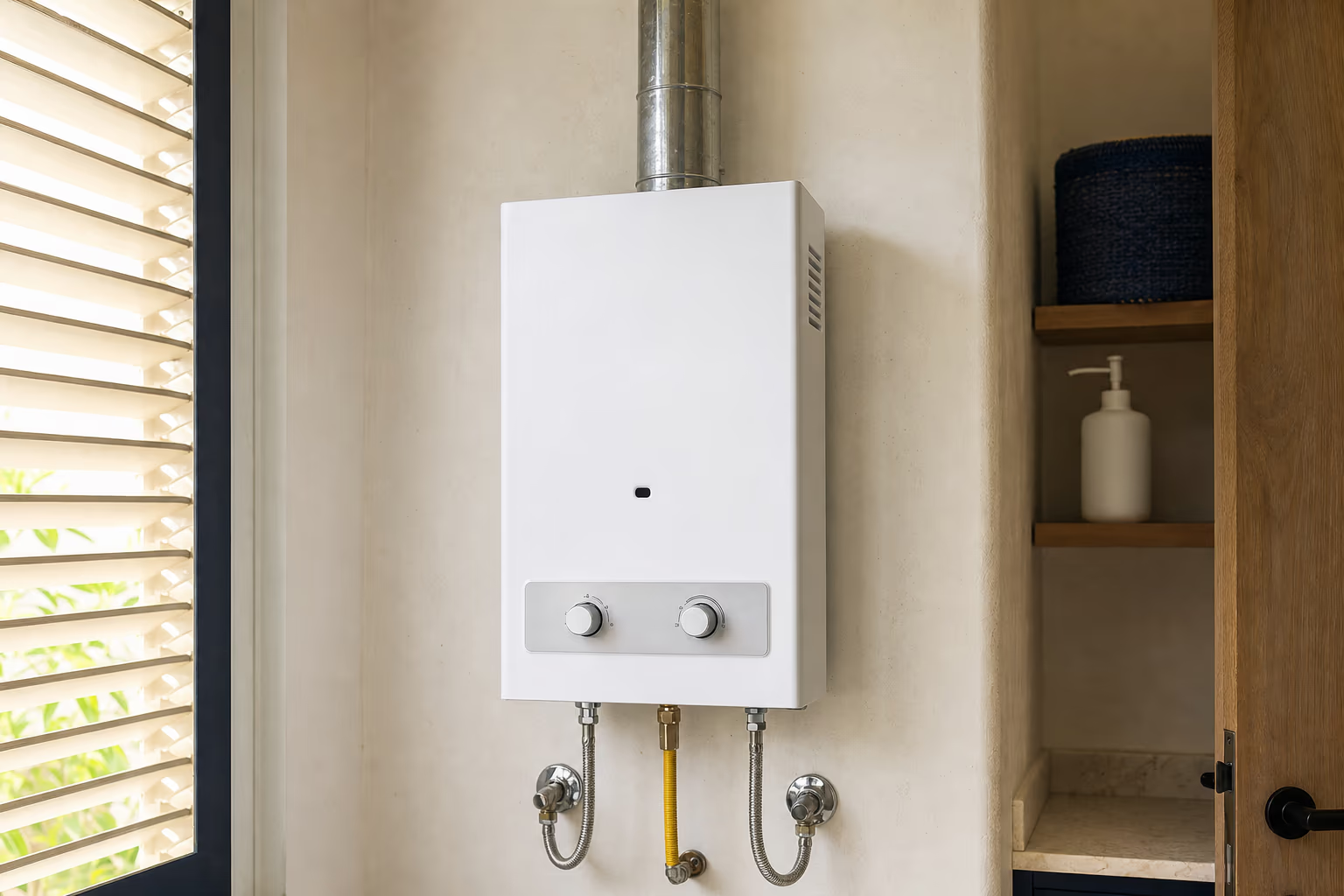
Gas water heaters in Egypt are mostly instantaneous: the burner lights when you open a hot tap and heats the water as it flows through the heat exchanger. There are two kinds: older models with a standing pilot and a thermocouple, and newer ones with battery ignition, a flame sensor and an electric gas valve. The most common faults: flat batteries (no spark), a torn water diaphragm so the heater does not light when you open the tap, a faulty micro-switch or ignition electrode, or the thermocouple on older models. Brands we work on include Bosch, Electrostar, Ferroli, Ecomatic, Fresh and Kiriazi.
Signs your Gas Water Heater needs service
- The flame goes out the moment you let go of the button
- The water is lukewarm, not hot, even with the gas on
- A loud crackling noise from the burner
- Any gas smell, even a faint one, is an emergency: shut the valve, open the windows, touch no electrical switches and call the gas emergency line 129 from outside
- Black soot on the outside of the heater (incomplete combustion)
- A yellow flame instead of blue (blue is the healthy colour)
Common technical faults
Faults we often meet when servicing this type.
- 01
Flat batteries or a faulty ignition electrode — no spark
- 02
A torn water diaphragm or a faulty micro-switch — the heater does not light when the tap opens
- 03
A faulty thermocouple (older models) or flame sensor — the valve shuts the gas for safety
- 04
Burner jets clogged with dust or soot, or weak gas pressure from the supply
- 05
A burnt-out magnetic valve or a broken wire to it
- 06
Scale on the heat exchanger, or a faulty water temperature sensor (NTC)
Gas Water Heater repair services
Cleaning the burner jets and ignition ports
Replacing the magnetic valve with a safety test
Descaling the heat exchanger
Checking all gas connections with a soapy-water leak test
Installing a new gas heater with a flue to the outside and a leak test
Tips to keep your Gas Water Heater running
- Inspect the gas hose every year — if it is cracked, close the valve and have a technician replace it and leak-test it with soapy water, never a flame
- Never block the vents or remove the flue — the heater belongs outside the bathroom, or in a well-ventilated spot with a flue to the outside
- Headache, dizziness or drowsiness while showering: turn the heater off, open the windows and get into fresh air at once; if the symptoms continue, call an ambulance (123)
- The flame must be blue — yellow means incomplete combustion and carbon monoxide (dangerous)
- Regular servicing to clean dust from the burner and scale from the heat exchanger
Water Heater fault guides
Fault guides that apply to this type — causes, safe checks and when to call a technician.
Gas Water Heater repair by brand
Pick your brand to see its common faults and error codes.
Gas Water Heater — frequently asked questions
The flame goes out the moment I let go of the start button — why?
On heaters with a pilot, the thermocouple is usually faulty — it is what tells the magnetic valve that the flame is lit, and without its signal the valve shuts the gas for safety. Replacing it is a simple, inexpensive repair. If your heater has battery ignition and will not stay lit, replace the batteries first.
I smell gas — what should I do?
1) Shut the gas valve immediately. 2) Open the windows. 3) Do not switch any electrical switch on or off, and do not strike a lighter or match. 4) Leave the apartment and call the gas emergency line 129 from outside. Once the area is safe, call us on 16062 for the repair.
Is gas water heater maintenance dangerous?
Without a trained technician — yes, gas is dangerous. Our technicians are trained in gas work and leak-test after every repair. Do not attempt the repair yourself.
The flame is yellow, not blue — what does that mean?
Yellow = incomplete combustion = dangerous carbon monoxide. Turn the heater off and ventilate the room; a technician must inspect it. The causes: clogged burner jets, poor ventilation or a blocked flue, or a fault in the burner itself.
What is the lifespan of a gas water heater?
Roughly 10–15 years with regular servicing, and less without it. Batteries, the water diaphragm and the thermocouple are among the parts replaced most often.
Do you install a new gas heater to replace the old one?
Yes — installation on an existing gas outlet, with a flue to the outside, a leak test and a trial run. Any change to natural-gas piping is done by the gas company.
Other Water Heater types
Need a technician for your Gas Water Heater?
Inspection, a clear price before the repair, and a 6-month written warranty.