
Replacing cracked hob glass (ceramic or toughened) to suit the model
Stoves
Cooktop (Hob) Repair
Gas, electric and induction hob repair: burners not lighting, clicking ignition, cracked glass, dead touch controls. Clear price first, 6-month warranty.
Agent Site is an independent repair center — not the manufacturer's authorized service or warranty provider.
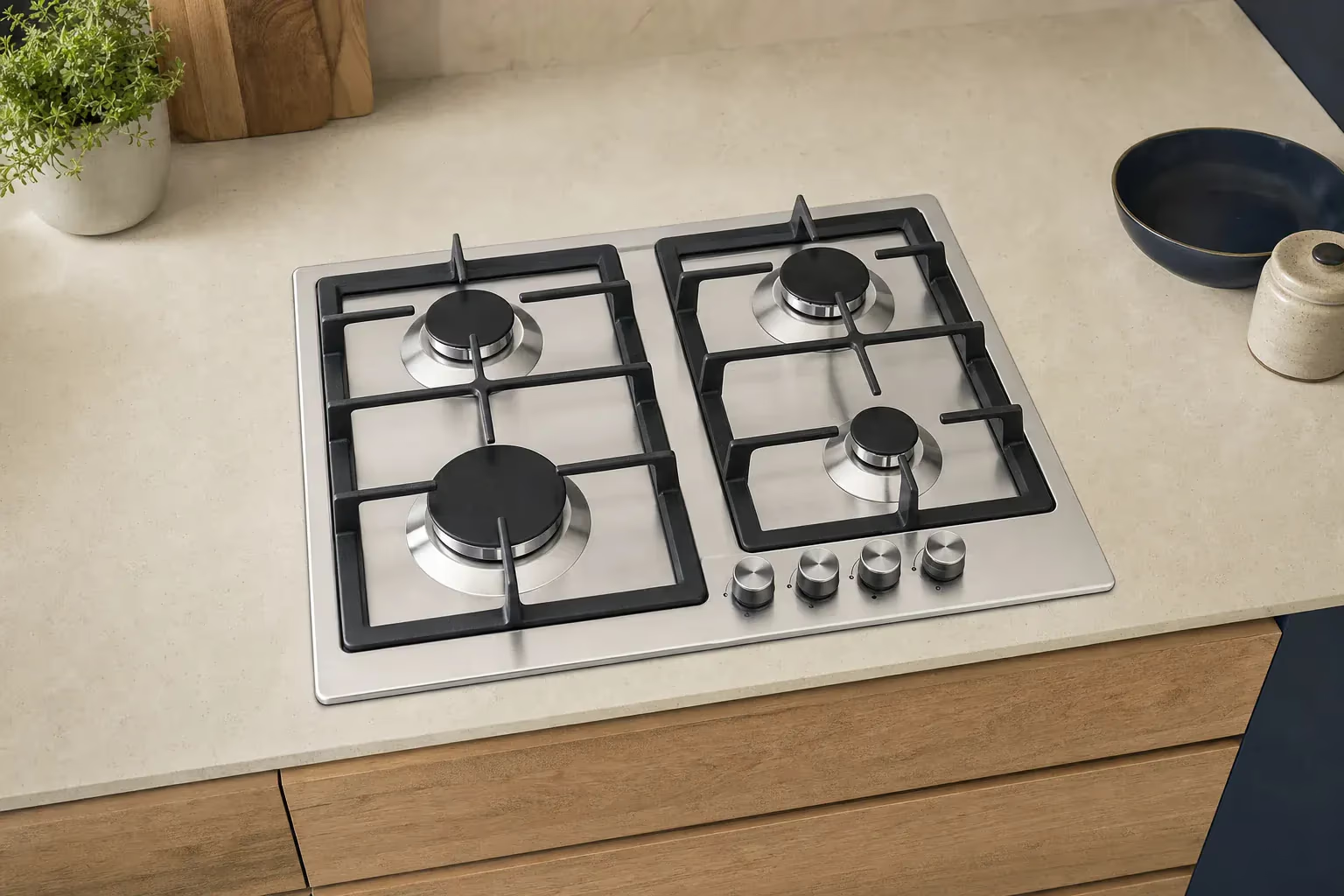
A cooktop (built-in hob) is a cooking surface set into the countertop, with no oven, and it is common in modern kitchens. On a gas hob the burners sit on a stainless steel or toughened-glass top, and the usual faults are in the ignition, the flame-safety device on each burner and blocked jets. Electric and induction hobs have a ceramic-glass (vitroceramic) top with the elements or induction coils underneath, and their faults are in the touch controls, the elements, and the induction board and its fan. A built-in hob needs care to service: the gas or electrical connection is under the countertop inside the cabinet, the hob has to be removed and refitted without cracking the stone, and the cabinet below needs ventilation. If you smell gas: close the gas valve, open the windows, don't switch any light or appliance on or off and don't use a lighter, then leave and call the gas emergency line 129. The most common brands: Bosch, Beko, Franke, Indesit, Fresh and others.
Signs your Cooktop (Hob) needs service
- A burner doesn't light from the knob
- A crack in the hob glass
- The touch controls don't respond (touch models)
- The igniter clicks but no gas comes out
- The igniter keeps clicking
- The hob switches itself off after a while
Common technical faults
Faults we often meet when servicing this type.
- 01
Gas hobs: a worn spark electrode or ignition unit
- 02
Gas hobs: a faulty flame-safety device (thermocouple) on one burner — it lights, then goes out
- 03
Gas hobs: a blocked burner jet or burner-head ports
- 04
Electric and induction: ceramic glass cracked by an impact
- 05
Electric and induction: faulty touch controls or control board
- 06
Induction: a failed power board or cooling fan
Cooktop (Hob) repair services
Repairing or replacing the ignition unit and spark electrodes
Replacing the flame-safety device on a specific burner
Cleaning the jets and burner heads
Repairing touch controls and induction boards
Installing a new hob in the countertop
Tips to keep your Cooktop (Hob) running
- Don't use very heavy pots that could drop onto the glass
- Use a dedicated ceramic-glass cleaner — not just any cleaner
- Clean the burners after each use, once they are cool
- Don't touch the controls with wet hands
- Make sure the burner caps are seated correctly and clean
Stove fault guides
Fault guides that apply to this type — causes, safe checks and when to call a technician.
Cooktop (Hob) repair by brand
Pick your brand to see its common faults and error codes.
Cooktop (Hob) — frequently asked questions
The glass has cracked — what should I do, and is it worth repairing?
On an electric or induction hob, stop using it and switch off its breaker straight away — a cracked top can expose live parts. On a gas hob, turn the gas off and stop using it, because cracked glass can shatter when it heats up. A cracked top is replaced, not repaired, and the technician tells you its price for your model so you can compare it with a new hob.
One burner won't light while the rest work — what's the cause?
First, with the gas off, dry the burner cap and head, clear the ports with a dry brush and seat the cap properly. If it lights and then dies when you release the knob, it's the flame-safety device (thermocouple); if there's no spark at all, it's the spark electrode or ignition unit — both need a technician.
Do you install a new hob in the countertop?
Yes — measuring the countertop, cutting the opening to size, fitting the hob, connecting the gas or electricity, and leak-testing gas connections.
Do you service induction hobs?
Yes — we repair induction hobs: touch controls, the power board, the cooling fan and the sensors.
What is the lifespan of a hob?
Usually 10–15 years, as long as the glass isn't knocked and it is cleaned properly.
Other Stove types
Need a technician for your Cooktop (Hob)?
Inspection, a clear price before the repair, and a 6-month written warranty.