
Compressor and refrigerant-circuit inspection
Dryers
Heat-Pump Dryer Repair
Heat-pump dryer repair: drying slower than usual, clogged filters and heat exchanger, sensor or compressor faults. Clear price first, 6-month written warranty.
Agent Site is an independent repair center — not the manufacturer's authorized service or warranty provider.
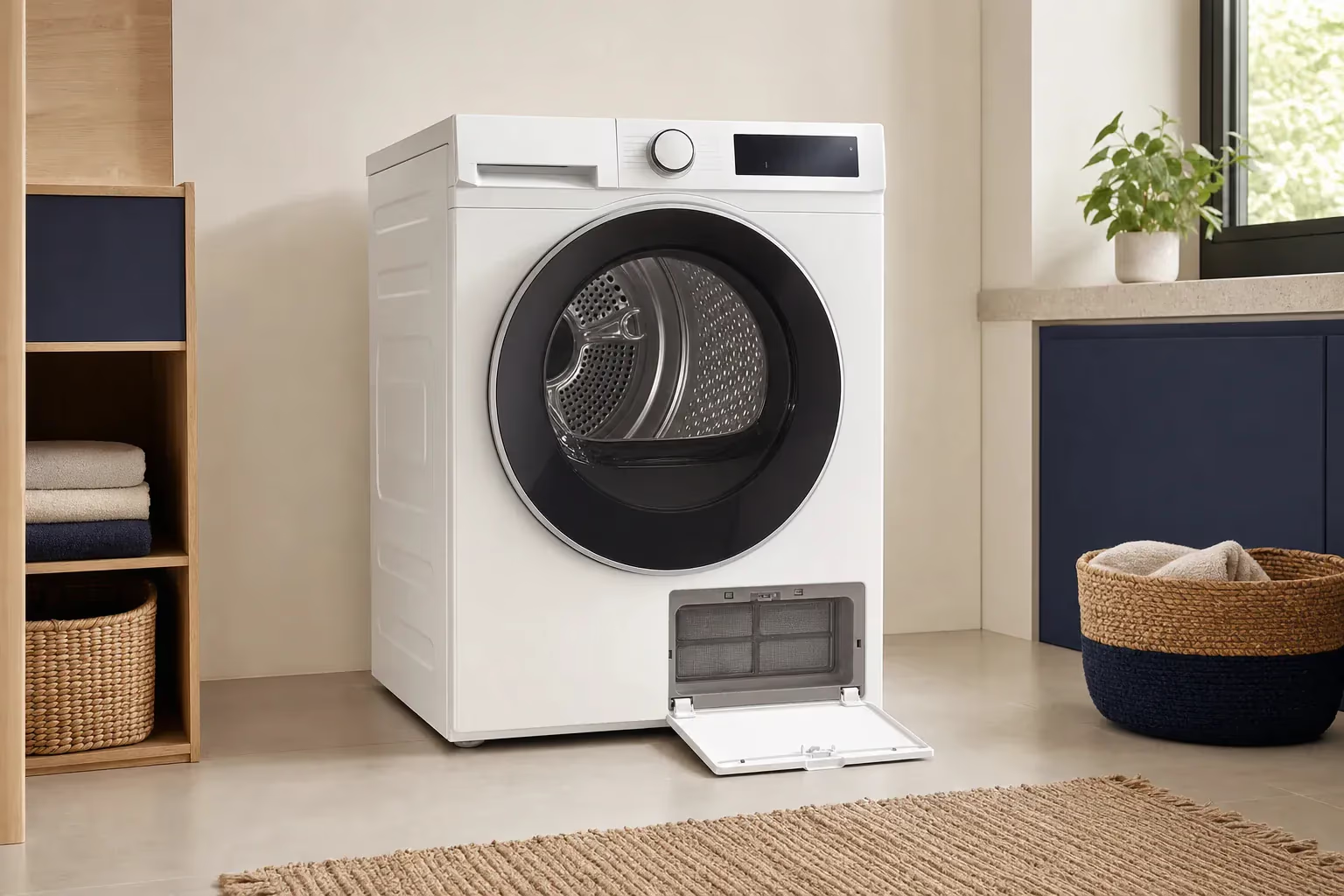
Heat-pump dryers are among the most energy-efficient dryers and dry at a lower temperature (around 50°C), which is gentler on delicate fabrics — but cycles are longer and the price is higher. They work like an air conditioner: a compressor, refrigerant, an evaporator and a condenser. Moist air from the drum passes over a cold evaporator, where the water condenses and drains to the tank; the air is then reheated by the condenser and sent back into the drum warm and dry. The most common faults: lint-clogged filters and heat exchanger, the water pump and sensors — and less often a refrigerant leak or a compressor failure (the most expensive).
Signs your Heat-Pump Dryer needs service
- Drying takes noticeably longer than usual for the same programme and load
- Clothes come out damp
- A loud or strange noise from the compressor
- The drum turns but the air isn't warm
- Water in the wrong place (under the dryer or at the door)
- Electricity use suddenly increased
- A fault code on the display
Common technical faults
Faults we often meet when servicing this type.
- 01
Lint-clogged filters or heat exchanger (most common)
- 02
Faulty water pump
- 03
Faulty temperature sensor
- 04
Faulty moisture sensor
- 05
Refrigerant leak
- 06
A fault on the inverter board
- 07
Failed compressor (the most expensive)
Heat-Pump Dryer repair services
Refrigerant leak repair and recharge when needed
Heat-exchanger and filter cleaning with suitable tools
Replacement of faulty sensors
Inverter board repair
Full safety-system check
Annual preventive maintenance
Tips to keep your Heat-Pump Dryer running
- Clean the second (sponge) filter at the bottom about once a month — it is separate from the lint filter in the door
- Go easy on dryer (fabric-softener) sheets — they leave a film on the filter, heat exchanger and sensors
- Use sensor drying (Auto Dry) instead of the timer
- Annual preventive maintenance matters for this type
- Never open the refrigerant circuit yourself — many models use R-290, which is flammable
- Use a suitable voltage protector to protect the compressor
Dryer fault guides
Fault guides that apply to this type — causes, safe checks and when to call a technician.
Heat-Pump Dryer repair by brand
Pick your brand to see its common faults and error codes.
Heat-Pump Dryer — frequently asked questions
Why does a heat-pump dryer take longer?
Because it dries at a lower temperature (around 50°C) to protect fabrics and save electricity. A full cycle can take two to three hours, and that is normal — compare with the time in your model's manual. If it now takes longer than usual, the filters or the heat exchanger probably need cleaning.
Is it worth the high price?
It depends on your usage. With daily use, the electricity savings recover much of the price difference over time, and it is gentler on your clothes.
The compressor runs loudly — is that normal?
No — a heat-pump dryer compressor should run quietly. A loud noise or knocking is a sign of a problem; stop the dryer and call a technician.
Do you recharge refrigerant?
Yes, once the technician has found and fixed the leak. Heat-pump dryers use R-290 (propane) or R-134a depending on the model. R-290 is flammable, so any work on the refrigerant circuit is for a technician only, away from any flame and without sharp tools on the heat exchanger. If you smell gas, keep any flame away, ventilate the room and unplug the dryer.
What is the expected lifespan?
About 10–15 years with preventive maintenance and regular cleaning of the filters and heat exchanger.
Do you repair Bosch and Miele heat-pump dryers?
Yes — we repair heat-pump dryers from Bosch (Serie 6 and Serie 8), Miele, LG and other brands.
Other Dryer types
Need a technician for your Heat-Pump Dryer?
Inspection, a clear price before the repair, and a 6-month written warranty.