
Replacing broken tubes
Water Heaters
Solar Water Heater Repair
Solar water heater repair: broken tubes, rooftop leaks, weak hot water or a failed backup heater. Clear price first, 6-month written warranty. A solar heater warms water with the sun's heat, so running costs are close to nothing, though it costs more upfront; servicing it differs from other heaters and needs a technician who works on rooftops.
Agent Site is an independent repair center — not the manufacturer's authorized service or warranty provider.
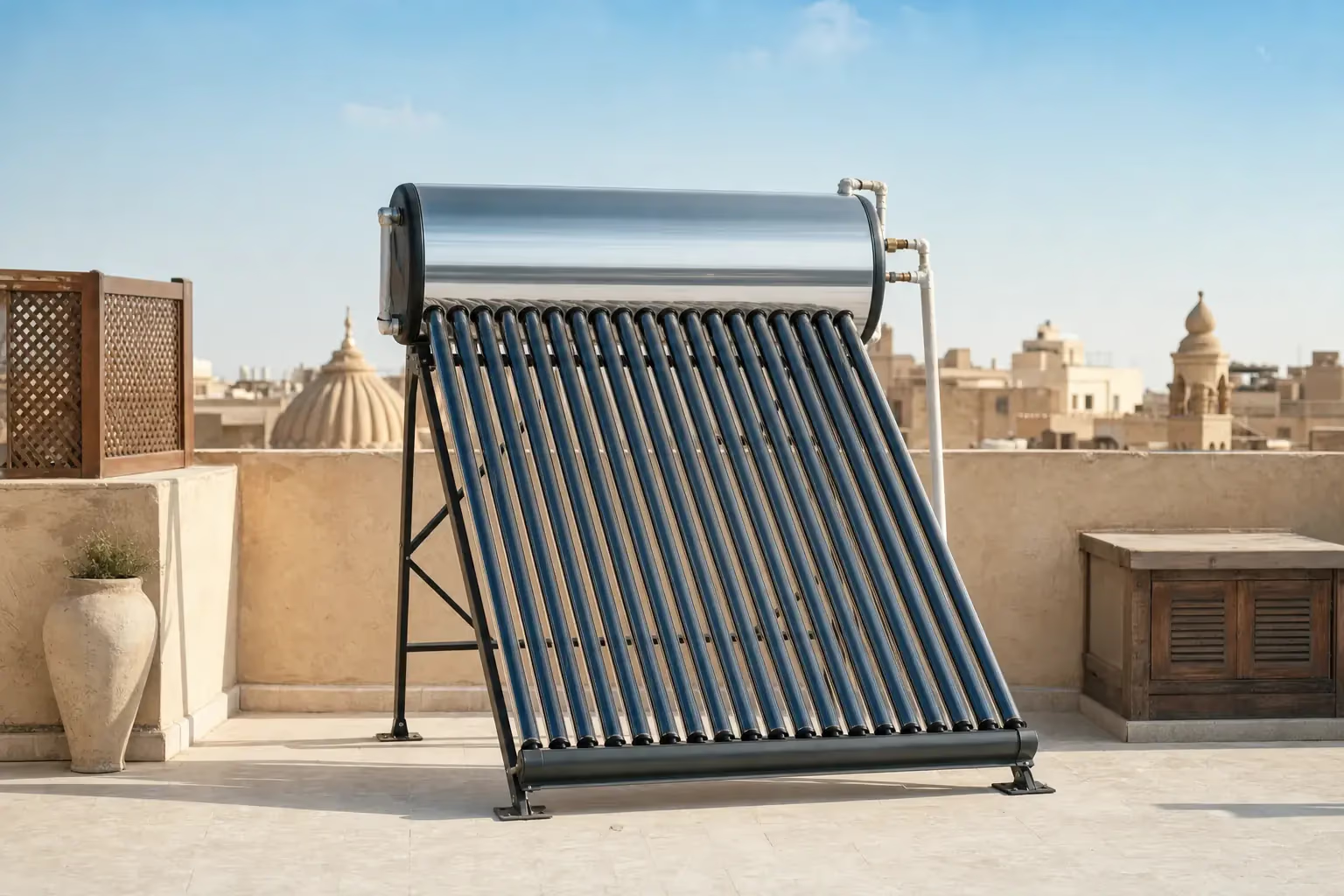
There are two types: evacuated (vacuum) tubes, the most common, and flat plates. Evacuated-tube systems come in two kinds: water inside the glass tubes, or sealed heat pipes with no water in them. The heater warms water during the day and stores it in an insulated tank, and an electric backup heater tops up the heating in winter and on cloudy days. We work on most imported evacuated-tube and flat-plate systems.
Signs your Solar Water Heater needs service
- Less hot water than before
- Water leaking on the rooftop, or damp in the ceiling below the heater
- A broken glass tube
- The backup heater does not work in winter or on cloudy days
- A faulty temperature sensor
- The tank empties quickly
Common technical faults
Faults we often meet when servicing this type.
- 01
A broken glass tube (the most common)
- 02
A leak from the copper connections on the rooftop
- 03
Scale in the tank and glass tubes (water-in-glass systems)
- 04
A burnt-out backup heater
- 05
A faulty temperature sensor in the tank
- 06
Worn tank insulation
Solar Water Heater repair services
Repairing and securing the rooftop connections
Descaling the tank and tubes
Replacing the backup heater
Checking and replacing the anode rod
Installing a complete new solar system
Tips to keep your Solar Water Heater running
- Inspect the tubes every 6 months and after any storm — early in the morning, while they are cool
- Wipe the dust off the tubes every month or two while they are cool — and never spray cold water on hot tubes
- If a tube breaks, do not touch it: close the supply valve, switch off the backup heater and call a technician
- Make sure the backup heater works before winter and is on a sound earth
- The water can come out scalding in summer — open the cold tap first, and make sure the safety valve works and is not leaking
Solar Water Heater repair by brand
Pick your brand to see its common faults and error codes.
Solar Water Heater — frequently asked questions
Is a solar water heater suitable for Egypt?
Very — there is sun most of the year. In winter and on cloudy days the backup heater tops up the heating, especially in Alexandria and the Delta.
The installation cost is high — is it worth it?
It costs more upfront, and the savings depend on household use and electricity or gas prices; over the long run they cover a large part of the cost. The lifespan is roughly 15–20 years.
If a tube breaks, does the heater stop?
It depends on the system. In water-in-glass systems a broken tube drains the tank: close the supply valve, switch off the backup heater and call a technician. In heat-pipe systems the heater keeps working at lower efficiency until the tube is replaced.
Do you install solar water heaters on the roof?
Yes — a full installation with the copper connections, a pressure tank where the system needs one, the backup heater and the controller.
Do you provide maintenance in villages?
We cover Cairo, Giza, Qalyubia, Alexandria, Matrouh (North Coast), Sharqia, Gharbia and Dakahlia, including villages in these governorates — timing depends on the area.
Other Water Heater types
Need a technician for your Solar Water Heater?
Inspection, a clear price before the repair, and a 6-month written warranty.